Monthly Archives

June 2021

By Community Partners, Migration V2

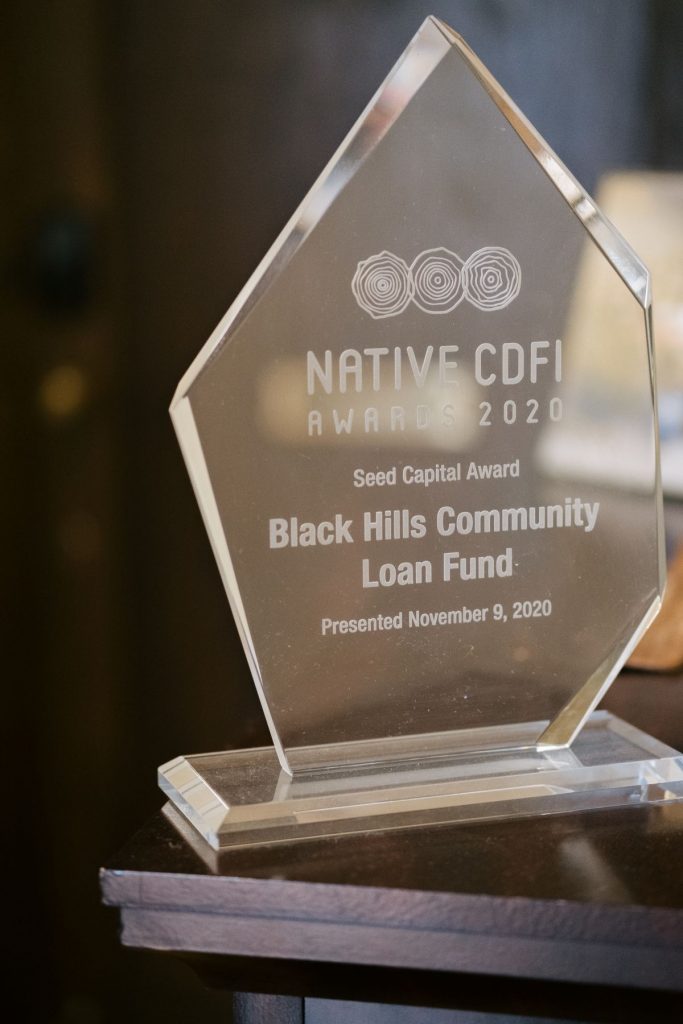
Meet the Black Hills Community Loan Fund, A Native CDFI Rooted In Its Community, And Growing With It

When Onna LeBeau took the job of Executive Director for the Black Hills Community Loan Fund (BHCLF) nearly six years ago, the odds were stacked against the nonprofit. For the better part of a year, the Rapid City-based nonprofit had sat idle, and its board was only willing to give it — and Onna — 12 months to see what could be done to keep the doors open. Despite that the organization had $10,000 in capital and a staff of one (Onna), she was hopeful. After all, this was the job she was meant to have.
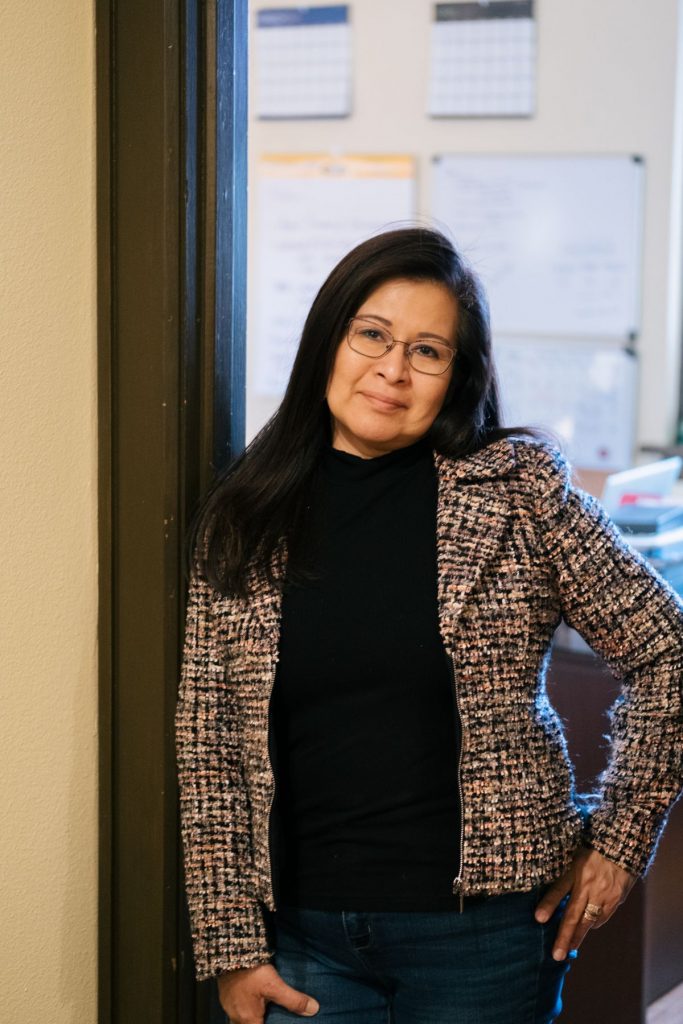
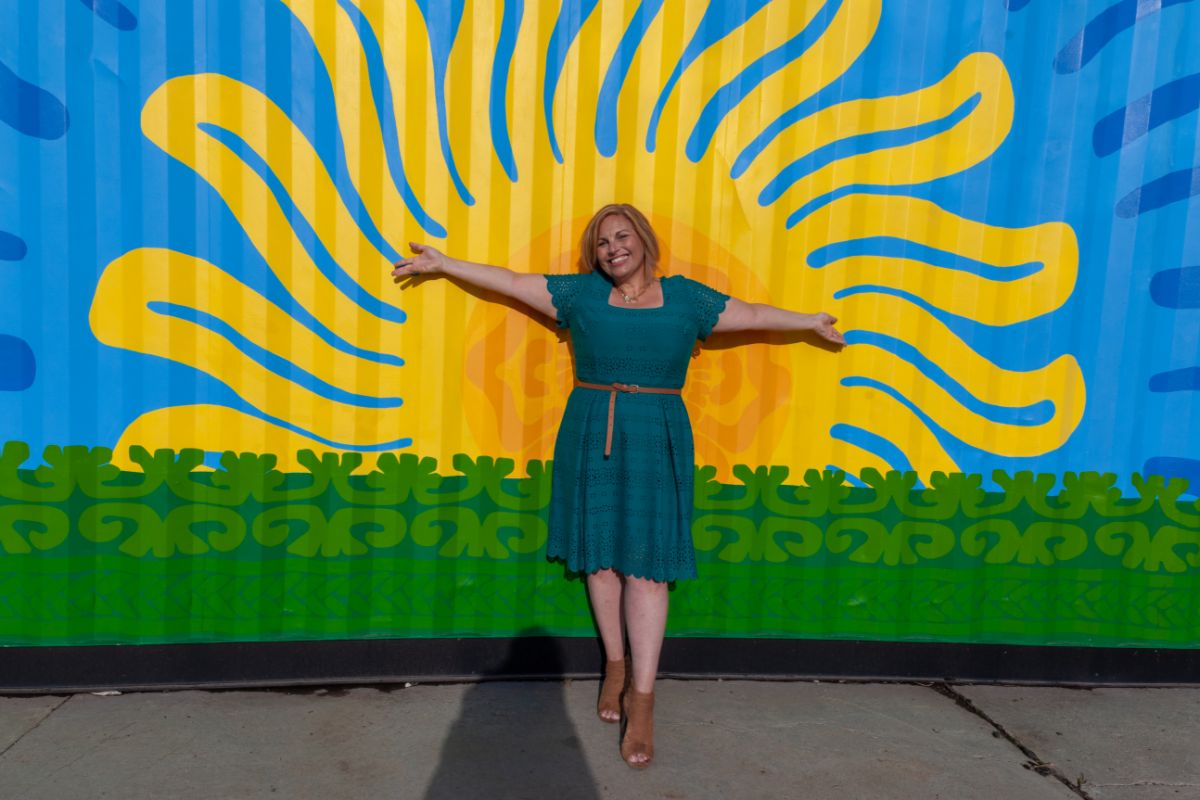
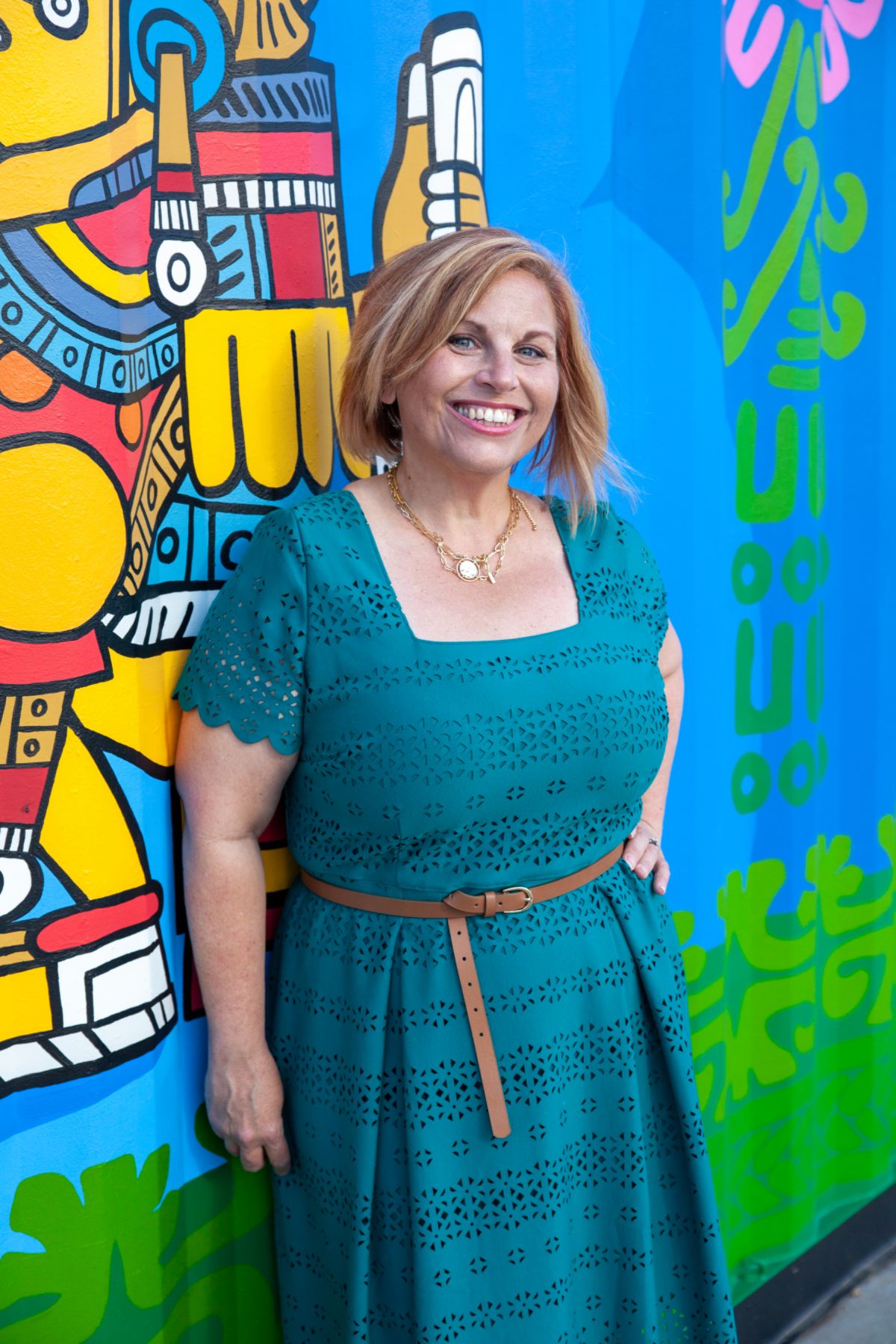
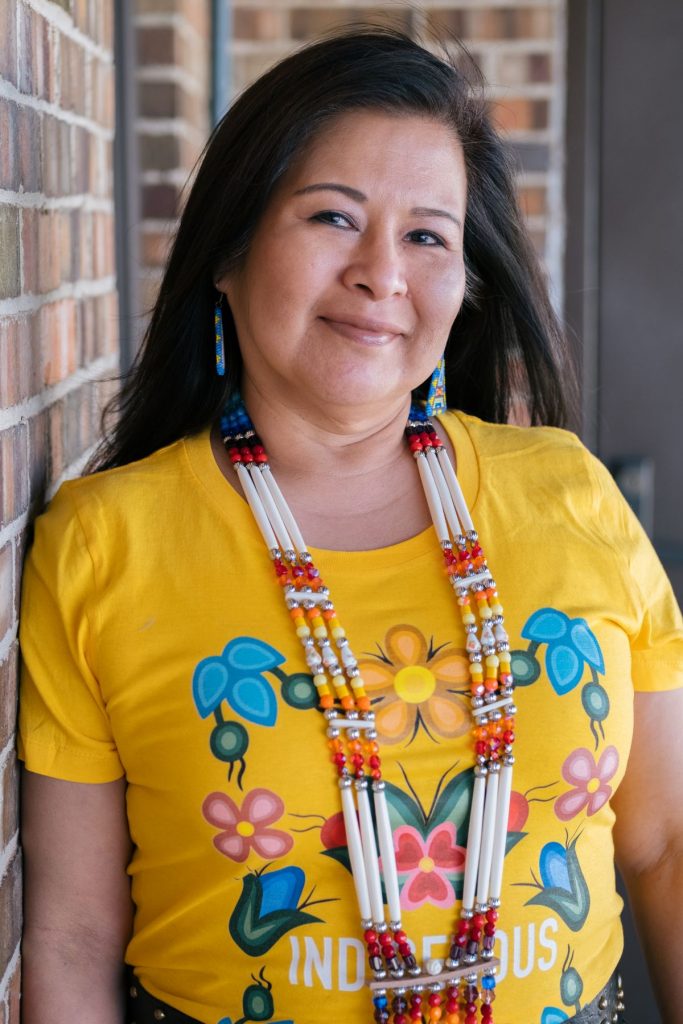
Onna LeBeau

Onna didn’t always aspire to be at the helm of a Community Development Financial Institution (CDFI). She was born into the Omaha Nation and lived in Aberdeen, South Dakota from the time she was six-months old. When she was 18, she got married and after some time the relationship became abusive. Although she knew she needed to escape the abuse, she didn’t know how to do it, especially given she only made $3.25/hour working at Hardee’s.

It wasn’t for another five years that Onna saw what it would take for her to leave. That’s when her then-husband put her in charge of paying the family’s bills. “I knew this is how I was going to be able to get out,” she said. “It let me see what the bills were and how much we paid for rent and utilities and everything.”

Taking over her family’s finances proved to be the financial literacy education Onna had never received in high school, where she’d learned how to write a check in “business math.” Without her husband’s knowledge, she budgeted for and created a five-year plan that would allow her to save the money she’d need to leave, pay rent (and a security deposit), and get out of her situation. When she found out she was expecting her second child, however, Onna sped her plan up to two years.

Once Onna left her abusive relationship, there was nothing holding her back. She graduated from college, got a community development job with the federal government, remarried, and had three more children. She was exactly where she wanted to be — or so she thought. One day, Onna attended a meeting where Elsie Meeks, president and CEO of First Nations Oweesta Corporation, a Native CDFI intermediary, was speaking. “They were talking about the curriculum they had just created for Indian country,” she said, “and about how the financial education curriculum was tied to the cultural perspective that, as a people, we are planners. I thought ‘where was this when I needed it? This is amazing, and I need to do this.’”
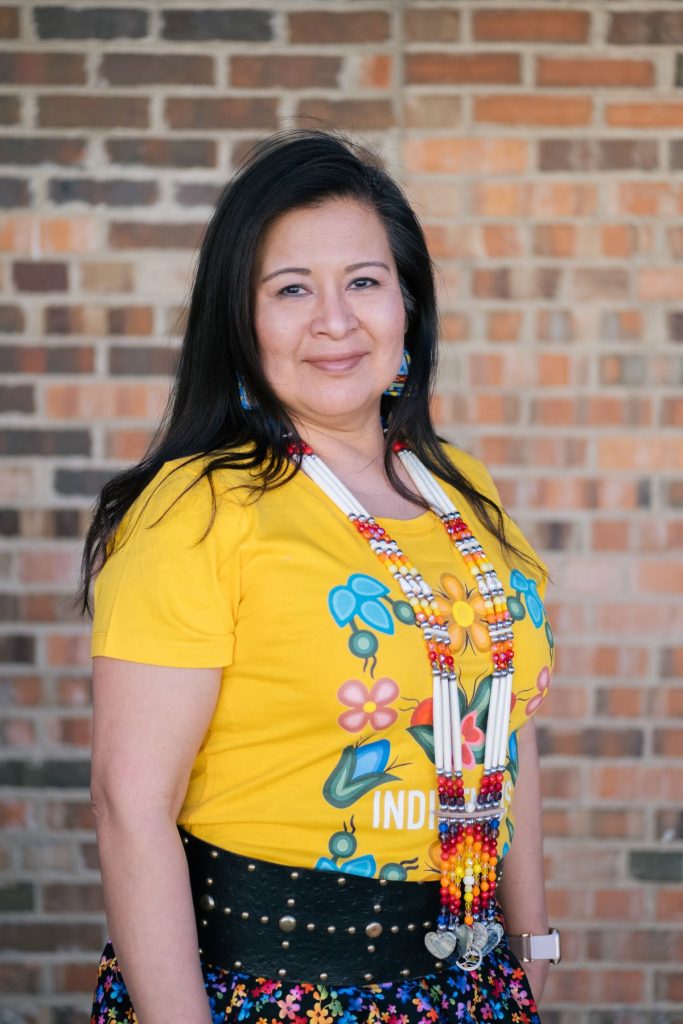
From the moment Onna learned about CDFIs, she knew she wanted to get involved and be a part of one. She left her 15-year tenure with the federal government, became a consultant, and returned to the classroom to get her master’s degree in community development. Five-and-a-half years ago, she was offered her dream job at BHCLF.

Building Trust Through Shared Experiences

When Onna took over the reins at BHCLF, she faced a steep learning curve; however, she wasn’t afraid to ask for help. She reached out to her peers at other CDFIs, particularly those working at the handful of Native, urban CDFIs in the country, for guidance and advice. With the support of her CDFI network and her board, Onna helped to get BHCLF certified within 18 months of becoming the Executive Director. Since then, the CDFI has brought in over $1.2 million in grants, deployed more than $77,000 in loans, and launched numerous financial education programs. Additionally, BHCLF created a consolidated debt program to help community members defeat the payday loan cycle they were stuck in.

Because BHCLF is designated as a Native CDFI, 51% of its clientele has to be Native American. Onna, however, estimates 90% of BHCLF’s clients are Native. Of those clients, most work within western South Dakota’s tourism industry, making minimum wage or less. In Rapid City, of the 10% of the population that is Native American, more than 50% live below the poverty line, a statistic that’s being compounded by the increasing cost of living and lack of affordable housing. “It’s really challenging to live here, financially,” Onna said. “In order to make rent for the average $1,000/month home at the wages people make, they have to work one-and-a-half full-time jobs.”
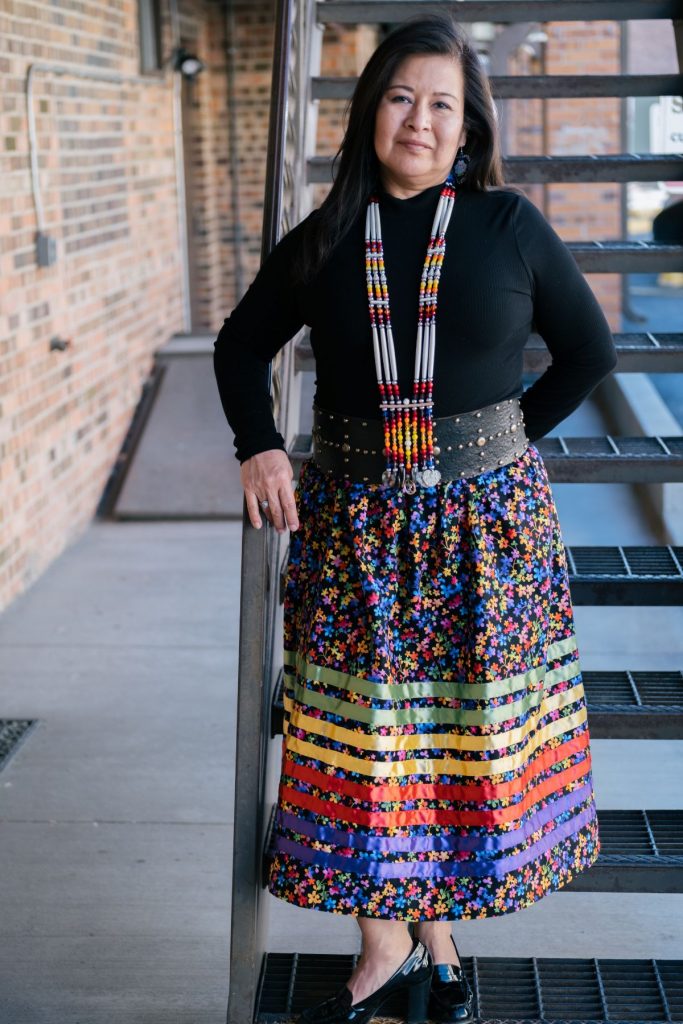
Given the realities of living in Rapid City, when BHCLF reached a point where it could hire two full-time staff members, Onna wanted team members who reflected and understood the surrounding community. That’s exactly what she got when BHCLF hired Dr. Shannon Ahhaitty and Nikkole Bostnar. “All three of us women have had some form of trauma we’ve had to overcome,” she said, “and we have all had to scrape by with pennies. We’ve all used the social service system, and we’ve all been single parents, so our clients see we actually get it.”
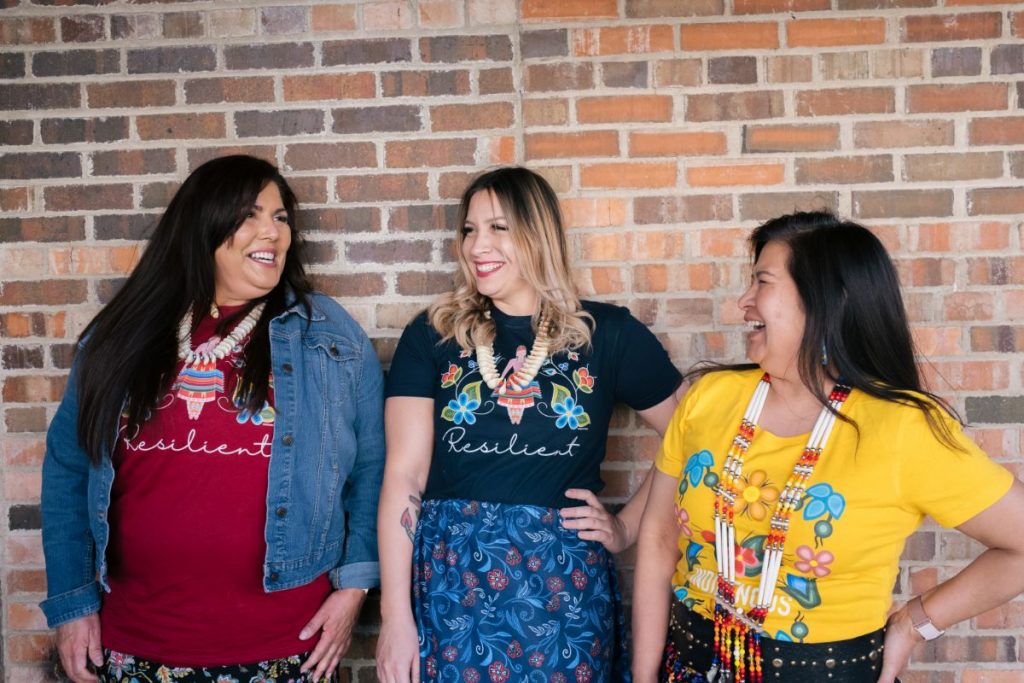
Onna says that her team’s ability to relate to BHCLF’s clients — or rather, BHCLF’s clients’ ability to relate to her team — is one of the ways the CDFI has been able to build trust and find success in its community outreach efforts. Additionally, all of BHCLF’s curriculum is Native-based, which is another way the CDFI has been able to build trusting relationships with its clients and establish itself as a recognizable placeholder in its community. In fact, unlike other CDFIs, lending isn’t BHCLF’s number one priority. Instead, its programmatic offerings are centered around financial education, mentorship for entrepreneurs, first-time homeownership, and youth outreach. According to Onna, each of these programs is about “getting people in the door.”

For example, in December, BHCLF received a small grant from the NDN Collective to help community members impacted by the pandemic. In order to be able to apply for utilities and rent assistance, however, community members had to complete BHCLF’s financial education class. According to Onna, nearly 40 people took the course and received funding. “Getting them in the door is the goal, because that makes them more curious about how we can further help them,” Onna said. “And then, over time, the assistance we provide helps them get to a point where they can start thinking about their futures, whether that’s buying a home or paying off debt or anything.”
“Amazing Things” To Come

Onna and her team at BHCLF have big plans for the CDFI’s future. Among their long-term goals are setting up financial education classes in the surrounding school systems and establishing a community center-esque space where community members can meet. More so, BHCLF recently received funding to help 20 local artists affected by the pandemic build their online sales platforms. In addition to the programmatic support she and her team are offering, Onna is aiming to provide BHCLF microloans to at least a quarter of the artists to further support them. It’s the kind of creative pairing of education and lending Onna wants to do more of at BHCLF.

“We just have to get really creative when it comes down to helping our clients,” Onna said. “But I always tell clients that if they’re able to find another organization who’s willing to lend them money, go for it because that means we got them to the point where they are loan ready, and to me, that’s a success.”

What’s also a success is Onna’s journey from where she was as an 18-year-old to where she is today. It hasn’t always been easy, and she’s been dealt plenty of setbacks and loss, but Onna strives to focus both on the good and on BHCLF’s mission to strengthen the financial future of her community. Not surprisingly, she has no plans of stopping anytime soon.

“As soon as I got this job, I knew this is where I needed to be,” Onna said. “I still don’t know how it’s all going to come together sometimes, but I love my job, and I have ginormous visions for this organization. Every day, I tell my team ‘we are going to do amazing things,’ and they tell me ‘we know!’”

Learn More

  • Black Hills Community Loan Fund is dedicated to creating financial opportunities for economically disadvantaged families who aim to strengthen their financial future in the Black Hills Region.
  • CNote is a women-led impact investment platform that uses technology to unlock diversified and proven community investments to generate economic mobility and financial inclusion.
By Borrower Stories, Migration V1

How Elevation Community Land Trust is Taking Affordable Housing to New Heights across Colorado

Stefka Czarnecki Fanchi has always been a big believer in homeownership. Both of her parents were teachers; however, her dad “built” every house Stefka’s family ever lived in, whether that meant physically building the structure or making improvements to what was already built. According to Stefka, she has lots of childhood memories as a kid on construction sites, and she was aware, from an early age, how special it was — emotionally and financially — for a family to have a house to call home.

Stefka Fanchi, President and CEO of Elevation Community Land Trust

Given that passion, it’s not surprising that Stefka has only ever worked for nonprofits, including jobs in high school and college, as well as five years working in local government. However, in 2004, Stefka was able to weave her deep-seated passion for affordable housing into her career when she took a position at Habitat for Humanity of Colorado’s state support organization. For the next 14 years, Stefka helped to support the 30-some Habitat for Humanity affiliates across the state by fostering and developing partnerships and raising funds. Although Stefka loved her job, she couldn’t ignore the buzz that was being created at the end of 2017 about the creation of a new community land trust in the Metro Denver Area. Recognizing that there wasn’t a robust funding mechanism for affordable homeownership in the region, a group of funders created Elevation Community Land Trust to help shrink the gap and create permanently affordable homes.

The community land trust model blossomed out of the civil rights movement, and the first community land trust was formed in the late 1960s in rural Georgia by a group of Black farmers who wanted to own their own land. What they helped to create was a model in which they could communally own the land while at the same time creating opportunities for individual families to participate in the wealth that came from homeownership. Therefore, homes are less expensive because buyers aren’t buying the land, which is what escalates in cost over time, and in exchange for that discounted price, buyers agree to pass that opportunity onto the next buyer. In this way, by splitting the land from the houses and having a strict resale formula that limits the appreciation of homes, community land trusts are able to keep affordable housing affordable. Today, there are more than 230 community land trusts throughout the United States, with many more scattered across the globe.

Generally, these trusts are owned and operated by nonprofits, and unsurprisingly, Stefka wanted to get involved in Elevation Community Land Trust. She was particularly drawn in by the community land trust model itself. According to her, the typical way of investing in affordable homeownership has been via down-payment assistance, which is focused on the buyer, not the real estate. The community land trust model, she says, flips the script on the traditional approach to affordable housing by putting capital and resources into real estate, much like public infrastructure. “The community land trust model is a much more responsible use of public funds,” she said, “because it is able to be recycled time and time again so that we don’t have a big windfall or a big subsidy coming into one family. Instead, we’re able to make this so that generations of families can benefit from the same home.”

A Creative, Strategic Lender

Elevation Community Land Trust launched at the end of 2018, and Stefka took over as president and CEO in November of that year. Since then, the nonprofit has hired nearly a dozen staff members. More impressively, the trust has more than 200 homes in its portfolio and 75 homeowners have closed on their homes. Another 330-plus housing units are in the nonprofit’s immediate pipeline, meaning that they’ll be completed over the next two years.

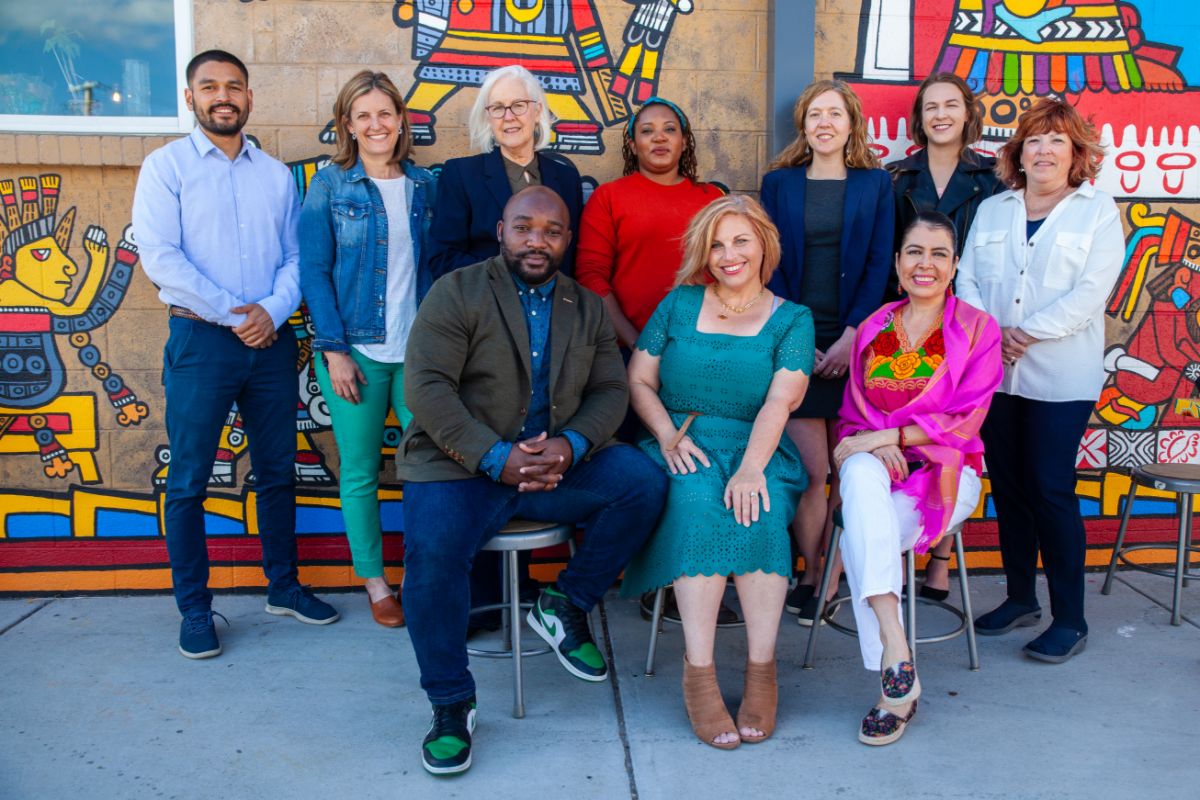
The Elevation Community Land Trust Team

Stefka is the first to admit that the public-private partnership’s early success metrics are a result of a robust coalition of actors, including local municipalities, state agencies, housing authorities, foundations, individual donors, and Impact Development Fund (IDF), a Colorado-based Community Development Financial Institution (CDFI) that creates economic opportunity by delivering flexible capital to develop and preserve affordable housing and nonprofit facilities in under-served communities across the state. CNote partners with CDFIs like IDF in communities across the country, channeling capital to fund social missions like women’s empowerment, entrepreneurial funding, and affordable housing.

Stefka had become a cheerleader for CDFIs when she was working at Habitat for Humanity, where local affiliates needed local financing to build homes, and she welcomed the opportunity to work with IDF when she joined Elevation Community Land Trust. That was especially true when the nonprofit began work on one of its first projects: a 92-unit condominium development called La Tela, located in Denver’s Art District on Santa Fe. Even with public and private funds, Elevation Community Land Trust had to put $3 million into the project, which would take two years to complete. “It’s expensive to use conventional financing over that long of a hold,” Stefka said. “We started talking with IDF about our cashflow pinch points. The great thing about IDF is that they are strategic thinkers, and we started talking about what we wanted to accomplish, not what we needed, and how we can work together to get that done.”

According to Stefka, unlike other lenders, Elevation Community Land Trust was able to access Capital Magnet Fund (CMF) dollars through IDF, which came with a 1% interest rate. More so, IDF was able to work with Elevation Community Land Trust to save the nonprofit financing charges over time, which in turn reduces the total development cost of each unit of housing built. In addition to that low-cost capital, IDF also offered Stefka and her team industry know-how that they wouldn’t have received elsewhere. “Affordable housing projects are super complex,” she said. “One of the things that is often a challenge for a bank is the idea of doing something that is not the ‘normal way.’ The creativity, expertise, and willingness to think outside the box on things that might be traditionally unbankable really is where the value of IDF and other CDFIs lie.”

Building into the Future

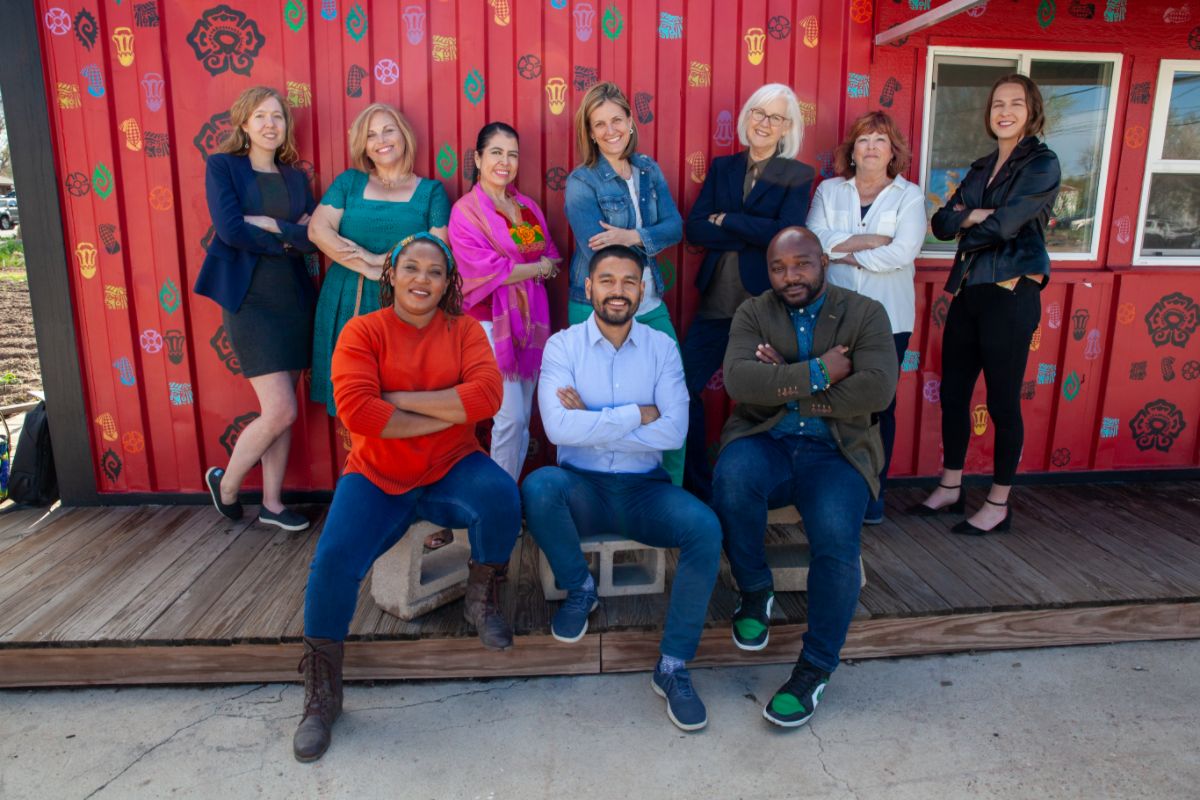
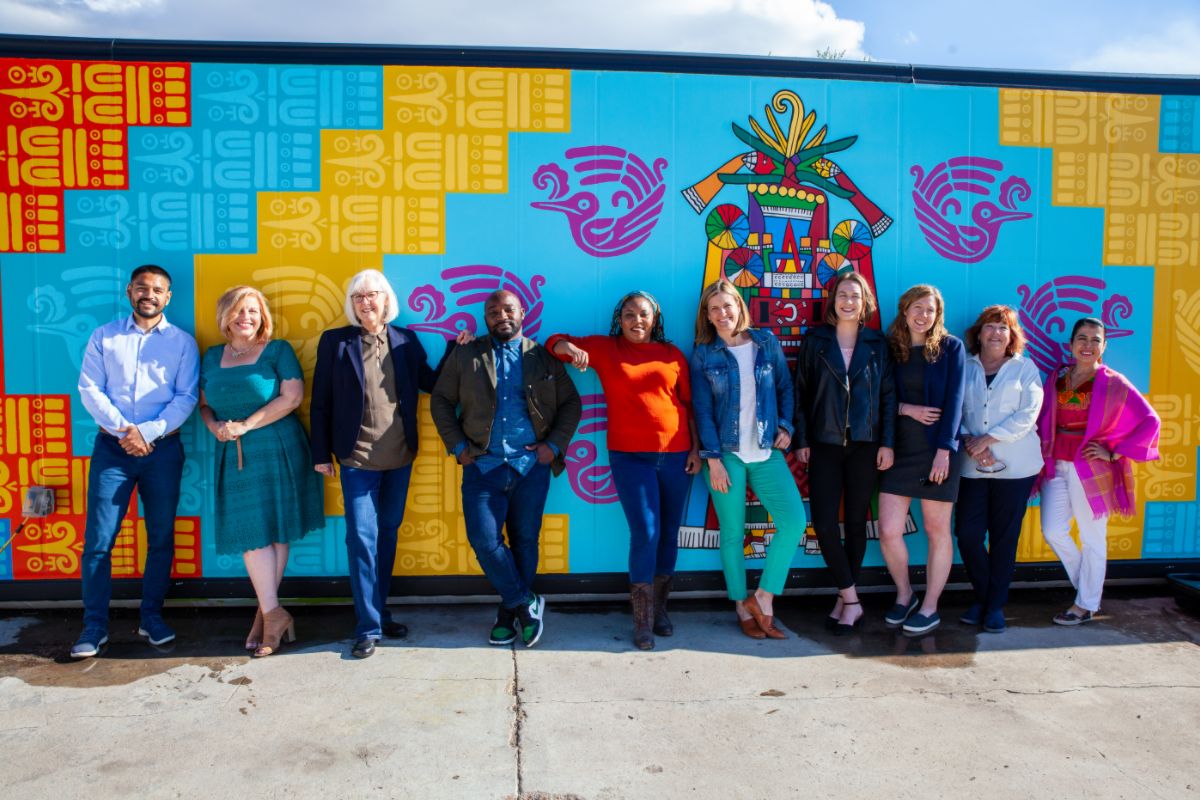
These photos were taken in Westwood, Denver, the location of Elevation Community Land Trust’s Stay in Place Program.

Stefka and her team at Elevation Community Land Trust have lofty goals: together, they want to add 1,000 affordable home-ownership opportunities to the Colorado housing market by 2027. They don’t plan on stopping there; however, that’s the critical stabilization point where, organizationally, the trust will be able to bring in enough revenue to cover its operating costs, which means the nonprofit won’t have to rely on philanthropy to stay above water.

The need has never been greater. According to Stefka, over the past year, Elevation Community Land Trust has seen a 10-fold increase in its application rates. It’s too early to know if the inundation of people wanting to buy affordable homes is a result of COVID or something else, but the present reality has added a sense of urgency — and purpose — to the land trust’s day-to-day operations. That’s led to deepening conversations around how Elevation Community Land Trust can help to proactively create racial equity through its work. In its first impact evaluation, the nonprofit learned that the percentage of its homeowners who identify as Black, Asian, Latinx, and female-heads of household are as much as three times higher than the general market.   

“We’re looking at what tools are at our disposal so that we can make real impact generationally,” Stefka said. “Homeownership and building something for yourself and your family is something that’s a real cornerstone to American life, and when people are shut out from that opportunity, they are shut out from the American dream, so we want to do everything we can so that everybody can share in the prosperity that is part of this crazy real estate market that we’re experiencing in Colorado.”

Learn More

  • Elevation Community Land Trust makes homeownership more accessible for Colorado families through the community land trust model, a proven tool for creating and preserving accessible, inclusive communities for generations.
  • Impact Development Fund (IDF) is a Colorado-based Community Development Financial Institution (CDFI) that creates economic opportunity by delivering flexible capital to develop and preserve affordable housing and nonprofit facilities in under-served communities across the state.
  • CNote makes it easy to invest in great CDFIs like Impact Development Fund, helping you earn more while having a positive impact on businesses and communities across America.


By CDFIs, CNote, Migration V2

CDFI Loan Fund Capital Needs Survey: Why and What’s Next?

CDFI Loans Fund Capital Needs Survey: Why and What’s Next? 

The CNote CDFI Loans Fund Capital Needs Survey supports a data-driven approach to investing in communities.

What is the CNote CDFI Loans Fund Capital Needs Survey?

CNote seeks to empower investors to make informed decisions and target investments where the need is greatest. To specifically assess and catalog current and expected needs for CDFIs, CNote has undertaken a bi-annual CDFI Loans Fund Capital Needs Survey to make CDFI-data easily accessible. 

Community Development Financial Institutions (“CDFIs”) are private organizations fully dedicated to principled, affordable lending that enables under-resourced individuals and communities to participate in the economic mainstream. 1

Their commitment to keep capital flowing into communities is crucial to ensuring healthy local economies. The need is great. The data to drive investment is the missing piece.

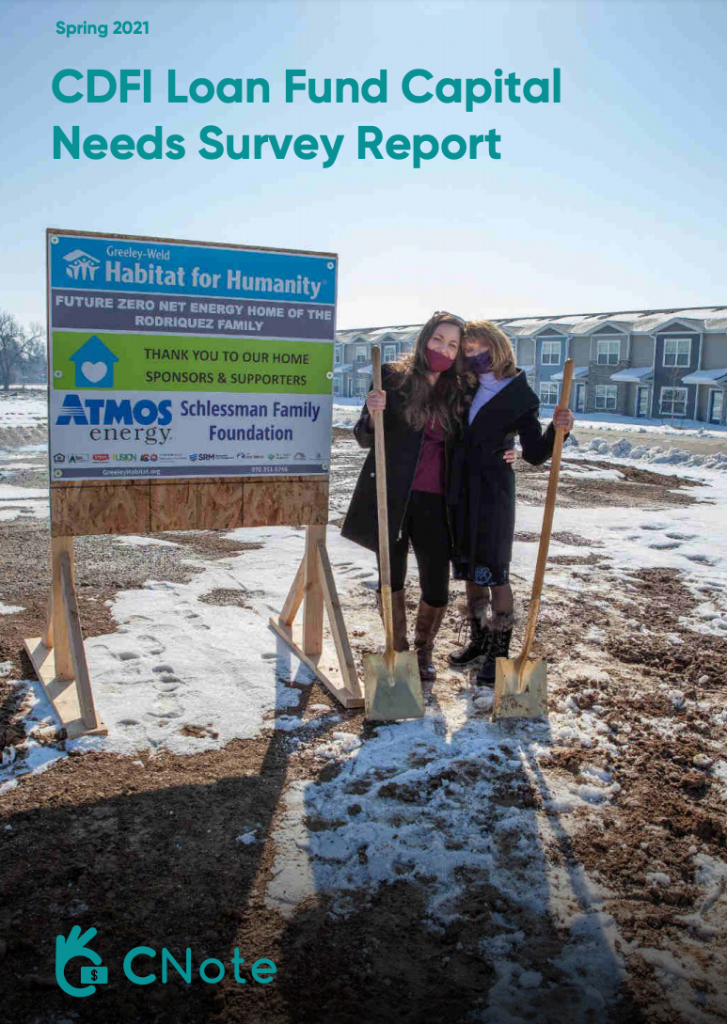
The initial CDFI Loans Fund Capital Needs Survey, published in Spring 2021, polled 52 CDFIs across the country (around 10% of the existing CDFI loan funds in the US) about their capital needs and expectations. The data collected included the amount of capital the CDFIs hoped to deploy, optimal interest rates, segments that are underfunded and underserved demographics. 

We believe in data-driven investment

Why This Survey?

The goal of the survey is to give investors an understanding of the landscape of opportunities in the CDFI industry so they can make data-driven decisions and increase impact. Additionally, it provides useful benchmarks for growing and emerging CDFIs as they assess the price of capital and other concerns. 

Bridging the knowledge and opportunity gap between investors (large and small) and the options to invest in CDFIs is the best way to align expectations among investors and CDFIs. The result should be increased investment in the CDFI industry, as investors and partners better understand demands and opportunities. That means more crucial dollars to local businesses, first-time entrepreneurs and homeowners and jobs created in underserved communities across America. And more investment in women and people of color. When it is needed most.

CDFIs are a powerful engine for economic change

What the Future Holds 

CNote will continue to commit resources to the CDFI Loans Capital Needs Survey and provide more data about CDFI capital needs to drive efficient and high-impact investing decisions. 

The CDFI Loans Fund Capital Needs Survey will become a longitudinal study (with discrete findings as well), with bi-annual reports released in mid-April and mid-August every year. CNote will devote resources to growing the number of respondents and continue to chart the expanding landscape for investors and CDFIs alike. 

Because the industry is diverse (some CDFIs only originate small business loans while others focus on affordable housing or other priorities), an integrated snapshot of trends may help investors refine baseline expectations for impact investing that meets their goals. 

A Reliable Source for Investors

By capturing longitudinal data around how capital needs evolve and identifying areas where investments are needed, CNote hopes that the Survey becomes a reliable, information-rich source for investors to consult. 

Some of the ways the Survey can support investors and other entities are by: 

  • Enabling investors to make better allocation decisions by providing timely, relevant and up-to-date data.
  • Educating new CDFI investors about the state of the market and how to work with CDFIs. 
  • Highlighting areas for investment and hopefully filling gaps by driving capital towards them.

For example, according to the initial findings:

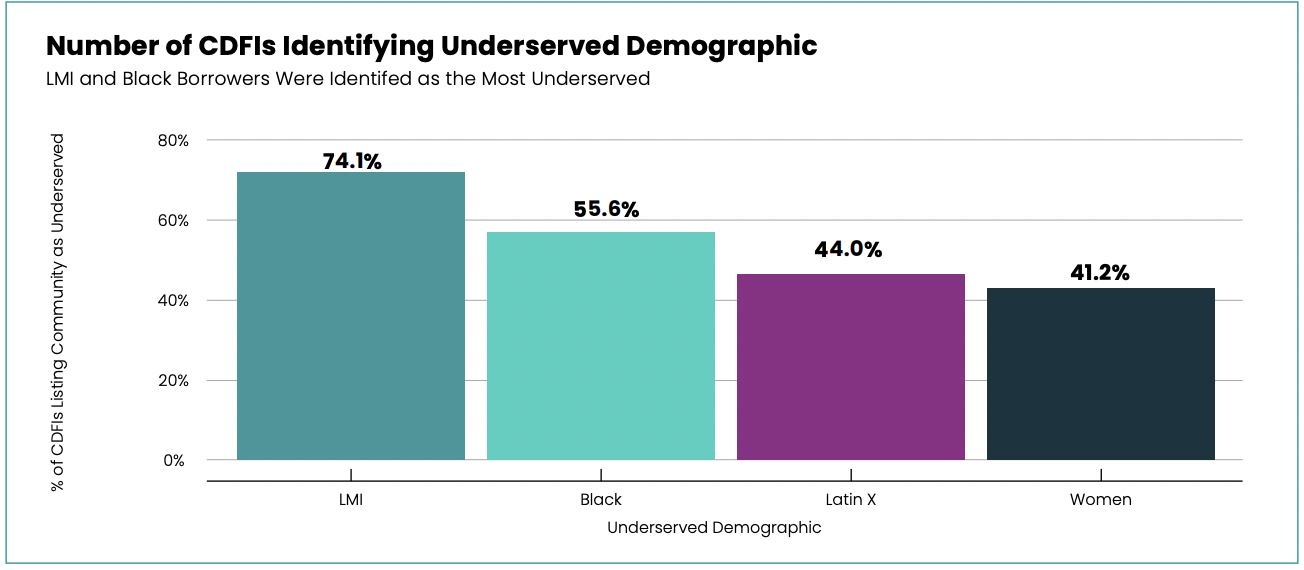
The most underfunded groups according to responding CDFIs: 

  • 74% Low-to-Moderate Income (LMI) borrowers
  • 55% Black borrowers 
  • 44% Latinx borrowers 
  • 41% Women borrowers

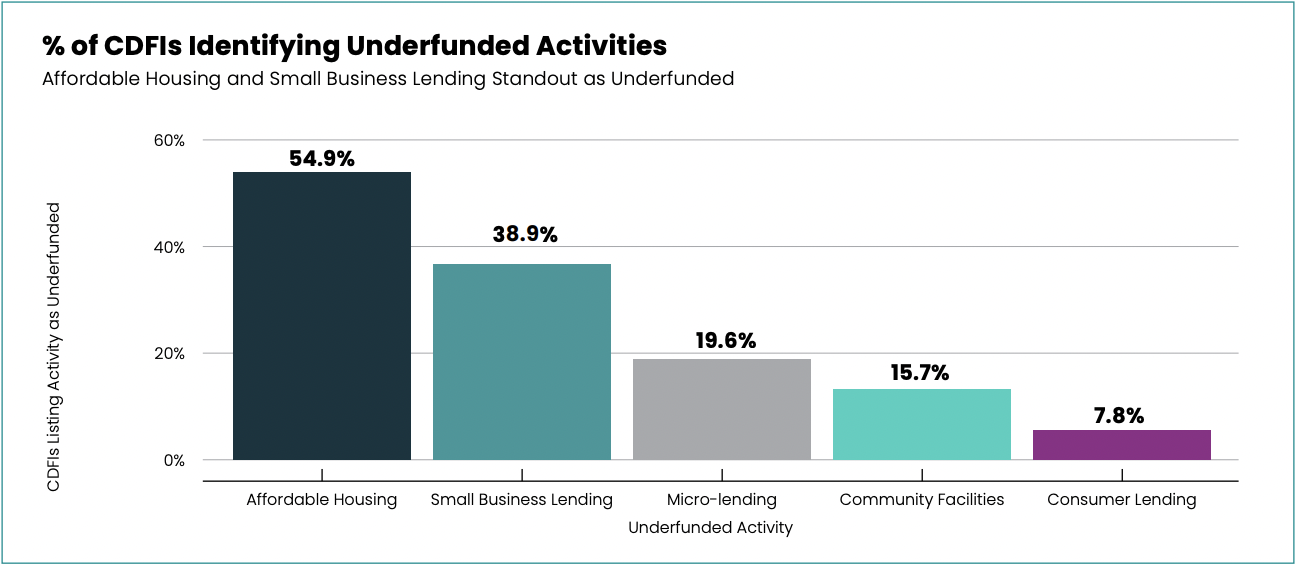
The most underfunded segments according to responding CDFIs:

  • 55% affordable housing lending 
  • 39% small business lending

The hope is that this data will encourage investors to commit more capital to these groups and segments. 

  • Providing a robust data set that could have utility outside of investment such as informing policy decisions, government funding, and awards programs.
  • Demonstrating the nature of CDFI funding, whether static or evolving, and how broader economic trends may impact community lenders. 

What’s At Stake?

Economic and racial justice can be furthered through enlightened investment.

Economic and racial justice can be furthered through enlightened investment. Job creation, funding of BIPOC-owned small businesses and support for affordable housing development can make a significant difference in leveling the economic playing field. 

That’s why CNote is doing the work on the CDFI Loans Capital Needs Survey, to increase the impact of impact investing.

By CDFIs, CNote, Migration V2

CNote survey shows major opportunity for corporations, foundations and other accredited investors to meet demand for capital in underserved American communities

  • 52 CDFIs could pump at least $182M into underserved communities within a year if they could access capital at favorable rates
  • CDFIs serving Black and low- to moderate-income communities report a persistent capital shortfall, with housing and small business lending the most underfunded

Oakland, CA—Loan funds certified as community development financial institutions (CDFIs) have an urgent need for capital over the next six to 12 months, particularly to meet the needs of low- to moderate-income, Black, Latinx and women borrowers, finds a new report from CNote, a women-led fintech firm working to close the wealth gap for women and people of color.

CNote’s CDFI Loan Fund Capital Needs Survey Report, the first in a planned semiannual series, is designed to map CDFI capital needs and point corporate, foundation and other accredited investors toward high-impact investment opportunities. As an intermediary between these mission-driven institutions and investors, CNote seeks to provide a frictionless platform that steers capital to where it’s most needed.

“This survey shows that CDFI loan funds are open to new investors, and corporations and foundations increasingly are stepping up to work with them,” says Catherine Berman, CEO and co-founder of CNote. “We also see that the communities most in need of capital continue to be underfunded. Institutions that want to fully deliver on their diversity, equity and inclusion commitments have a real opportunity here.”

Key Findings

Capital demand: Over 75% of survey respondents expressed an “urgent” or “somewhat urgent” need for capital over the next six to 12 months, and 65% said their capital needs had increased during the past 12 months. Collectively, the 52 CDFIs surveyed (about 10% of the total CDFI loan fund market) said they could deploy at least $182 million within the next year.

Unmet needs: CDFIs surveyed said their most underfunded lending areas are affordable housing (55%) and small business (39%).

Underserved borrowers: Asked which demographics are most underserved due to lack of capital, CDFIs most frequently cited low- to moderate-income borrowers (73%), followed by Black (59%), Latinx (45%) and women (41%) borrowers.

Rising capital partners: Asked which investor segments are showing increased interest, 55% of CDFI respondents cited foundations, over 37% cited corporations and 33% cited high-net-worth individuals. Those that work with capital intermediaries like CNote said the primary benefits are access to new investors (more than 69%), followed by industry knowledge (57%), infrastructure (53%) and due diligence simplicity (49%).

“CDFIs strive to drive more capital into the neighborhoods they serve, to reach the next layer of borrowers and to finance the next critical community development need. These plans are often stifled by lack of affordable capital—as this survey demonstrates,” said Amir Kirkwood, chief investment officer at Opportunity Finance Network, the national association of CDFIs. “Capital deployed through impact-forward financial vehicles like OFN’s Finance Justice Fund and CNote’s Wisdom Fund fuel real progress on affordable housing, small business creation and retention, clean energy and other community priorities.”  

Methodology

CNote received survey responses from 52 CDFI loan funds, about 10% of the 554 CDFI loan funds across the U.S. that were active during the December 5, 2020, to January 19, 2021, survey period. Participants were sourced from CNote’s partner network, network referrals, online CDFI forums and direct outreach.

CNote plans to repeat the survey every six months. The firm will open a new survey in June and publish data in the fall. CDFIs are encouraged to participate here: https://wpstaging.mycnote.com/capital-needs-survey/.

About CNote

CNote is a women-led impact investment firm on a mission to close the wealth gap through financial innovation. Using the power of technology and a community-first framework, CNote enables corporations and foundations to efficiently invest and deposit cash at scale in community development financial institutions (CDFIs). It also delivers timely and transparent impact reporting. CNote is a Certified B Corporation that has earned “Best for the World” honors from B Lab and was named “Best Women-Owned Business” by the United Nations’ Women’s Empowerment Principles program.

By CDFIs, CNote, Migration V2

PayPal Announces Investments In CNote’s Wisdom Fund and Promise Account

Today, PayPal Holdings, Inc. (NASDAQ: PYPL) today announced it will deposit $135 million of its capital into mission-driven financial institutions and management funds that help underserved communities of color to fight barriers to economic equity, including  CNote’s Wisdom Fund and various smaller depository institutions through a CNote Promise Account. These investments are part of PayPal’s $535 million commitment to strengthen Black businesses and underserved communities, and help drive financial health, access , and generational wealth creation.

You can read PayPal’s full announcement here.

Dan Schulman, President and CEO at PayPal, shared these comments on this initiative “A critical component to closing the racial wealth gap is economically empowering underrepresented communities that have traditionally been shut out of opportunities to build and sustain wealth. Whether it’s helping someone purchase a home or open their own business, these institutions are on the front lines of creating financial stability and expanding opportunity for traditionally underserved communities. We are proud to partner with them as we work together to advance economic equity and racial justice.”

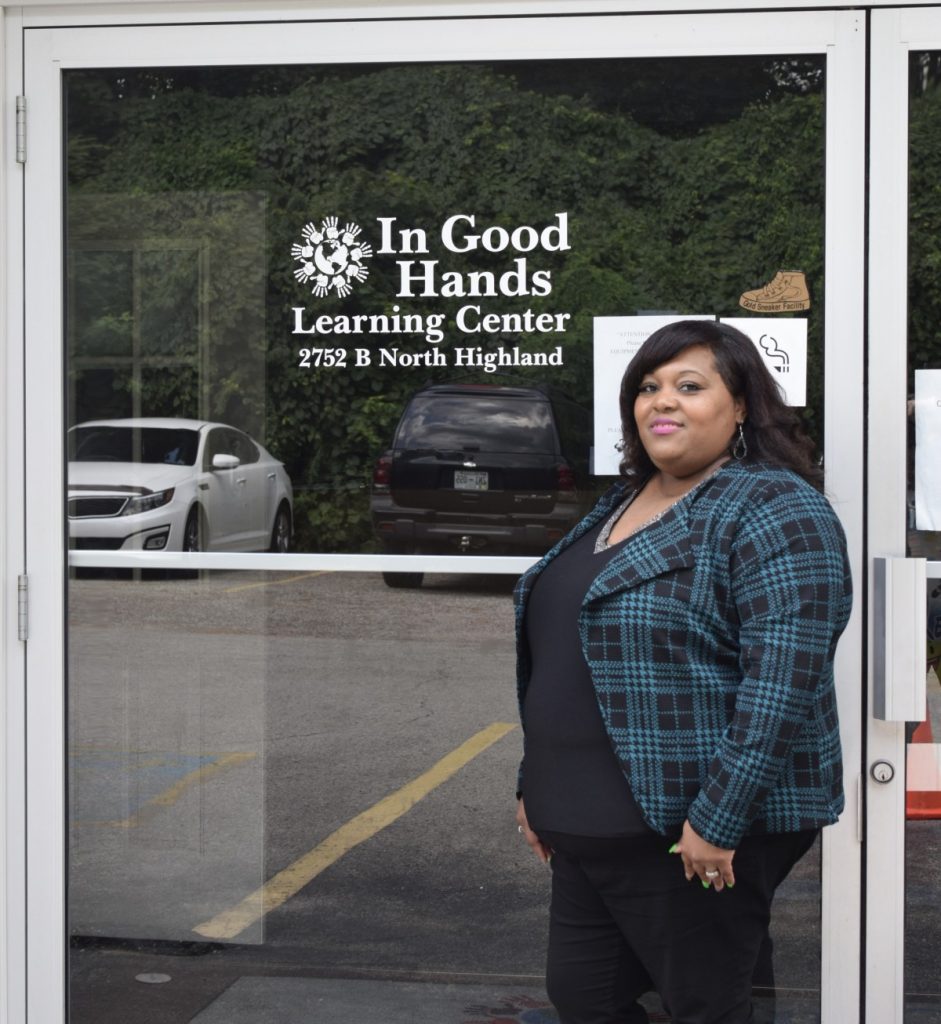
Ebony Harris is the type of small business owner PayPal’s investments support. Her business, In Good Hands Learning Center, served families in Jackson, TN throughout the pandemic so essential workers in her community could continue to work. Read her story.

John Rainey, Chief Financial Officer and EVP Global Customer Operations at PayPal, added “through strategic, sustainable investments in these institutions we can tangibly address inequality and work to help close long-standing lending gaps, creating opportunities for communities to build and sustain wealth.”

“PayPal’s investment in the Promise Account will mobilize deposits across CNote’s nationwide network of mission-driven depository institutions, fostering greater capital access and economic justice for communities of color,” stated Catherine Berman, CEO, CNote. “PayPal’s Wisdom Fund commitment is an investment in the future of women of color, providing the loan capital, business coaching and funding research to fuel greater economic freedom and wealth creation for BIPOC women business owners across America. Working together, we can help address the system, not just the symptoms, behind economic inequality in America.”

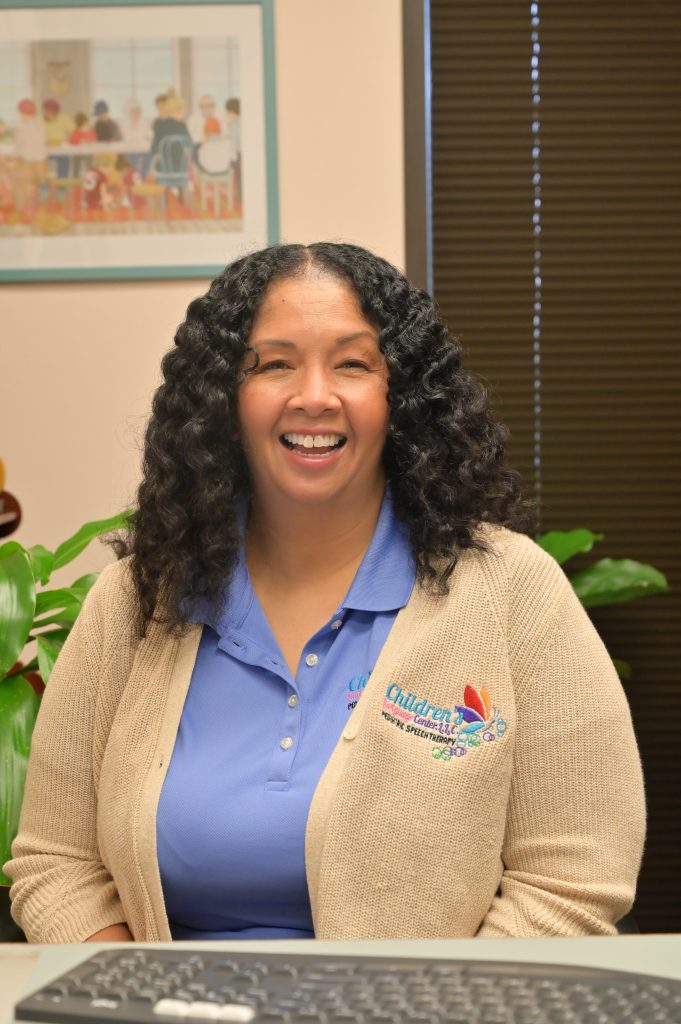
Michea Rahman is the founder of Children’s Language Learning Center, a speech therapy center with a mission of providing quality pediatric speech therapy services to children. Another illustrative beneficiary of this PayPal investment, Michea received a PPP loan from a CNote Partner which allowed her business to weather the effects of COVID-19. Read her story.

About CNote

CNote is a women-led investment platform that empowers individuals and institutions to invest in communities to further economic equality, racial justice, gender equity, and address climate change. With the aim of closing the wealth gap, CNote’s fixed income and depository products provide a diversified and scalable way to support job creation, small business creation, affordable housing development, and lasting economic growth in communities that need it most. CNote technology allows anyone, from large corporations to first-time investors, to generate measurable social and economic returns by investing in the causes and communities they care about.

Make an Investment Today | Learn more about CNote | Products | Home