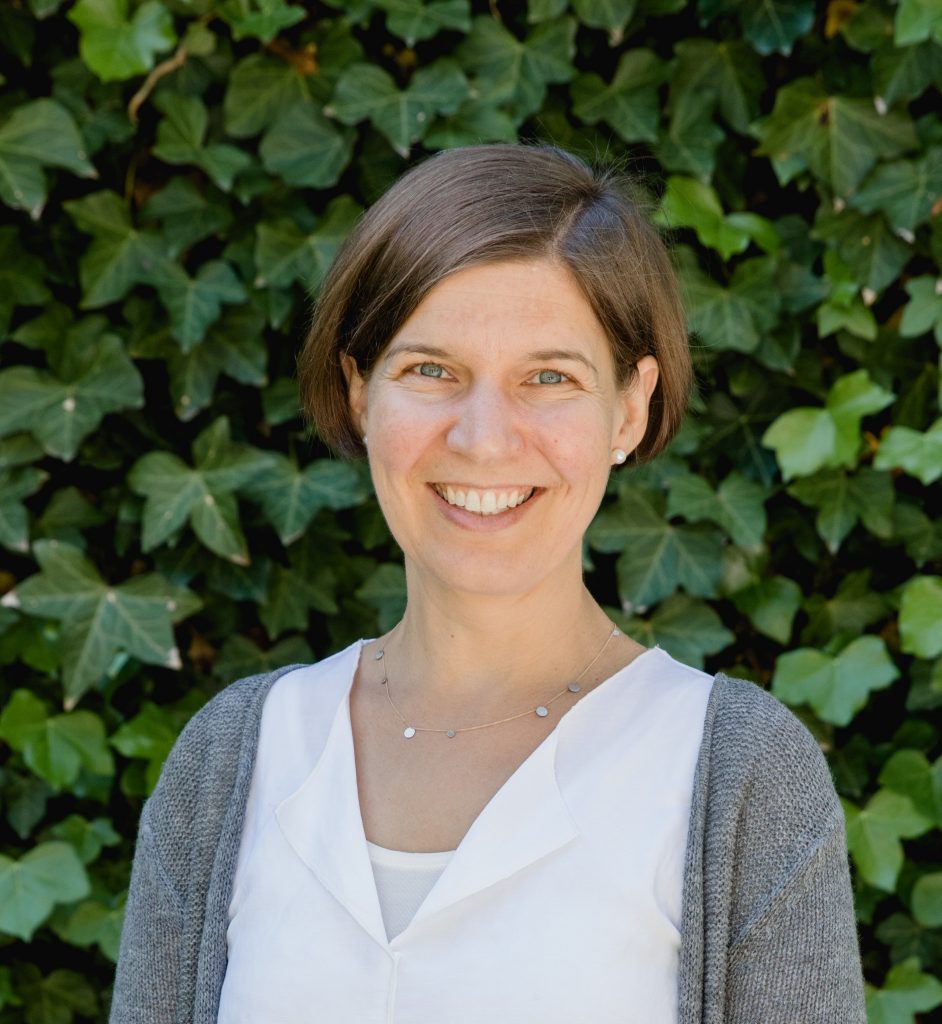
Liza Fleming-Ives may be new to her role as executive director at the Genesis Fund, but she’s not new to the world of community development finance. Instead, Liza has over 20 years of community development experience, 15 of which have been with The Genesis Fund, a Maine-based Community Development Financial Institution (CDFI). Since 1992, the Genesis Fund has been dedicated to bringing together resources to support the development of affordable housing and vital community facilities, mainly by providing financing and technical assistance.

Liza holds a B.A. in American Studies from Smith College and a Master’s in social work from the University of Michigan. She completed the Citi Leadership Program for Opportunity Finance and currently serves as Chair of the Maine Affordable Housing Coalition.
We caught up with Liza to talk about her career path, community development, and challenges facing CDFIs, and we got the chance to hear her thoughts on how the industry has grown over time and what she thinks the future holds for community finance.
CNote: What drew you to community development work?
Liza Fleming-Ives: I was drawn to community development work when I graduated from college. I had become aware of racial and economic inequity when I was in middle school and my family moved to New Haven, Connecticut — a city with enormous privilege, and also extreme poverty. Immediately after college, I began working for a housing organization bringing together community resources for the benefit of homeless and low-income families. I saw first-hand how stable housing and supportive services could transform people’s lives. When I moved to Maine after graduate school, I discovered the field of community development finance and the transformative power of increasing access to capital as a way to build more just and equitable communities.
CNote: What big concerns do you have about your communities in Maine?
Liza Fleming-Ives: People in Maine work hard to make ends meet, but many Mainers live on fixed incomes or have incomes that have not kept pace with rising costs of living. Maine faces a serious shortage of affordable housing. Many renter households are severely cost-burdened, paying over half their income on rent. Finding a safe and affordable place to live is an increasing challenge all over the state, and many households routinely sacrifice necessities such as healthy food and healthcare in order to pay rent and avoid eviction.
The global pandemic and economic fallout caused by COVID-19 have exacerbated these challenges for low-income households and exposed the need for a stronger safety net for people living on the margins. And this crisis has taken a disproportionate toll on the health and economic well-being of racial minorities and immigrants in Maine. Many have lost their jobs. Others are among the low-paid hourly workers who risk their health by going to work at grocery stores, nursing homes, and food processing facilities.
The Genesis Fund works to remove barriers to prosperity which stand in the way for marginalized and underserved people. We work to create and preserve affordable housing opportunities and to build and expand community facilities to ensure that Mainers have access to child care and healthcare services, and reliable sources of healthy food. We play a critical role in bringing together resources to address these most pressing challenges in our communities to help low-income and marginalized people thrive.
CNote: What’s unique about The Genesis Fund’s projects compared to other CDFIs?
Liza Fleming-Ives: The Genesis Fund’s mission is to bring together resources to support community development projects, and we seek to support projects that might not happen without our assistance.
One of our driving principles is to go where other financial institutions won’t — or can’t. We aim to be a creative and flexible partner to community organizations by filling critical gaps in financing or in expertise to support community development efforts. We take a collaborative approach to our work, and as a result, often partner with other funders or lenders to make a project possible.
Beyond our support for individual projects, we play a unique role in shining a light on areas of need in order to generate new public and private resources, beyond our own, for the benefit of low-income and marginalized people and communities.
CNote: When you say that The Genesis Fund provides “technical assistance,” what exactly do you mean?
Liza Fleming-Ives: Like most other rural states, Maine has relatively few nonprofit developers and intermediaries specifically focused on improving housing and community development opportunities. To help remedy this problem, the Genesis Fund plays an active role in supporting organizations working on these issues to ensure their long-term success. Often, a small group sees a need in their community and wants to help – but doesn’t know how to proceed – and contacts the Genesis Fund for help.
We customize our assistance to the needs of our community partners, but generally, this assistance can include help with assessing project feasibility, drafting project plans and budgets, identifying funding sources, and securing those sources.
The amount of assistance we provide varies by project. Some community partners need help with a single step in the project development process, while others need assistance from beginning to end. With decades of community development experience, our staff is available to provide whatever level of support is needed to help make a project successful.
CNote: What are some of the challenges you face in your role as executive director of The Genesis Fund?
Liza Fleming-Ives: This is certainly a challenging time right now in our country as we struggle with the impacts of the COVID health crisis, the economic downturn, and continued inequities caused by systemic racism. As a CDFI leader, I feel more committed than ever to seeking out ways to carry out our mission, while at the same time ensuring the well-being of the organization.
At the Genesis Fund, we are fortunate that we came into the COVID crisis in a strong financial position, and despite the uncertainties of this time and the challenges facing many of our community partners, our portfolio of affordable housing and community facility loans remains stable. This strength and stability allows us to consider how we can do even more for the communities that we serve. We’ve been doing that by talking to borrowers to understand the challenges they’re facing and the needs that they’re responding to. As we’ve gained a better understanding of those needs, we’re responding by creating strategies to adapt our financing and programs and raising new capital from private and public sources.
CNote: What headwinds to growth does a CDFI like yours face?
Liza Fleming-Ives: For much of our history, we were considered a small CDFI. But in recent years, we have grown our assets to over $30M and our loan portfolio to over $22M, which makes us a mid-sized organization today. One of the challenges to growth at this stage is raising the capital, both equity and invested funds, to keep pace with the increasing demand for our financing and services. We have been fortunate to find partners like CNote, along with many other institutions and individuals, interested in investing their funds with us for a social and financial return on that capital. In order to continue our pace of growth and achieve even greater scale, we need to increase our visibility so that more people know about the critical role that we play in community development activities and the opportunity to join us as community investors and supporters.
CNote: Why do you think more people don’t know about CDFIs?
Liza Fleming-Ives: The CDFI industry has largely been made up of relatively small organizations, like the Genesis Fund, operating for years in local communities with just a handful of staff focused on carrying out the work. Many CDFIs have worked behind the scenes, investing the first money in to support a project or as a critical gap filler, making deals come together but without significant visibility. In many ways, CDFIs have been a well-kept secret.
In recent years, as the impact of CDFIs has reached almost every corner of this country, our visibility as an industry has grown. However, much more work is needed to tell the remarkable stories of our industry’s impact on individuals, organizations and communities and the transformative nature of the work we do. As an industry, CDFIs must do more to lift up the stories of our work and make them visible in order to attract increased capital from investors who are looking for investment opportunities that provide a social as well as financial return.
CNote: With so many great potential projects out there to fund, how do you decide how to allocate resources?
Liza Fleming-Ives: We really focus on making sure that we’re filling gaps in financing or services that can’t be provided by other community resources. When we’re considering taking on a new project or responding to an inquiry, we ask ourselves, “how can we bring together resources to make this project work? What’s the role that we need to play here? Can our involvement in some way leverage other resources or the involvement of another partner?”
We want to make sure that we’re using our resources where they’re needed most, and we want to bring in partners where it’s appropriate and possible to do so. We do a lot of lending in partnership with community banks, state agencies, peer CDFIs, and other community development organizations. So, it’s really about looking to make sure that the services we’re providing are not only bringing our financing and our resources to the table but strategically leveraging our network of private and public partners as well.
CNote: How has the industry changed or evolved over the course of your career?
Liza Fleming-Ives: While it may be a while still before CDFIs are well-known as a household name, the industry has gained significant visibility and recognition for the impact of our collective work over the last 15 years. CDFIs proved to be an essential part of our country’s financial system in supporting communities through the recovery from the Great Recession, and many CDFIs have grown to a significant scale since that time. The industry in general has succeeded in carving out a place as an essential and highly effective part of the financial sector.
As a result, the CDFI industry has seen a steady increase in the amount of funding appropriated by Congress for the CDFI Fund over the last decade. And in addition to public support, we’ve seen new partnerships with the private sector that demonstrate the degree to which business leaders recognize the significant value that CDFIs bring to effectively and efficiently getting capital to the communities that need it most, with incredible success and results.
While CDFIs have grown and professionalized over the past few decades, it’s really important that we remember that we are part of an industry that emerged from the civil rights movement, with the explicit goal of addressing the systemic racism that denied communities of color access to capital. We are reminded, especially in these past months, of the importance of staying true to our industry’s founding goals through our work: continuing to seek out ways to address racial disparities and financing projects which help marginalized communities overcome institutional barriers to prosperity.
CNote: Any big hopes for the industry going forward?
Liza Fleming-Ives: There are so many ways that CDFIs work to address the most pressing challenges that face our communities and our country. I hope the CDFI industry can continue to build scale in order to do more to ensure that all communities have access to the capital they need to thrive.
As CDFIs gain recognition for the incredible impact of our work, I hope that the industry will be able to create and leverage new resources, including access to equity grants as well as invested capital, to carry out our mission at greater scale. I remain hopeful that as CDFIs get better at sharing stories of the transformation that we make possible, new investors and supporters will be excited to join us and we’ll see significant continued growth in the sector.
CNote: Do you have any suggestions for folks who’re looking to take their first step into the world of community finance and development?
Liza Fleming-Ives: I always encourage people to reach out to learn about our work. When I started at the Genesis Fund, I found so many CDFI peers and leaders willing to talk and make themselves available to share their experiences. I’m so grateful to those leaders, and I definitely try to make myself available for folks looking to take their first step in the field today. I think internships are a great way for people who want to learn about community development finance to get a better understanding of our work. We’ve been very fortunate to have some wonderful interns over the years who have helped us with key projects while getting to know the industry. And as we continue to grow at the Genesis Fund, I’m hopeful that we can create paths into our organization for folks that are excited about community development and finance and want to dedicate themselves to developing their skills and gain experience in the field.

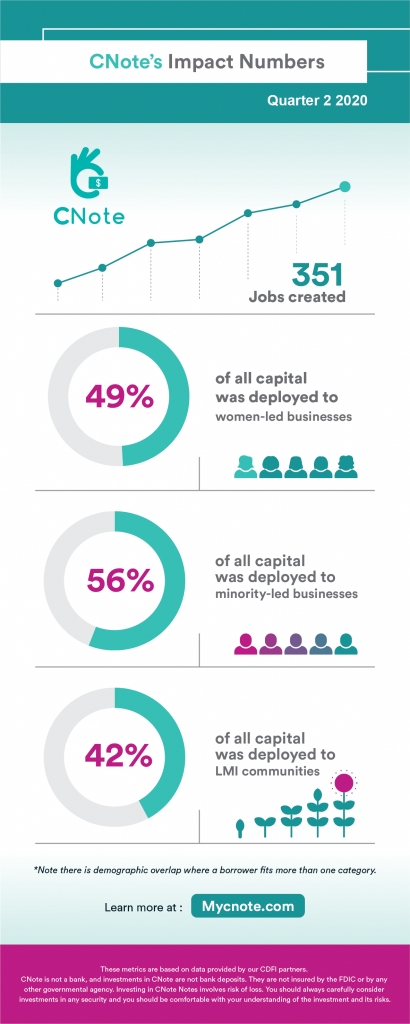



 In a 2009 industry assessment, the

 In their role as “financial first responders” CDFIs are perfectly suited to provide a rapid response to the pandemic. CDFIs have a long track record of absorbing economic turmoil and thriving during downturns while investing in underserved communities to help them weather unforeseen financial emergencies.