Monthly Archives

November 2019

By CNote, Migration V2

Investing locally for a global impact: An Introduction to How CDFIs are Addressing the Climate Crisis

CDFIs have a strong history of providing economic resources to financially under-served communities across America, helping to create jobs, fund small businesses, and support affordable housing development among other great projects.

With international attention and demand for action around the climate crisis, what role do CDFIs have in addressing this enormous challenge facing communities across America?

This webinar explores how CDFIs can proactively address the climate crisis and collectively scale their impact to build sustainable and resilient communities nationwide. It will also explain how investors can support CDFIs working in this space.

You’ll first hear from Elizabeth Rogers from CEI, a leading CDFI at the vanguard of community investing and climate change, and from Jen Leybovich who is leading a CDFI working group on the climate crisis. They’ll detail concrete examples of projects that are addressing climate change, along with sharing insights gained and plans for the future from the CDFI working group.

You’ll also hear from Yuliya Tarasava, the co-founder of CNote, an impact investing platform that works to connect investors with values-aligned opportunities to invest in CDFIs and target issues, like the climate crisis. Yuliya will detail the growing investor demand for climate-centered products and how increasing the pool of investor capital to support climate-centered initiatives by CDFIs can help address this urgent crisis.

If you’re looking to make investments that address the growing climate crisis or you’re a CDFI looking to find ways to get more involved in these issues, this webinar will be of interest to you.

You can watch the youtube recording below, or rewatch the full webinar experience using this link.


By Borrower Stories, Migration V2

Meet April Westman, The Entrepreneur Tackling Her Community’s Child Care Shortage

If April Westman was going to start a small business anywhere in the world, it was always going to be in Duluth, Minnesota: the city on Lake Superior where she grew up. Of course, she didn’t always know that.

After high school, April followed her dreams to be a banker in Southern California, but a couple of years later, she was back in Duluth, where she knows every street and every neighborhood, and where everyone says “hi” to each other. It’s that close-knit community of neighbors and family members that propelled April to get into child care.

It was the summer of 2009, and her partner’s sister was not happy with the daycare provider taking care of her child; however, their options were limited. April agreed to watch the child for the summer until the little girl’s parents found another daycare. Summer came and went, and with fall approaching, April asked the girl’s mom if she’d found a new daycare. “She said ‘no, and we don’t want to. We love her with you. And we’re pregnant,’” April laughed. ‘“Will you take the baby too?’”

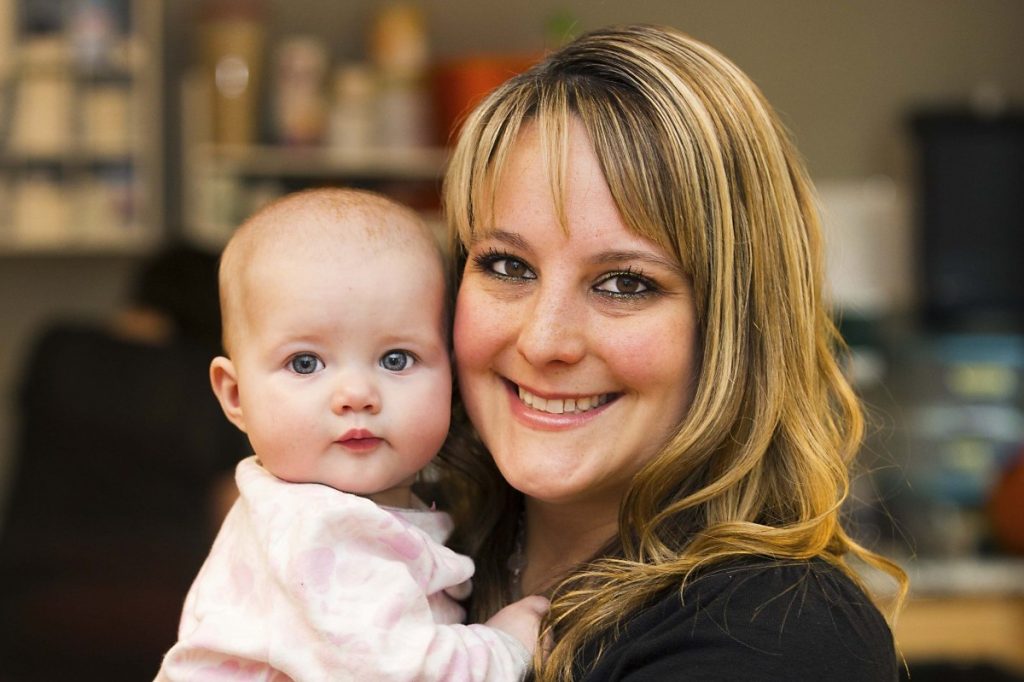
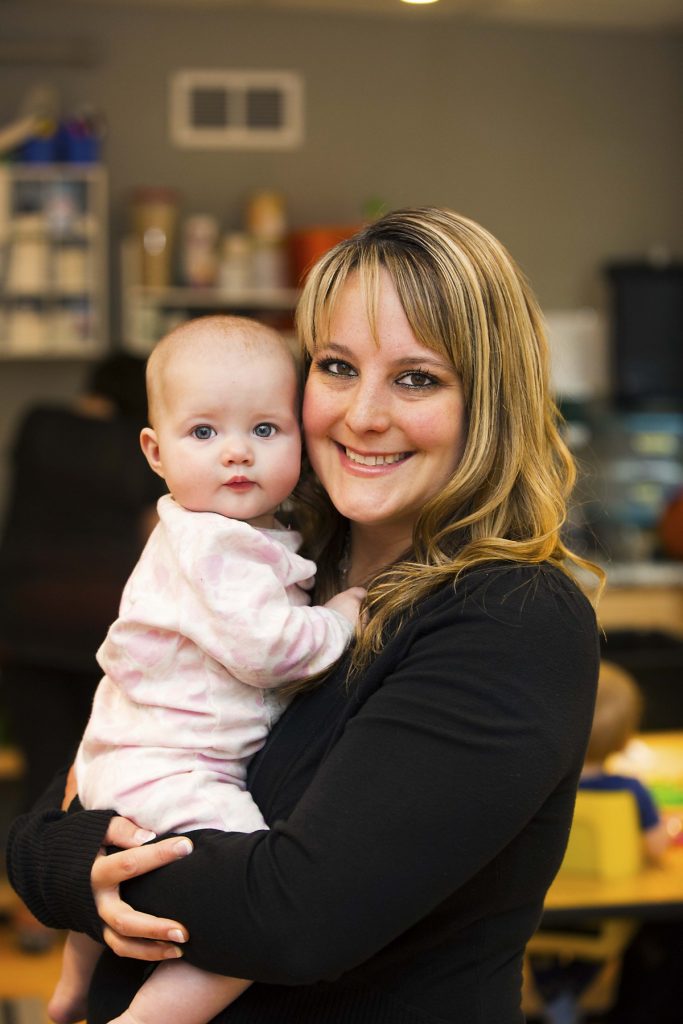
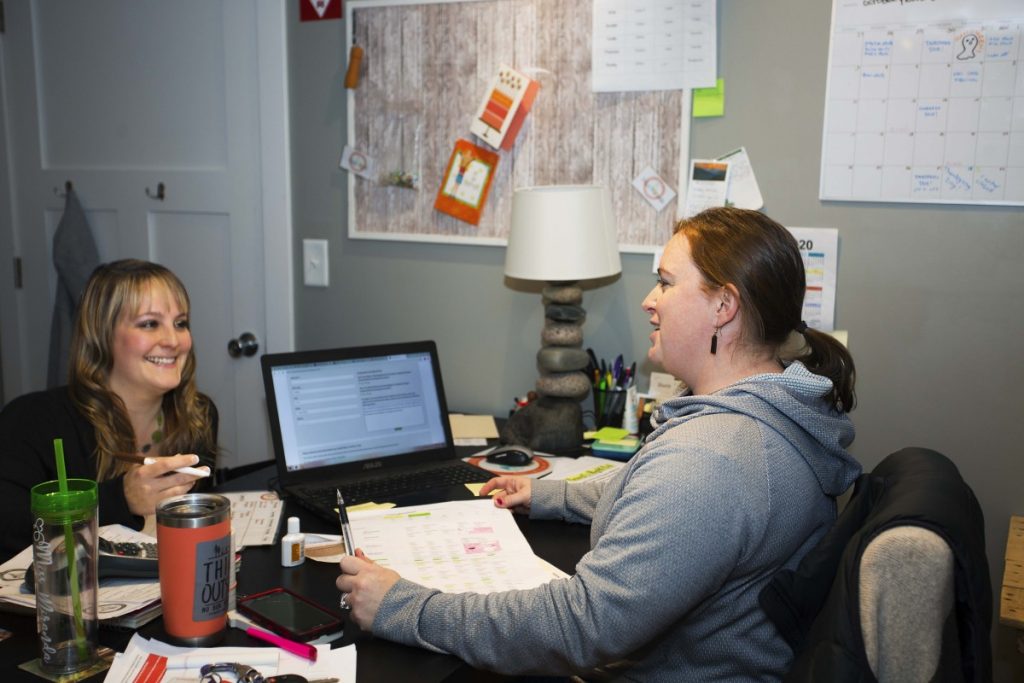
April doing what she loves

This didn’t fit into April’s plans. She thought she was going to continue to make sea glass jewelry to sell at art and craft shows. April sought advice from her best friend, who not only encouraged her to provide care for her niece and her future niece or nephew but to also watch her child.

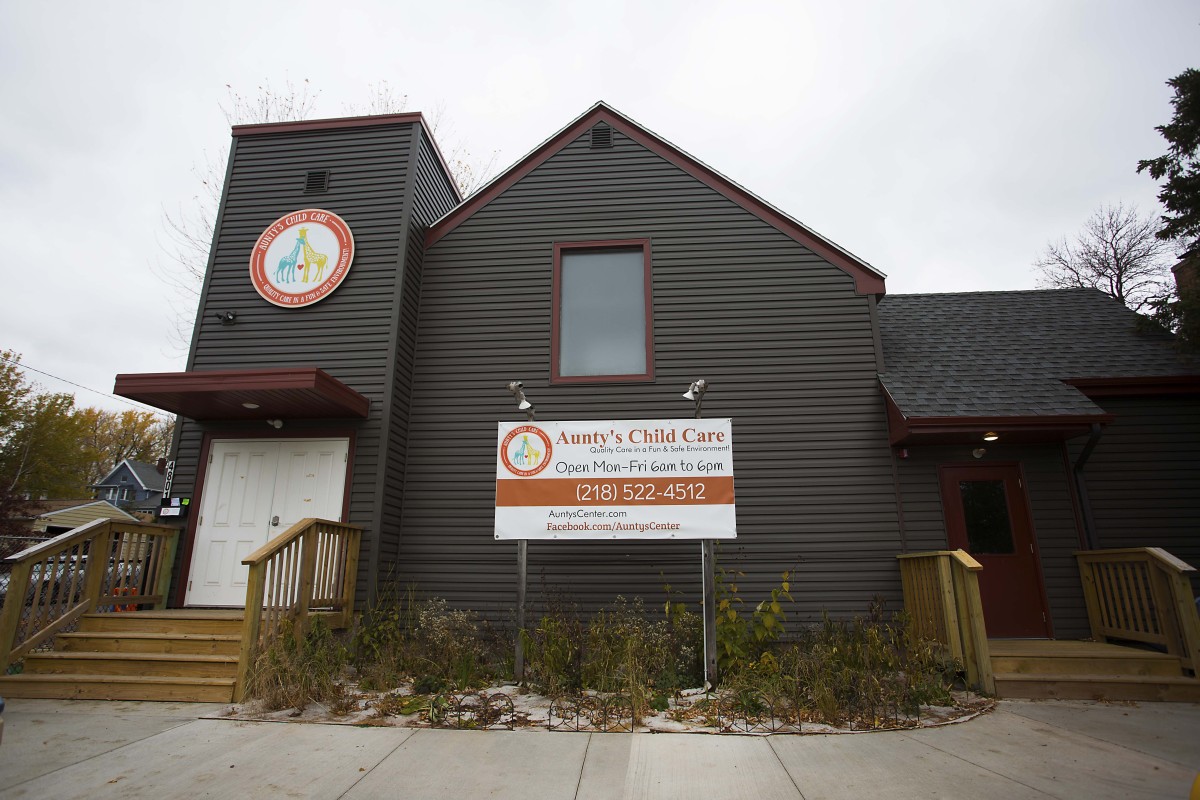
Given that April had always loved children and that she had plenty of friends and family members offering their children to her to watch, she shifted gears. April started the process of becoming a licensed child care provider in Minnesota, and instead of moving forward with buying a house for herself, she bought a duplex that was suitable for daycare. In February of 2010, she opened Aunty’s Child Care.

A Hand To Hold

It’s been nearly 10 years since April opened her first eco-healthy child care facility. In that time, she’s gone from taking baby steps to taking some pretty impressive strides as a business owner. Today, April has two subcontractors running child care operations at her duplex location, and on September 26, 2019, she opened a new 6,000 square-foot child care center in a remodeled church that will house 13 employees and serve 56 children.

The New Center

Expanding her business hasn’t been without its fair share of growing pains. Despite a need for child care in the community, April couldn’t find a bank that would give her a small business loan to fund renovations to Aunty’s Child Care’s new building. She was rejected five times and told she didn’t have enough experience. “I was really frustrated,” April said. “If you can believe it, my plan was to just pay what I could afford to pay and do little tiny chunks of the project at a time. It would have taken probably five years to get the building open.”

Instead, April found The Entrepreneur Fund, a Duluth-based Community Development Financial Institution (CDFI). CNote partners with CDFIs like Entrepreneur Fund in communities across America, funding loans to small businesses and empowering local entrepreneurs like April. Entrepreneur Fund stepped in to help April open her new building so that she could serve more children faster, helping to alleviate the local child care shortage.

Entrepreneur Fund not only provided April with two loans for her business, but the organization has repeatedly offered her advice, support, and resources, including help setting up a commercial kitchen. “They’ll just reach out and ask me if there’s anything else I want to learn about as a business owner,” she said. Currently, The Entrepreneur Fund is helping April to learn QuickBooks and to get additional human resources training.

April in the new commercial kitchen

Perhaps the biggest thing Entrepreneur Fund has provided April with, however, is encouragement. “At one point, I called Mike Lattery, my contact at Entrepreneur Fund, and said ‘this is a lot of money, and we’re spending a ton,’” April recalled. “He told me: ‘You got this. You’re doing a good thing, and we believe in your business and what you’re doing.’”

Community, Not Competition

It’s not surprising that as someone with an affinity for teaching and a joy for watching kids grow and learn, April is also a fount of encouragement for those around her. For example, when one of her former employees approached her earlier this year and expressed an interest in opening her own daycare, April helped her to become licensed and to set up her own program, just a few blocks away from Aunty’s Child Care’s new building. The two have even worked out an arrangement where infants and toddlers who age out of Joyful Noise Child Cares program get funneled into Aunty’s Child Care.

That camaraderie wasn’t always the norm. According to April, when she first started 10 years ago, she was warned that other child care providers in the area weren’t typically friends, and that the local industry — however meager — was cutthroat. She didn’t buy into it. Instead, she created a Facebook group to bring people together, and a fellow provider named Summer started a once a month get together through the page., April loves to go out to dinner with other child care providers! “It’s been really great to encourage each other instead of to cut each other down,” she said.

With support from her loyal parents and her community of fellow child care providers, April has her eyes on the future. Not surprisingly, her dueling five-year plans are both aimed at tackling Duluth’s child care crisis. According to her, as of this past spring, the city was short about 1,100 child care spaces, leaving parents without choices of where to send their kids for quality care. At any point in time, April’s waitlist is at least a year long. “Parents can’t tour two or three places and pick their favorite,” she said. “They have to find one with an opening and scoop it up. That’s not right. People should be able to pick the child care place that goes along with their personal beliefs of how they want their child raised.”

In the next five years, April would either like to set up an after-school and summer program for older children, or she’d like to open a nonprofit infant and toddler facility that would qualify her for grants she otherwise wouldn’t be eligible to receive. If she goes down the latter road, she’d transfer children out of her nonprofit care center to her existing for-profit building, which she hopes to one day turn into a preschool.

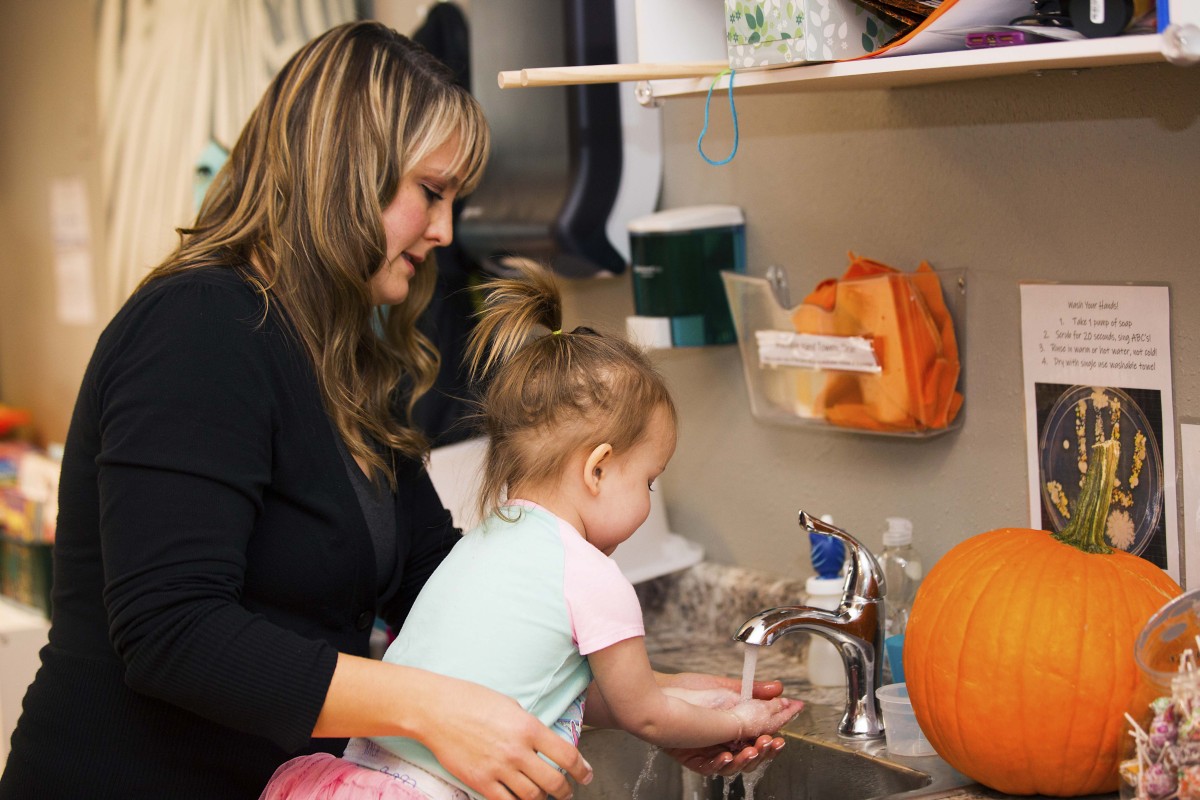
April working with Miranda, Aunty’s Director of Operations

April is building a community to support the children of Duluth. As she mentioned time and again, it is her commitment to that community that serves as her north star,  “It is a circle, and people need to understand that quality child care is the start of a healthy, happy, well-educated community that we are all a part of,” she added, “my reward is knowing I’m helping children and families in my community.”

Learn More

  • Aunty’s Child Care
  • The Entrepreneur Fund – a CNote partner and certified CDFI, actively partners with small business owners in northeast Minnesota, central Minnesota and northwest Wisconsin to support small business growth and local economic development. The Entrepreneur Fund provides flexible financing, along with small business coaching and strategic support to promote a culture of entrepreneurship throughout the region.
  • CNote makes it easy to invest in great CDFIs like The Entrepreneur Fund, helping you earn more while having a positive impact on businesses and communities across America.
By Change Makers Series, Migration V2

Change Makers Interview: Emily Sipfle of FUND Consulting

Emily Sipfle’s interest in CDFIs came out of her time as an AmeriCorps Vista volunteer working with an affordable housing organization in Chicago. Emily ended her service with a growing interest in community development projects, particularly the funding aspect of those projects, and went on to receive a masters degree in urban planning and policy from the University of Illinois, where she discovered the important economic role that CDFIs play in many communities across the country.

Emily currently works FUND Consulting, a Chicago firm focused on providing strategic and operational services to CDFIs. Founded in 2000, FUND Consulting has worked with over 350 clients and raised over $492 million in government and local grants, investments, and tax credits for its clients. In addition, FUND Consulting has helped organizations understand market needs to enhance and develop products and services through the completion of over 130 market research projects and supported the strategic growth of organizations through the delivery of over 120 business, strategic, and capitalization plans.

Prior to joining, in 2015, Emily was the director of impact at National Community Investment Fund (NCIF), a CDFI nonprofit private equity fund that specializes in supporting mission-oriented banks, including CDFI banks, through research and investments. We took the opportunity to catch up with Emily to talk about the power of CDFIs, the opportunity of impact investing, and the future of community lending.


CNote: What led you to FUND Consulting?

Emily Sipfle: I have worked at several different CDFIs in the Chicago area, and that helped me get some experience in the field before coming to FUND. My background is largely more on the data research and impact tracking side of things, and working within CDFIs was a really helpful way of seeing how their work gets done. That’s what led me to FUND, where I now get to work with CDFIs all across the country and across the spectrum of size and product type. Our position here at FUND is really exciting because we can see what’s happening nationally, as well as all of the creative solutions different CDFIs are coming up with for community and economic development challenges in their own community.


CNote: Tell us a little bit about the work you do at FUND.

Emily Sipfle: FUND Consulting was founded 20 years ago, and in that time, we’ve worked with more than 350 so different clients. Our focus has been on CDFIs, but CDFI work ties closely into supporting nonprofits more generally. We provide a range of services, including everything from helping organizations think through whether they should become certified CDFIs, through preparing grant applications and providing help with compliance reporting and annual reporting: basically, all of the work that needs to be done to be a CDFI, maintain CDFI status, and access the CDFI Fund’s programs.

We also offer a range of strategic projects that are designed to support the work of CDFIs and nonprofits, like strategic planning, capitalization plans, market studies, and impact analyses. Our goal is ultimately to try to so increase the capacity of CDFIs and other nonprofit organizations so they can create positive outcomes in their communities. It’s really rewarding work.

I am also a board member of FUND Community Institute, a nonprofit think tank conducting independent studies, partner projects and commissioned researched. FUND Community Institute’s grew out of FUND Consultant’s experience in the CDFI and community development field and now the two organizations form the FUND family of organizations to facilitate positive social, economic, and environmental impacts in communities nationwide utilizing multiple approaches.


CNote: How does data and impact tracking fit into your work with CDFIs?

Emily Sipfle: That’s definitely my background, and that’s carried over into my work at FUND. We have a series of impact-related reports that we put together for our clients that can help be a tool for CDFIs to better understand their impacts internally as well as make the case for their work if they are going out to investors or grant funders, etc. We also have a product called Impact Systems Analysis, which is designed to help the clients be better at tracking their own impacts.


CNote: How do you explain CDFIs to someone who’s not familiar with them?

Emily Sipfle: I like to think of CDFIs as innovative lenders that are working in underserved or distressed communities or populations in order to help them increase access to capital and create positive change.

There are places that traditional banks just don’t go or where other lenders can’t make a product work — That’s really where CDFIs step in. They’re able to look beyond the simple margins and commit to making the loan that helps to create positive change in the community.


CNote: Do you think CDFIs have a broader impact on the U.S. economy? 

Emily Sipfle: Compared to the number of banks and credit unions in the country, there are a relatively small number of CDFIs – about 1,100 CDFIs currently. While in terms of asset size or dollars out the door in loans, they are small, CDFI are a very important part of our overall financial system, and I think they do have impacts that we can point to in terms of being more community focused.

They’re often able to identify local challenges and then come up with flexible solutions to make loan products that works for a given community or local region. To quantify the overall effect of CDFIs on the economy, it’s may not be easy to surface big macro numbers, but if you were to dial down to the more local level and even to the household or small business level, a CDFI can have a lot of impact there. This is particularly important because, as I’ve mentioned, CDFIs are often working in areas or with populations where other financial institutions are not.

While CDFIs are a very small niche of the financial industry overall within this country, they are creating outsized impacts on the ground, just because of their ability to be community focused and flexible in the financing they’re able to offer. The other great work that they do that maybe is less apparent sometimes is just how much they do in terms of technical assistance and helping borrowers to better enter the financial mainstream.


CNote: How are CDFIs able to be more flexible than traditional banks?

Emily Sipfle: It comes both from the mission of CDFIs and what they are trying to do, as well as the scope of who they work with.

In some communities, CDFI staff might have a personal, on-the-ground relationship with a borrower who’s struggling. That local knowledge helps the CDFIs’ staff be nimble when challenges do arise, and it also adds comfort that’s hard to gain from looking at a credit report when you’re trying to understand a borrower, for example.

Of course there are CDFIs that are much larger and don’t have that may not have that level knowledge of a borrower, but based off of their mission of lending to organizations or individuals that traditional banks aren’t able to reach, there is very much an interest to have flexible terms at the onset of offering a loan product to help get dollars out the door. A good example of some of these flexible terms is being able to look beyond the credit report for alternative flows of capital that a borrower might have.


CNote: What are some changes you’ve seen in the industry since you started working with CDFIs?

Emily Sipfle: My position in the industry has been an interesting one because I came in just after The Great Recession. So in some ways, I have seen how the industry responded to that. I know anecdotally, CDFIs continued to lend during the recession and in the time following, when traditional banks and other financial institutions were pulling back and really restricting their credit standards.

In the past 10 years or so, there’s been substantial growth in the number of CDFIs, and in recent years, there have been new lenders that are coming into this space, specifically with the intention to follow a CDFI mission of financing needs of underserved communities. As the industry grows overall, it continues to be an interesting balance of some that are very small and locally based and other CDFIs that are growing in size and scale and are tackling regional challenges or even have a national footprint.


CNote: What’s one of your favorite examples of a CDFI doing what a CDFI does best?

Emily Sipfle: There’s a CDFI loan fund we work with that does small business lending. They lend as little as $500 to establish a payment track record to improve their credit score. There’s certainly not much money to be made on a $500 loan after you do all the paperwork and reporting and your staff time to get it ready. But it can be really important to that borrower just to help them start to develop a credit score again. They also make loans up to $100,000 for more established small businesses.

They’ve also put together a really innovative and impactful program where they are working with a range of partners, to work on a recidivism prevention program. This program starts with inmates who might have an entrepreneurial spirit and an idea for a business. The program provides them with training to help develop that with some more business development skills so that when they get out of prison, they can make their own job. The solution that this CDFI has identified to help people make their own jobs by becoming small business owners. The CDFI helps to make that possible both by coordinating resources and providing the loan.


CNote: How do you think CDFIs’ capital need gap can be filled?

Emily Sipfle: Solving the capital gap is always going to be a moving target because there’s just so much unmet demand for CDFIs’ products — If you keep giving them more money, they will keep finding good work to do with it.

Other than that, I think there needs to be kind of a couple-pronged approach. One is in terms of just the overall volume of capital. I would love to see CDFIs being able to access funds from impact investors and other sources. They are creating the impacts in the community that investors would potentially be interested in, but it’s about creating that link and familiarity in order to make the investors feel like they’re comfortable with an investment in a CDFI.

The second prong that I think would help meet the needs of CDFIs is the availability of flexible capital. Grant dollars, for example, that could be used to support loan loss reserves or to be used for internal operations to help CDFIs to build out their own systems and be more effective and, importantly, try out new products. As I’ve mentioned, CDFIs have a local grounding and knowledge, so they see what’s happening on the ground and identify potential gaps. But it can be hard for them to deploy a new loan product if they don’t have flexible capital to try out a new product or to provide loan loss reserves to protect the portfolio overall.

It’s about getting a certain volume of funding as well as having at least some of it that can be flexible use for reserves or internal purposes to help build out the innovative side of what CDFIs can do.


CNote: Do you have any predictions as to how the CDFI industry will evolve in the future?

Emily Sipfle: I think there’s benefit both in collaboration and consolidation where it’s appropriate. There’s a lot of conversation in the industry about ways that collaboration can be utilized on the back end in terms of back-office work. If there’s some way that CDFIs could come together on back-office work, it could potentially free up staff time and resource for other activities. There are initiatives like that underway to think through how resources could be pooled to make on the ground to work more efficient and go farther in terms of staff time.

I also think there will be a growing number of these larger CDFIs, partially just because success tends to breeds success in terms of what funds you are able to capture, whether it’s through grants or larger scale things like impact investing. I’m not sure that the question has been cracked yet of just how CDFIs can fully take advantage of impact investing as an industry, but I certainly think the future holds the potential to do so.


CNote: What are your thoughts on impact standardization? 

Emily Sipfle: Itis certainly a known challenge for the industry and something that there’s been a lot of conversation about. One of the challenges is, again, that range of CDFIs and what they do. For some, it’s they’re small, they’re focused on providing their products and services, so setting up comprehensive impact tracking systems is a real lift for them in terms of staff capacity. Part of what we do at FUND is build out more effective systems for capturing impact so that it can be transferred back into information to include in the grant application or marketing materials or potential funding requests.

More complex conversations are happening in the industry in terms of how impact data can be used to really attract larger scale investments and how could CDFIs come together to create a standard set of impact metrics, whether it’s as an industry overall or maybe by type of lender.  It’s certainly an ongoing challenge and an ongoing effort, and it ties back into the investment side, because many CDFIs are interested in utilizing a wider range of capital sources and know that they need to get the data out there in a way to make a compelling case for impact investors.
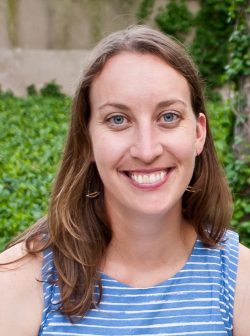
 

Emily works for FUND Consulting a women-owned firm located in the City of Chicago with a staff of ten. Founded in 2000, FUND Consulting has worked with over 350 clients and raised over $492 million in government and local grants, investments, and tax credits for its clients. Their team provides both strategic and operational services to community development financial institution (CDFI), nonprofit, and government clients nationwide.

By Borrower Stories, Migration V2

Meet Jamar Kirk, The Entrepreneurial Life Coach Breaking The Cycle Of Poverty In His Community

Jamar Kirk didn’t have to think too hard about what to name his new business, which provides consulting, coaching, mentoring, and resources to often marginalized and at-risk demographics of his community — a community that struggles with violence, drug use, and a 50 percent high school attrition rate for minority students. 

After all, that’s just like the community Jamar grew up in. 

Breaking the Cycle

Jamar was born and raised in a drug-infested neighborhood in Gary, Indiana by his mother and grandmother, and he moved to Duluth, Minnesota just before his 15th birthday. According to him, he was pretty angry about it. Although he wanted to remain close to his grandmother, his friends, and his hometown, Jamar’s world began to change. He began losing friends to violence and drugs, and the odds felt stacked against him at school.

“When I was in high school, my mom couldn’t afford to buy me school clothes,” Jamar recalled. “So it’s winter in Duluth, and I’m in holey shoes and a coat that didn’t zip up, and I’m not really eating the greatest at home. You’re dealing with all of that and then you have to show up at school and be perfect. It’s not a great feeling.”

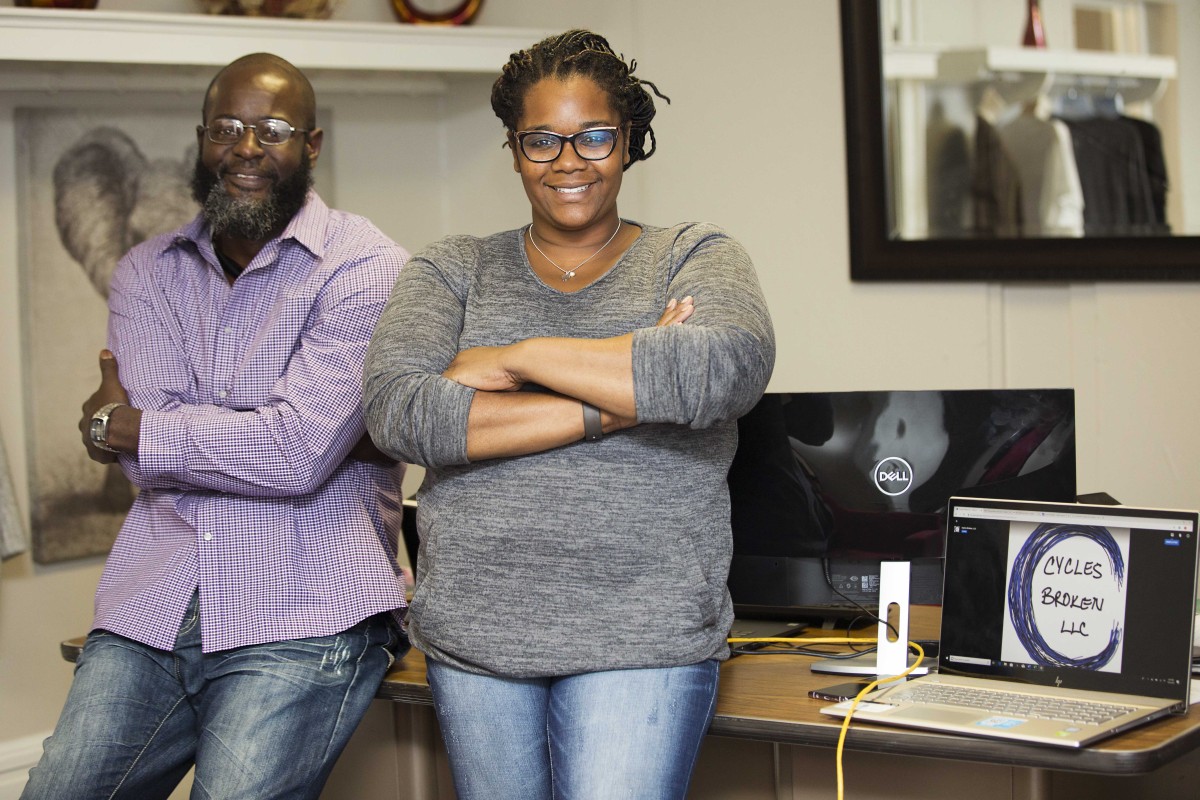
Jamar’s struggles weren’t unique to him, and the challenges he faced when he was a teenager are the same that many continue to face today. However, through organized sports, fortuitous friendships, and strong mentorship, Jamar navigated his way to where he is today: the entrepreneur behind Cycles Broken LLC

“I identify with a lot of the kids that I see here,” Jamar said. “A lot of the young men I see here are about to go through the exact same things that I went through. If I can reach out to this or that person and directly have an effect on them or start a wave of change for them, I’m here for it. It’s really personal to me.”

Jamar launched Cycles Broken earlier in 2019 to help those trying to break out of the same cycles he escaped. Jamar provides moral support and life coaching, and his expertise includes helping clients manage their finances, establish credit, buy homes, get visitation rights and secure child support. Although he consults, coaches and mentors individuals and families, Jamar also works closely with local nonprofits and businesses.

Recently, Jamar received a grant to facilitate a series of business planning workshops with Families Rise Together, a nonprofit that works to strengthen families by engaging parents in their children’s lives and in the community. The sessions will target 18 to 31-year-olds, and according to Jamar, the grant will allow him to improve and expand curricula he developed for previous workshops. 

“It’s so exciting when those small accomplishments happen because it means somebody else is going to receive something,” he said. “It allows me to say, ‘alright, I’m ready to help. What’s next?’” 

Help Me Help You

Despite Jamar’s altruistic mission and partnerships with local nonprofits, Cycles Broken is a for-profit entity, and when it came to setting up his business for success, he needed some help.

That’s what led Jamar to Entrepreneur Fund, a Duluth-based Community Development Financial Institution (CDFI). CNote partners with CDFIs like Entrepreneur Fund in communities across America, funding loans to small businesses and empowering local entrepreneurs like Jamar.

Entrepreneur Fund gave Jamar the capital he needed to purchase a laptop and buy QuickBooks, and the CDFI provided him with access to an accountant, as well as marketing guidance and website help. They also helped him throw a launch party with families and kids in the community. “They helped to make my business more tech-savvy and financially streamlined,” Jamar said. “It’s been a great help, and I can go to them whenever I have a question.”

Jamar says that the biggest piece of advice he’s received from Entrepreneur Fund is to contract out for help when he needs it, especially until he’s able to grow his team. “One piece of advice they gave me is to hire it out when I come across a problem that’s out of my realm,” Jamar said. “By allowing someone else to take care of it, I can get past it and continue to flourish and be profitable. I understand how much getting help can help you.”

Whereas Jamar is happy to do that in the near term, he’d like to one day grow his team so that he can have more “boots on the ground” facilitators and staff under him who can help with Cycles Broken’s growing operations and outreach. Plus, a larger team will be necessary if Jamar wants to achieve his goal for 2020: to “affect 100 businesses in a year.”

“That’s my personal goal,” Jamar said. “We want to have an effect on the graduation rate and youth entrepreneurship in the community, and being a minority-owned business that can affect the business culture in this community and have an impact is motivating. It would be nice to build my team to a point where we have a major movement.”

As Jamar continues to grow his business, his team, and his brand, his commitment to his community — especially the youth — is unwavering. 

“A lot of kids are dealing with the exact same issues of poverty and lack of education as I did,” he said. “It’s not that they’re out of touch, they just don’t have the dexterity yet to navigate life. A lot of kids don’t think they’re capable of growing. A lot of adults don’t think they’re capable of growing.”

“But I’m still here, and I’ve been through so much,” Jamar said. “It was really bad being a product of my environment, but I was shown another way. I’m driven by my family and kids, and I’m able to do what I do by being fearless. I always tell people ‘there are options for happiness and fulfillment in life, and I’m here to help with that.’”

Learn More

  • Cycles Broken LLC
  • The Entrepreneur Fund – a CNote partner and certified CDFI, actively partners with small business owners in northeast Minnesota, central Minnesota and northwest Wisconsin to support small business growth and local economic development. The Entrepreneur Fund provides flexible financing, along with small business coaching and strategic support to promote a culture of entrepreneurship throughout the region.
  • CNote makes it easy to invest in great CDFIs like The Entrepreneur Fund, helping you earn more while having a positive impact on businesses and communities across America.
By Borrower Stories, Migration V2

Meet Rebecca Biesenbach, The Ice Cream-Loving Entrepreneur Behind Grandma B’s Sweet Treats

If there’s one thing that Rebecca Biesenbach loves, it’s Blue Bell’s old-fashioned ice cream. And it’s not just the company’s 66 unique flavors and deep Texas roots that she appreciates: Rebecca loves how Blue Bell’s ice cream brings people together.

That’s what led her to open her own ice cream shop in Rockport, Texas, in 2018, after Hurricane Harvey destroyed the town’s only purveyor of Blue Bell ice cream the year before.

Opening a small business — Grandma B’s Sweet Treats — in the wake of a major natural disaster wasn’t an immediate decision for Rebecca, who at the time lived in San Antonio. Before the hurricane, she and her family frequently visited Rockport to escape the big city, to relax, and to fish. Following Harvey, Biesenbach and her husband returned to the coastal town to repair their house and to help out neighbors. After a hard day’s work, all Rebecca wanted was some good ice cream — but according to her, there wasn’t any. “After Harvey,” Rebecca said, “I just kept saying ‘God, I miss my ice cream.’”

After a fair bit of sleuthing, Rebecca found out that Waffle Cone’s owners — who’d operated the store in Rockport for over 20 years and sold Blue Bell ice cream — decided not to reopen, leaving the town with an ice cream gap. “You gotta have an ice cream store,” Rebecca said. “I literally got into this because my husband got tired of listening to me say how much I missed Blue Bell. That’s it.”

Even though she spent over two decades working in the dental field as an office manager, Rebecca wasn’t completely new to running her own business. Her husband has owned and operated his own plumbing company, and Rebecca kept the business’ books in order and worked with the accountant to keep everything straight. “I knew we could do it,” she said. “Our last kid was out of school, we could move down there, bring the other business, and open up a store. It’d be fun, and it’d give me something to do.”

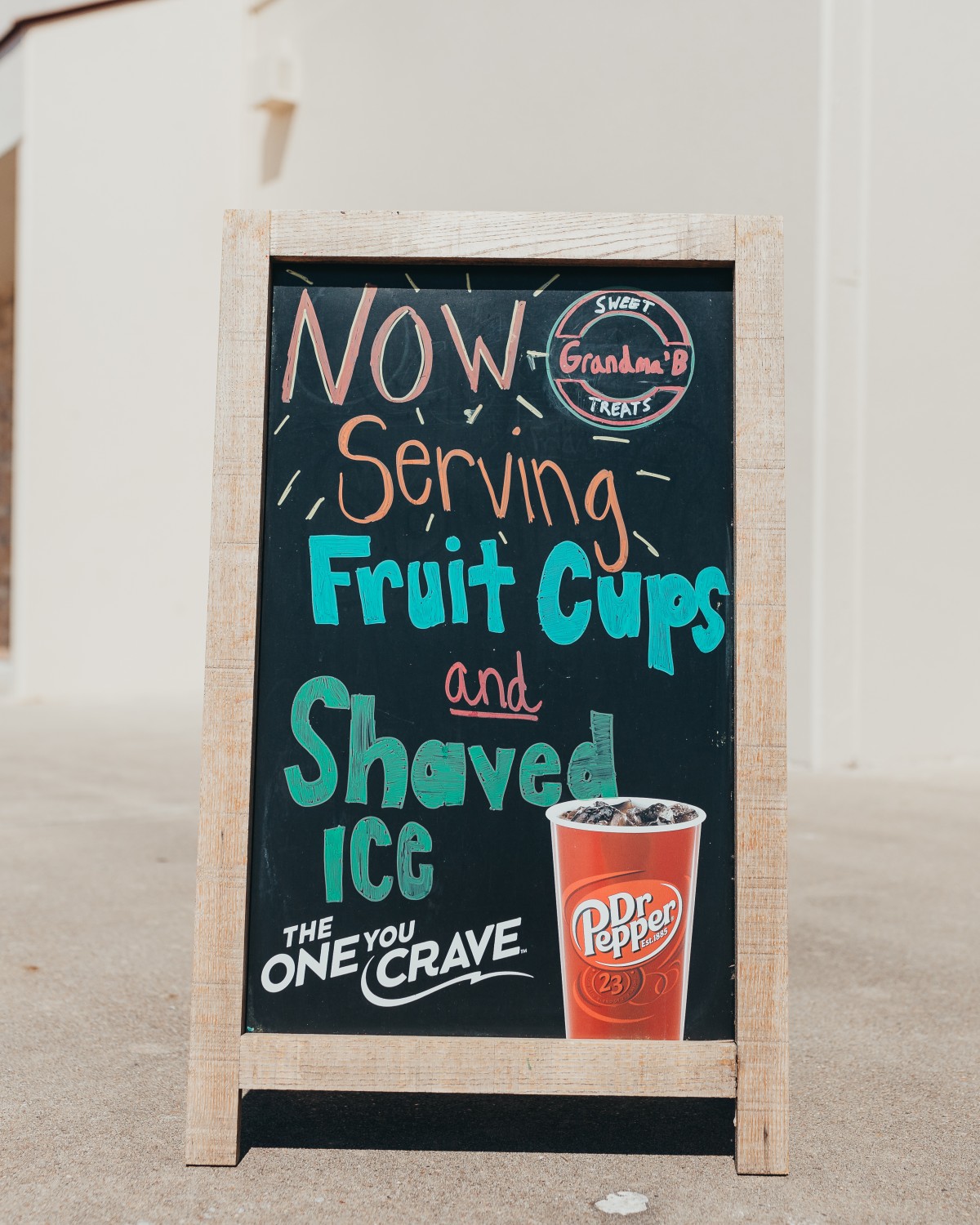
At the end of 2017, just months after Harvey had ravaged Rockport, Rebecca was busy looking for a commercial space to rent and for equipment to buy. In February of 2018, she permanently moved to Rockport, and a month later, she opened Grandma B’s Sweet Treats, which sells 16 different flavors of Blue Bell ice cream, as well as candy, sandwiches, soups, and salads.



Help Along The Way

Even though Rebecca says that her and her husband’s two companies are going strong today, getting Grandma B’s off the ground wasn’t without its bumps.

To help get Grandma B’s up and running, Rebecca went to her bank to inquire about a small business loan. Although she was originally denied for a loan due to the fact that Grandma B’s wasn’t “an established business,” the employee told her that another one of the bank’s customers had recently received a loan through LiftFund, a San Antonio-based Community Development Financial Institution (CDFI). CNote partners with CDFIs like LiftFund in communities across America, funding loans to small businesses and empowering local entrepreneurs like Rebecca.

Grandma B’s Menu

Rebecca applied for a LiftFund loan and got the capital she needed to keep Grandma B’s afloat. “LiftFund helped us with some of our operating costs when things slowed down coming out of the winter months,” Rebecca said. “We were able to use the loan to help keep us steady, and it helped us to get that ice cream machine that’s sitting out there now. That was one of the big purchases.”

More so, Rebecca has been able to attend several of LiftFund’s small business webinars, which she says were helpful.

However, the most important thing LiftFund provided Grandma B’s with was stability. “Without that loan, it would have been a struggle,” Rebecca recalled. “I probably would have had to let people go. But because of me getting that money, I was able to keep people employed.”

Ice Cream Scoops Are Here To Stay

Grandma B’s currently has a staff of five, including Rebecca, and the shop is open seven days a week, serving Texans from all over the state.

“We’ve had a lot of people thank us for opening up and for giving back,” Rebecca said. “Our most exciting day was opening the doors and being able to give ice cream back to Rockport, because I thought this town really needed it. Everybody needs a little help now and then. The community helps me, so I help them.”


Following Harvey, Rebecca says that a number of local businesses have yet to return to Rockport, and many likely won’t. Grandma B’s, however, isn’t going anywhere.

“I want to see this grow,” she said. “I love it, and it’s totally different than what I’ve ever done. I want to be here for years to come.”

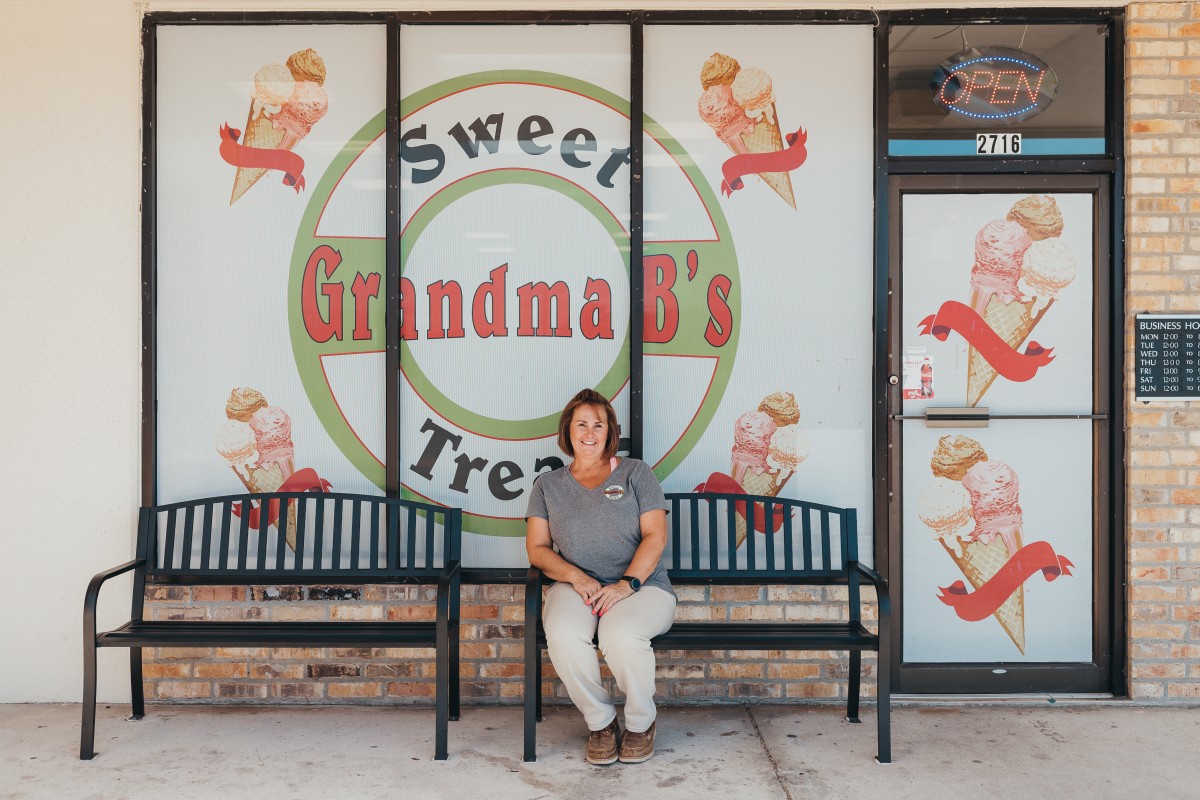
Rebecca outside of Grandma B’s

Learn More

  • Grandma B’s
  • LiftFund is a community small business lender that transforms lives by opening doors and providing capital, financial coaching, tools and resources to entrepreneurs who do not have access to loans from commercial sources. Since 1994 LiftFund has provided over $300 million in capital, propelling the dreams of over 20,000 diverse small businesses throughout its 13 state footprint.
  • CNote – Interested in helping create another story like this? CNote makes it easy to invest in great CDFIs like LiftFund, helping you earn more while having a positive impact on businesses and communities across America.
By Impact Investing, Migration V1

The History of Socially Responsible Investing

Many investors are choosing to align their portfolios with their personal values, using their investments to make a positive impact.

While socially responsible investing might seem like a new phenomenon due to its rapidly growing popularity, its earliest origins trace as far back as the first books of the bible.

The history of SRI

The earliest precursors of socially responsible investing date back to the Pentateuch – the first five books of the Bible, believed to have been written by Moses as early as 1500 BC. The books refer to a Jewish concept called Tzedek (justice and equity) and how it should govern all aspects of life. Tzedek aimed to correct the imbalances that humans inevitably generate, including the benefits one would receive from ownership. Owners had rights and responsibilities in how holdings were used, one of which was to prevent any immediate or potential harm.

This principle formed the genesis of socially responsible investing, providing religious and indigenous cultures with a set of criteria on how to generate financial returns ethically and sustainably.

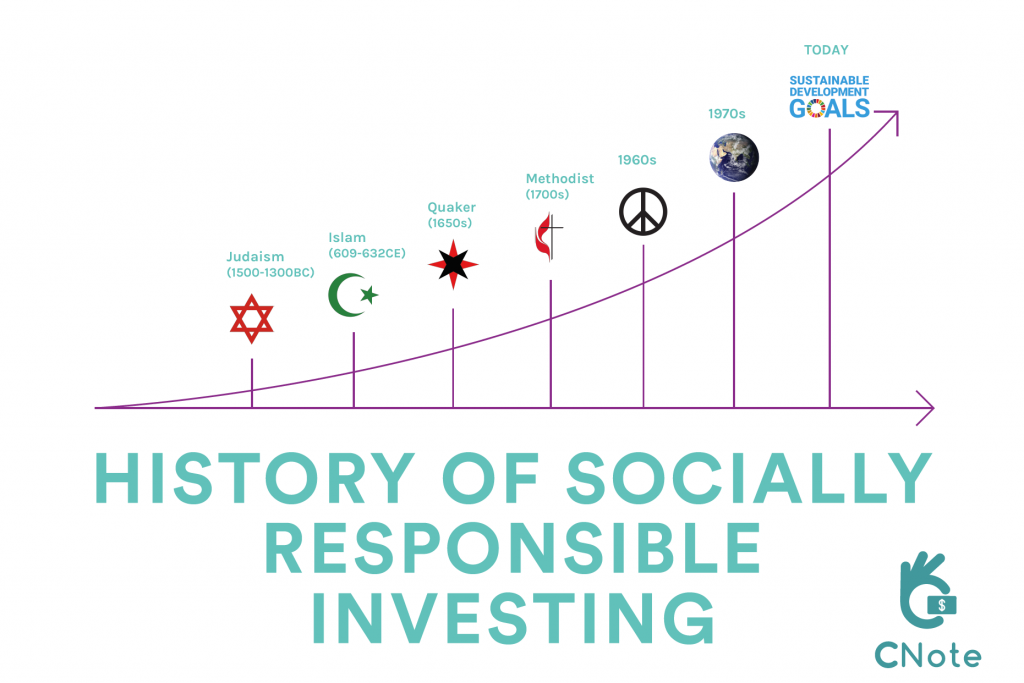
A simple graphical overview of some SRI investment movements/rules over time

Note: The above image provides a cursory summary of some of the movements and institutions that have shaped SRI investing as we know it today. It is not intended to be a completely exhaustive list.

Religious roots and origins of socially responsible investing

Despite a consensus that ethics were an essential consideration for investment decisions, the application of the principle varied; some groups used it as a guideline, others required it by law. The basis for SRI varies between religious groups, leading to many different interpretations of the subject.

Judaism (1500-1300BC)

As mentioned above, Judaism sees a need for justice/equity in all aspects of life, including government and economic activity. Jewish Law states that investments make us property owners, giving us the responsibility to use our holdings to prevent immediate and potential harm.

While most biblical and rabbinic sources refer to single owners or small partnerships, Jewish religious figures eventually addressed the ethics of shareholder responsibility. Since shareholding is a form of ownership, investors must consider the ethical responsibilities of a company before investing. This prevented followers from investing in “immoral” companies such as those involved in oil, coal and gas because of their immediate impact on human health.

Islam (609-632CE)

The Qur’an established guidelines surrounding investments based on the teachings of Islam, now known as Shariah-Compliant Finance. This philosophy aims to govern the relationship between risk and profit, along with the responsibilities of institutions and individuals. It states that money should be a medium of exchange, not an asset that grows over time.

One of the governing principles in the Qur’an is Riba, which aims to prevent exploitation from the use of money. It prohibits the payment or receipt of all forms of usury, including all sorts of interest payments, gambling or uncertainty. The Qur’an also forbids any Islamic institution or individual from investing in alcohol, pork products, immoral goods, gold & silver and weapons.

Quaker (1650s)

Based in England since the 1650s, Quakers are members of a group called The Religious Society of Friends. While the group is primarily interested in Christianity, it is also known for its opposition to slavery and war.

In 1758, the Quaker Philadelphia Yearly Meeting prohibited members from participating in the slave trade, marking one of the first occurrences of SRI in its current form. Eventually, some Quakers went on to establish two of the largest financial institutions in modern history: Barclay’s and Lloyd’s.

Methodist (1700s)

Established in 1703, the Methodist movement was led by a man named John Wesley, one of the most articulate early adopters of SRI. During a sermon titled “The Use of Money”, Wesley outlined his stance on social investing; avoid industries that have the potential to harm workers and any business practices that might harm your neighbor. Followers eventually resisted investments in “sinful” companies, such as those involved in tobacco, firearms and alcohol. A prelude to modern exclusionary investment screening.

Modern Era: The rising popularity of SRI

The modern version of SRI in America really took hold in the mid 1900s, when investors began to avoid “sin” stocks – companies that dealt in alcohol, tobacco or gambling. In 1950, the Boston-based Pioneer Fund, established in 1928, doubled down on this movement, becoming one of the first funds to adopt SRI principles.

The avoidance of sin stocks in the 1950s marked the beginning of the rise of modern socially responsible investing, each decade bringing forth an influx socially concerned investors:

1960s

Socially responsible investing in the 1960s was largely driven by politics and concerns about the Vietnam War. Protestors boycotted companies that provided weapons for the war, while groups of students demanded university endowment funds no longer invest in defense contractors.

Meanwhile, civil rights, environmental and labor movements raised awareness about social, environmental and economic issues, bridging the gap between corporate and investor responsibility. In support of these movements, trade unions like the United Mine Workers and the International Ladies’ Garment Workers’ Union deployed targeted investments into medical facilities and union-built housing projects.

1970s

In April of 1970, 20 million Americans convened for the first Earth Day celebration, opening the door for a cascade of environmental and consumer protection legislation in the early 1970s. As society reacted to war, sweatshops, Apartheid, climate change, human trafficking and a number of other political and cultural issues, socially responsible investors followed suit.

Supported by consistent efforts from both investors and corporations, it was clear that the SRI movement was here to stay. A growing number of new funds combined social and environmental consciousness with financial objectives, reflecting the prevalence of aspirational progressive values. The Pax World Fund and the First Spectrum Fund were established in 1971, followed by the Dreyfus Third Century Fund, firmly backed by over $25 million.

1980s

In the wake of the Bhopal, Chernobyl and Exxon Valdez disasters, concerns about the environment and climate change were at the core of SRI in the 1980s. This led to the launch of The United States Sustainable Investment Forum (SIF) in 1984, which has now become one of the largest resources for SRI and impact investing.

The standardized approach to SRI in the 1980s involved building a portfolio that behaved like the traditional market while avoiding investments in alcohol, tobacco, weapons, gambling and environmental pollution. Firms paired these avoidance screens with a commitment to shareholder activism, a practice that allowed shareholders to leverage ownership to improve a company’s behavior.

1990s

By 1990, the popularity of SRI mutual funds and socially conscious investing hastened the need for a way to measure performance. Launched in 1990, The Domini Social Index (which is now the MSCI KLD 400 Social Index), was comprised of 400 U.S. publicly-traded companies that met certain social and environmental standards. Many potential investors were concerned that socially responsible investments would have lower returns than traditional investments, but this index helped to disprove those claims.

2000s and beyond (UN SDG)

By the early 2000s, socially responsible investing continued to gain supporters, alongside the introduction of many major initiatives and funds. In 2006, the United Nations Principles for Responsible Investment was launched, establishing guidelines for mainstream investors to incorporate ESG (environmental, social and governance) issues into investment practices.

Many socially conscious investors are going beyond SRI to seek out investments that prioritize a positive impact, sparking a rise in ESG and impact investing. This forward-thinking approach was reinforced by the UN Sustainable Development Goals in 2015. These goals, backed by all 193 UN Member States, are an urgent call to solve the world’s most pressing development challenges.

Conclusion

Socially responsible investments now account for over 33% (over $17T) of all assets under professional management in the US, and with increased interest from the millennial generation, that number is only expected to rise. Despite the involvement of large investment firms and funds, socially responsible investments are not exclusive to institutional investors. There’s a range of retail impact investment options that allow anyone to invest ethically and responsibly.

The history of socially responsible investing shows that what’s old is new again. We can see that this growing movement shows no signs of stopping, making for an even larger impact as more investors get involved.

By Equality, Financial Planning, Migration V2

A great discussion on the state of income inequality, financial markets and monetary policy

When one of the world’s most successful investors says The World Has Gone Mad and the System Is Broken, you listen. That’s exactly what Ray Dalio did in a piece published on LinkedIn just a few days ago. We’ve summarized his views and shared an interview that further colors his viewpoints.

Mr. Dalio’s views summarized

At its core, Mr. Dalio’s article lays out the following concerns:

  • The price of money is low and the supply is high, leading to either the acceptance of low returns or incremental risk-taking
  • This mal-investment is evidenced by recent failures, like WeWork, where investors buy into a “dream” rather than future or current profitability and sustained value creation
  •  Large government deficits will require more debt issuance which should increase rates, at a time when rising rates “would be devastating for markets and economies because the world is so leveraged long”
  • This results in a “dynamic in which sound finance is being thrown out the window”
  • More and more pension and healthcare liabilities will come due while investment targets are not being met, meaning they will be underfunded
  • Changing demographics result in “fewer earners having to support a larger population of baby boomers needing healthcare, there isn’t enough money to fund these obligations either.”

His piece ends with a scary reminder about inequality and its likely trajectory, which dovetails with the work we’re doing at CNote to build a more inclusive economy and fight against this growing wealth transfer to the top:

“At the same time as money is essentially free for those who have money and creditworthiness, it is essentially unavailable to those who don’t have money and creditworthiness, which contributes to the rising wealth, opportunity, and political gaps.”

Post-Article Interview

Shortly after authoring the piece above, Mr. Dalio spent the better part of fifteen minutes further illuminating his views and the likely outcomes he sees based on the current situation.

If you’re looking to gain a better understanding of the current global economic situation and the likely path forward, this is definitely worth a watch.

By CDFIs, CNote, Migration V2

Announcing a New CNote CDFI Partner: Renaissance Community Loan Fund

CNote announces new CDFI partner committed to housing affordability and community resilience, Renaissance Community Loan Fund

Innovative fintech platform inks deal to become new capital source for Mississippi lender committed to economic development.

CNote has entered into a partnership with Renaissance Community Loan Fund to serve as a new capital source, supporting their mission to increase homeownership and support small businesses and local economic development in Mississippi. Founded in the wake of Hurricane Katrina’s devastation, Renaissance Community Loan Fund (Renaissance) has had a significant impact since its 2006 founding. 

With a strong focus on economic empowerment, wealth building, and homeownership, Renaissance Community Loan Fund is a natural partner in CNote’s mission of closing the wealth gap in America. 

CNote leverages technology to enable impact investing at scale, allowing investors of any size to invest in a diverse pool of stellar Community Development Financial Institutions (CDFIs) like Renaissance. CDFIs are community-focused lenders that provide funding for small businesses, affordable housing development, and other projects in communities that often lack adequate access to financial resources. With a growing nationwide network of CDFI partners, CNote is helping to build a more inclusive economy for everyone by offering competitive financial products that drive positive social change and build more economically resilient communities across America. 

Yuliya Tarasava, CNote’s Co-Founder, notes “CNote is honored to partner with Renaissance Community Loan Fund. We’ve been impressed by their history of supporting and revitalizing the communities they serve, especially in the face of devastating natural disasters. We strongly believe in their ability to leverage new investment capital to create great economic outcomes in the communities they support across Mississippi.”

Since 2006, Renaissance Community Loan Fund has been dedicated to revitalizing underserved communities throughout Mississippi. Renaissance’s success is driven by their ability to understand the specific needs of the communities they serve, having a highly qualified team to address those needs, and developing a customized and thoughtful approach to program implementation. To date, Renaissance has helped over 2,300 families achieve the dream of homeownership, provided personal financial counseling to over 3,500 clients, and created $88.7 million in economic impact from new homeowners.

Kimberly LaRosa, President & CEO of Renaissance Community Loan Fund, remarked, “Our focus has always been on achieving positive results for our community. That is why we are excited about partnering with an innovative capital source like CNote, who’s capital will allow us the opportunity to drive more results for the Mississippi communities that need it most.”

###

About CNote

CNote is an award-winning, first-of-its-kind financial platform that allows anyone to make money investing in causes and communities they care about. With the mission of closing the wealth gap, CNote directs every dollar invested toward funding female- and minority-led small businesses, affordable housing and economic development through its nationwide network of CDFI community lenders.

About Renaissance Community Loan Fund

Renaissance Community Loan Fund was created by The Gulf Coast Business Council in 2006 to help rebuild the community in the aftermath of Hurricane Katrina. Today, Renaissance provides support through financial assistance and development services which help provide safe, quality housing for the residents of Mississippi and providing economic resources for small business owners to add or retain jobs in the community.

###

Link to Press Release