
At CNote we believe in financial empowerment. That everyone, regardless of their gender, skin color, or birthplace deserves equal economic opportunity. That is why we make financial products for everyone, not just the 1%. Read More
At CNote we believe in financial empowerment. That everyone, regardless of their gender, skin color, or birthplace deserves equal economic opportunity. That is why we make financial products for everyone, not just the 1%. Read More

Updated July 2021
Community Development Financial Institutions, more commonly referred to as CDFIs, are private sector, primarily nonprofit, financial institutions that provide loans and other financial resources to Low to Moderate Income (LMI) and BIPOC communities that are often underserved by traditional financial institutions.
CDFIs are federally certified entities. That certification comes from the CDFI Fund, an agency within the U.S. Department of Treasury, which explains that “certification is the U.S. Department of Treaury’s recognition of specialized financial institutions serving low income communities.” The fund has certified more than 1,200 CDFIs and these institutions exist in every state and the District of Columbia, serving rural, urban, and native communities while sharing the primary mission of promoting community development.
CDFIs have roots in the civil rights, anti-poverty, and other progressive movements and can trace their origins to local credit unions and banks that sprang up to address predatory or exclusionary lending practices like redlining in communities across America. They believe in economic justice for all people and are federally regulated to focus their lending and business development efforts in low-income and underserved communities.
This article will explain how CDFIs work, their history, and will contextualize their positive impact on society.
If you’d like to dig deeper we’ve also created a more quantitative industry overview, which you can download and read via this link: CNote Whitepaper – Overview of the CDFI Industry (pdf).
Since CDFIs are a fundamental part of CNote’s impact investment offerings, and we make it easy for anyone, from corporate investors to individuals, to invest in CDFIs, understanding CDFIs will provide a more complete picture of the positive impact an investment in CNote has on communities across America.

Tanesha Sims-Summers (far right) is the founder of Naughty But Nice Kettlecorn Co. She received a $50,000 loan from TruFund to complete the build-out of a food truck, which allowed her to attend popular events across Alabama to sell her gourmet kettle corn.
Historically, CDFIs are an asset class that is undervalued despite their catalytic impact in communities. The Brookings Institute had the following to say when looking back at decades of historical data on CDFIs:
“CDFIs have succeeded by all obvious measures. A recent sampling of CDFI performance found that 81 CDFIs managing $1.8 billion in assets had provided more than $2.9 billion in financing. They did this with a 1.8 percent cumulative loss rate, consistently low delinquencies, and no losses of investor principle.”
CDFIs exist to increase wealth building opportunities for LMI populations and ultimately reduce the wealth gap. They provide loans, financial services and educational resources to those left out of the financial mainstream. CDFIs put a priority on enriching their community over enriching their shareholders and focus on supporting economic growth at the community level, usually by financing small, minority-owned businesses, microenterprises, affordable housing, nonprofit and volunteer organizations, and services essential to revitalizing low-income neighborhoods.
Accordingly, a CDFI’s success is measured not only by their growth and financial performance but also by their impact in underserved communities, including increasing access to capital for minority and female entrepreneurs, new job growth and retention, the creation of affordable housing units and availability of affordable consumer loan products.
Typically, CDFIs come in four different forms, banks, credit unions, development loan funds, and venture capital funds. Each of these four institutional models serves a different part of the community and may have different risk profiles, legal structures, and targeted borrowers.
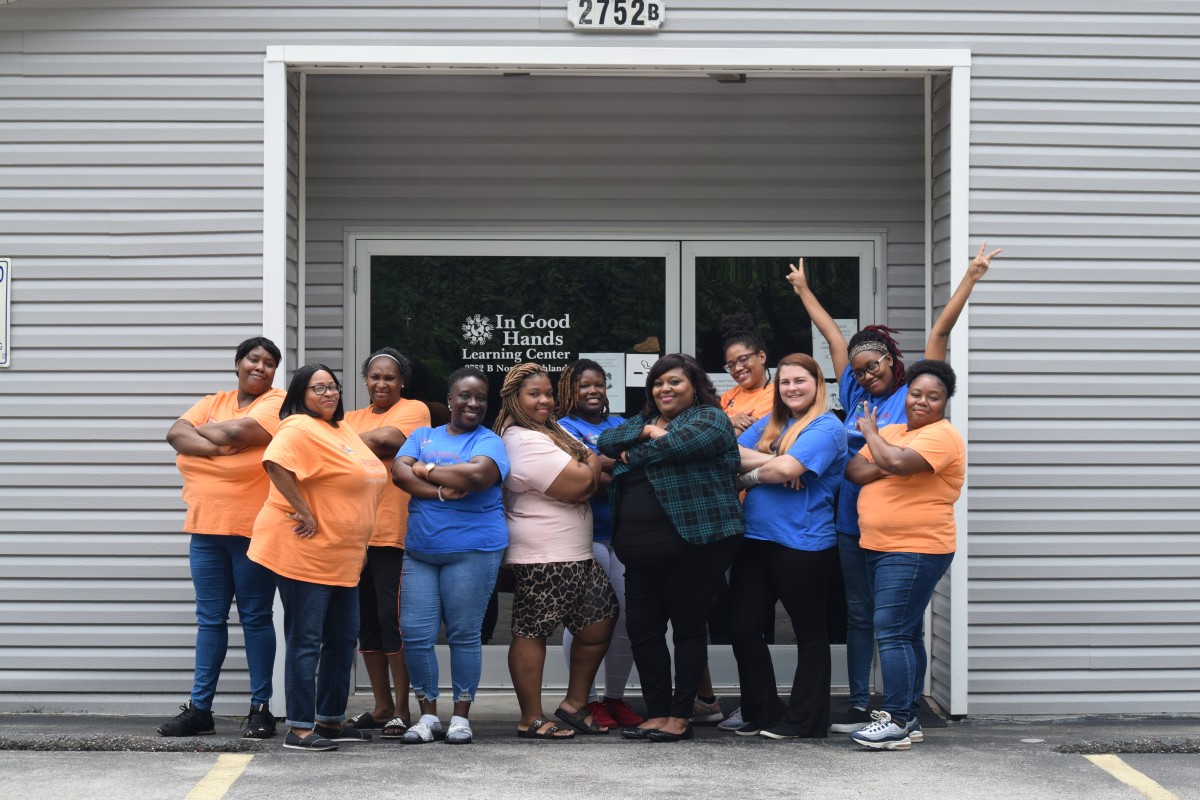
Ebony Harris, center right, received funding from a CNote partner CDFI. Through her learning center, In Good Hands, she has served families in Jackson, TN throughout the pandemic by providing childcare and support so essential workers in her community could continue to work.
CDFIs provide financial services and products to individuals and communities that often do not qualify for services by the standards of mainstream financial institutions. These can be individuals that have nontraditional credit profiles and limited assets, younger borrowers with a shorter financial history or previously unbanked groups. CDFIs frequently recognize that living outside the economic mainstream does not make one uncreditworthy. When assessing people and places that have been shut out from mainstream financial tools like FICO scores and home appreciation, CDFIs consider alternative, though no less predictive, underwriting approaches like savings accumulation rates and history of rent and utilities payments.
It should be noted that despite how CDFI underwriting criteria may diverge from a traditional bank’s underwriting criteria, the Opportunity Finance Network (OFN) and Wells Fargo reported in “Innovations in Underwriting” that “innovative underwriting strategies by CDFIs don’t undermine risk management or portfolio quality. Rather, the new strategies analyze past and current portfolio activity to inform new practices.” Without access to affordable flexible capital, these groups’ ability to generate economic growth remains limited. CDFIs, by making their lending activity more inclusive and supportive of their borrowers, are including underserved groups in the financial mainstream.
The loans that CDFIs make have a tangible impact on their local community. Funds are used to support small businesses, develop affordable housing, build community facilities, and launch or expand other community programs.
As noted by Vice President Kamala Harris on June 15th, 2021 when she addressed the nation to announce federal relief funding for small business via a national network of CDFIs, “Community lenders understand the merit in providing access to capital directly to communities, and because they do they add value to those communities, and by extension our entire nation.”
The Community Development Financial Institutions Fund (CDFI Fund), which will be discussed further below, explained the history and the need for CDFIs in more detail:
Community Development Financial Institutions—or CDFIs—emerged in response to a lack of access to responsible and affordable credit and capital in minority and economically distressed communities. The CDFI “movement” took shape in the 1970s with the passage of the Community Reinvestment Act, which encourages financial institutions to meet the needs of all sectors of the communities they serve. Amid growing concerns about the social consequences of investment decisions made by the financial services industry on the nation’s low-income communities, early CDFIs began filling a niche by providing capital and credit in areas that are often difficult for traditional financial institutions to serve. (source)
One example of a successful CDFI with transformative impact is Black Hills Community Loan Fund, a Native CDFI dedicated to creating financial opportunities for economically disadvantaged families who aim to strengthen their financial future in the Black Hills Region of Rapid City South Dakota. With the Native CDFI designation, 51% of an organization’s clientele has to be Native American. BHCLF’s Executive Director estimates that their clientele is coming in at 90% Native American. In Rapid city 10% of the population overall is Native American, and within that population, more than 50% live below the poverty line. BHCLF’s programmatic offerings are centered around financial education, mentorship for entrepreneurs, first-time homeownership, and youth outreach in addition to its lending. You can read more about their impact here.

Executive Director Onna LeBeau (far right) and her full staff for the Black Hills Community Loan Fund
Looking again at the Brookings Institute’s comprehensive retrospective on CDFIs, Taking Stock: CDFIs Look Ahead After 25 Years of Community Development Finance, Brookings found that “CDFIs have helped prove several things, many of which now constitute mainstream market thinking.” Those included:
Individual CDFIs are certified by The Community Development Financial Institutions Fund (CDFI Fund). The CDFI Fund is an agency within the U.S. Department of the Treasury that was established by the Riegle Community Development and Regulatory Improvement Act of 1994.
The CDFI Fund’s mission “is to expand economic opportunity for underserved people and communities by supporting the growth and capacity of a national network of community development lenders, investors, and financial service providers.” You can read more about the CDFI certification process here. CDFIs, despite being certified by the CDFI Fund, are non-government entities. CNote only invests money with CDFI-Fund certified institutions.
CDFIs, which are certified by the CDFI Fund, then go on to make loans throughout their local communities. The CDFI Fund summarized its model as follows:
“The CDFI Fund supports the mission-driven financial institutions working on a local level that know their communities best. Financial institutions that become certified by the CDFI Fund are eligible to apply for the comprehensive services it offers—including monetary support and training to build organization capacity. The CDFI Fund’s model is competitive and each of its programs provides CDFIs with the flexibility to determine the best use of limited federal resources in their community.”
(source)
The aim of the CDFI Fund “is an inclusive economy: an America where all citizens have the chance to participate in the mainstream economy.” CNote supports this goal by driving investor capital to these CDFIs, allowing them to expand their impact and fulfill their mission of financial empowerment.
CDFIs have a significant impact on the economic growth of the United States. Nationwide, the CDFI industry manages more than $222 billion, creating jobs, affordable housing, financial health, and opportunity for all. While the focus of CDFIs may be on their local communities, these local activities can have a real impact on the broader economy.
In 2016 CDFIs provided over $3.6 billion dollars in financing to underserved communities (source). While the focus of CDFIs may be on their local communities, these local activities can have a real impact on the broader economy. Here are the 2016 results as provided by the CDFI Fund:
In fiscal year 2016 alone, CDFI Program awardees reported that they provided $3.6 billion in financing to homeowners, businesses, and commercial and residential real estate developments. These developments include the construction of community facilities in communities that might not otherwise have these amenities. In addition, CDFI Program awardees financed over 13,300 businesses and provided more than 427,000 individuals with financial literacy or other training. Similarly, in 2016, over $3 billion in loans and investments were made possible under the New Markets Tax Credit Program, with over 74 percent of the loans and investments made in Severely Distressed Communities. This critical financing contributed to more than 10,000 jobs and an estimated 26,000 construction-related jobs; and resulted in more than 600 affordable housing units, 10.1 million square feet of commercial real estate, and 5,500 businesses receiving financial counseling or other services.
(source)
According to the Opportunity Finance Network (OFN), a network of CDFIs, through its fiscal year 2018, its member CDFIs provided more than $75 billion in lending. This led to the creation or maintenance of 1.56 million jobs, the start or expansion of 419,150 businesses and microenterprises, and the development or rehabilitation of over 2.1 million housing units and 11,592 community facility projects.
This data shows just how concrete of an impact community-focused lending can have on the broader economy. These investments in small businesses and community development lead to job growth and economic prosperity. In summary, CDFIs help deliver economic opportunity to everyone
To that point, this video illustrates the kind of opportunity CDFIs provide to borrowers:
In addition to capital, CDFI’s differentiate their success and impact via technical assistance. They provide tailored support and guidance to the entrepreneurs they support. These CDFIs know the common issues small businesses in their communities face, and they can help them overcome obstacles to grow and become sustainable entities that create jobs and increase the tax base.
An example of this local expertise and guidance was the ongoing support that Access to Capital for Entrepreneurs, ACE, was able to provide to budding franchisee Felicia Parks. Felicia, a veteran, decided to open a Jimmy John’s store in Atlanta with her sons but being a first time business owner, she needed some help. Initially, ACE was able to assist Felicia with her business operations via a business coach; however, when COVID-19 hit, Felicia received a bridge loan from ACE to cover operating costs until she could secure a PPP loan through another lender. Unlike many of the business owners around her, Felicia’s Jimmy John’s never had to close its doors. Now, as she’s preparing for life after the pandemic, ACE has provided guidance and advice to help Felicia navigate the next 12 months, and Felicia is making use of ACE’s online resources on marketing, management, and finance, all geared toward getting her business back up and running after COVID.

Felicia Parks (far right) is the owner of a Jimmy Johns location in Atlanta. When COVID-19 hit the area, her sales dropped 64%. She connected with a CNote CDFI partner, who provided a bridge loan that enabled Felicia to keep her head above water and her store open.
CDFIs do much more than cut a check and walk away. They provide guidance, support, and expertise. They share success with their borrowers. By extension, every investor at CNote shares in the success of our partner CDFIs as they work to increase access to capital for communities in need and create more inspiring stories like that of veteran turned entrepreneur, Felicia Parks.
The risk profile of CDFIs has been assessed and the reality is that CDFIs do not present significantly more risk than non-CDFI financial institutions.
CDFIs also have the benefit of certain federal programs like the CDFI Bond Guarantee Program, which provides federal guarantees for bonds issued by CDFIs that make investments for eligible community or economic development purposes. We note that every investors’ appetite for risk can vary. While the research cited below can help guide an investment decision, it is not investment advice; Always consult with a financial adviser to find the investment option that is best for you.
In late 2014, two independent reports on the CDFI program “found that CDFIs have no more risk than conventional lenders and that they perform nearly just as well as mainstream financial institutions.” The first report, CDFIs Stepping Into the Breach: An Impact Evaluation Summary Report, undertaken by Michael Swack, Eric Hangen and Jack Northrup from the Carsey School of Public Policy at the University of New Hampshire made the following key conclusions:
The second report, Introduction to Risk and Efficiency among CDFIs: A Statistical Evaluation using Multiple Methods, conducted by Gregory Fairchild from the Darden School of Business at the University of Virginia and Ruo Jia from the Stanford Graduate School of Business determined:
This research suggests that CDFIs, when managed properly, can deliver returns at or below the risk profile of their non-CDFI counterparts.
CDFIs have consistently operated on the front lines of economic disasters such as 9/11, Hurricane Katrina, Superstorm Sandy, Hurricane Harvey, and the 2008 financial crisis, providing economic relief to American communities when they need it most. The Federal Reserve has recognized CDFIs as “economic shock absorbers” that continue to effectively serve their communities even amidst the most catastrophic economic conditions. Not surprisingly, we’re seeing that now in full force with this pandemic and the associated economic fallout.
The COVID-19 health crisis has had a traumatic and far-reaching impact on American communities, especially low-income communities and communities of color where small businesses play an essential role in sustaining economic growth. CDFIs have been essential to recovery as a crucial lifeline for small businesses across the country during the pandemic, and even for decades before.
During the Great Recession, when mainstream finance retracted lending, CDFIs maintained their lending activities and kept capital flowing to low income communities. With consistently low loan loss rates—a cumulative 0.73% from 1999-2017 that outperformed the 0.92% loan loss rate of FDIC-insured institutions in that same time period— CDFI lending has proven effective and successful in changing economic conditions.

Brighter Beginnings (staff pictured above) is a non-profit which provides vital medical and social services to low-income and minority families in Richmond and Oakland, California. They received a critical PPP loan from CNote partner, Self-Help Federal Credit Union, which allowed them to rehire employees, and continue serving the community.
After the pandemic began, a subset of about 300 CDFIs delivered $7.4 billion in PPP loans within the first three months. For comparison, JPMorgan Chase, which is the largest PPP lender and whose assets total $2 trillion, made only four times as many PPP loans as CDFIs did while being about nine times the size of the CDFI industry. In 2021 when the PPP portal reopened for an additional round of federal relief capital at the beginning of 2021, CDFIs were granted an exclusive access period to fulfill loan applications in recognition of their unique position to reach those being hit the hardest by the health and economic effects of the pandemic.
CDFIs have led the way for decades in supporting recovery efforts and it has been no different during the pandemic, and are essential to the health of our economy as a whole.
In September of 2019, CNote co-hosted a webinar with leading CDFI, Access to Capital for Entrepreneurs (ACE). You can watch the webinar below or register and watch it on demand anytime here.
Large banks and foundations of all sizes have been investing in CDFIs for decades. Until recently, investing in a diverse pool of CDFIs at scale presented significant challenges for all but the savviest of investors. Now, with CNote, investors of all sizes can deploy capital across a diverse pool of CDFIs with ease.
This presentation provides an overview of the CDFI industry, its history, how CDFIs are certified by the Department of Treasury, their mission and the types of investments CDFIs make in the communities they serve. Most importantly, this webinar explores the way increased capital access and CDFI lending activities can have a transformative effect.
“Even if you never apply for a loan from a CDFI, you should care about them. These institutions serve in places that the financial sector historically hasn’t served well. And that lifts our whole economy up.”
Prior to CNote, investing in a CDFI was a difficult, rigorous, and generally limiting process. CDFI investments can often be bespoke undertakings.
Today, anyone can invest as little as $1.00 in CDFIs to earn a higher return on their savings and have an impact on communities across the country. CNote optimizes for impact within its portfolio of CDFIs, and is the first company to make CDFIs, as an asset class, available to all investors.
If you are interested in investing in community development and want a better return on your savings, CNote might be a good option for you.

On September 27, 2017, CNote launched its impact investing product to all investors. You can also check out our launch coverage recap. Below, CNote Co-Founder Yuliya Tarasava details what it took to bring CNote to all investors and her aspirations for the financial sector and CNote going forward. Read More

At CNote, we a believe in underdogs. Our mission is to deliver financial empowerment, both to savers, and to financially underserved communities. Your investment in CNote drives community development projects, and provides the funding female and minority entrepreneurs rely on to get their businesses off the ground.
Often, its hard to envision what these companies might look like, who runs them, and how they impact the world. Today, we highlight Pandia Health and its CEO, Sophia Yen, MD, MPH, as an example of the kind of change that can occur when a motivated entrepreneur is given the capital to execute on her dream.

Dr. Sophia Yen has over 20 years of experience in medicine. She serves as a clinical Associate Professor of Pediatrics in the Division of Adolescent Medicine at Stanford Medical School. She graduated from MIT, UCSF Medical School, and UC Berkeley with a MPH in Maternal Child Health. Dr. Yen co-founded Pandia Health and enjoys educating the public and other physicians about birth control, acne, weight management, and other adolescent health issues.
For the vast majority of the women who use it, birth control can be a real pain in the uterus. It’s a pain to swallow a pill every day. It’s a pain to drive to the pharmacy once a month to refill the prescription. But most of all, it’s painful to stress over the possibility of an unplanned pregnancy and the life-altering impact it can have.
Dr. Sophia Yen, co-founder and CEO of Pandia Health, calls it “pill anxiety.”
“You’re going through your pills and you get to that last week; and if you don’t get to the pharmacy, there will be a dire consequence. And so you have that stress in the back of your mind every single month,” she explains, speaking of her own experience as well as that of millions of other women. “And so that is the goal of Pandia Health…to cure women of this pill anxiety.”
“Set it and forget it; don’t run out on our watch.”
Indeed, when it comes to birth control, Pandia Health has taken over the watch. Through its website the company offers two main services: 1) monthly deliveries of birth control to the customer’s door, billed to insurance; and 2) telemedicine prescriptions costing a flat rate of $39, valid for a year. By taking over the responsibility of refilling birth control, Pandia Health has cured pill anxiety with what Dr. Yen dubs “Pandia peace-of-mind.”
From the way Dr. Yen speaks of her company, it’s clear that it is a source of pride and joy to her: “We are busting open access, and that’s what makes me happy: saving women stress, preventing unplanned pregnancy.”
An MD and MPH in Maternal Child Health, Dr. Yen has a demonstrated passion for women’s health and reproductive rights. Pandia Health is a natural extension of that focus. Indeed, it was in preparing for a talk about birth control that she conceived the idea of Pandia Health.
“I came across this statistic that one of the top three reasons women don’t take their birth control is they don’t have it on hand,” she recalls. “And I said, ‘This is easily solvable.'”
But her passion to solve such problems began even before that.
When Sophia Yen was 15, she ran a pregnancy test. The test wasn’t for her, but for her 13-year-old client in a pregnancy counseling program. And it came back positive.
“That was life altering for that patient forever,” Dr. Yen recounts. “It just made me sad to see the two different trajectories: I was going to head off to college and off to medical school, and she was going to head off to a life of teen pregnancy. And so I realized then how critical it is that people have access to birth control and comprehensive sex ed.”
The joy is clear in the way she treasures her customers. Admiring their initiative to prevent unplanned pregnancy and make their lives easier, she calls them all “beautiful” and includes “fun things, randomly” in their shipments, such as chocolates, sunglasses, and condoms. On the rare occasion that there’s a problem with a refill date, she contacts the patient’s pharmacy to make sure patients have access to a new prescription before the pills run out.
In the end, the personal and professional commitment that characterizes Dr. Yen’s work comes from a passion to empower women to control their own destiny. She’s said that her life’s work is to make women’s lives easier by saving all the unnecessary effort that goes into getting and using birth control. Her commitment to reproductive health is consistent, from the bumper sticker on her car, to the playful uterus-shaped pendant that adorns her necklace.
In the early stages Pandia Health’s founding, the passion was there, but the money was not.
“The financial part is always ugly in the beginning…Funding-wise, you just have to bootstrap it or suck it up until you get money,” says Dr. Yen.
But her efforts to “bootstrap it” and secure funding at investment pitches were met with some resistance: namely, the barrier of many potential investors not understanding the problem because they had never experienced it personally.
In addition to uncertainty in the cause, there was also some uncertainty in Dr. Yen herself as a potentially successful entrepreneur. From the female founders before her Dr. Yen quickly learned to “never bring your male CTO or co-founder next to you, because they [investors] will be looking to him to approve, even though you’re CEO, even though it’s your idea, even though you brought the whole team together.”
Aside from gender bias, there was the perceived disadvantage of her being a physician (who are not traditionally credited with good financial intuition) and being a mother (who are not traditionally credited with having much time on their hands).
But rather than being weaknesses, Dr. Yen argues these unique life experiences helped her succeed. As a physician and mother, she was accustomed to working hard. And as a woman entrepreneur, she was able to anticipate being judged on accomplishments rather than potential. She knew she had to work harder and be more proactive than most if she wanted Pandia Health to succeed. So, she arranged a team of five multi-disciplined founders to make sure that they “could absolutely do it” before they asked for money.
Talk about weaknesses being turned into strengths.
It turned out that the “weaknesses” perceived by some investors became Pandia Health’s saving grace in other circles of investors. Namely, the cause for accessible birth control that turned 70-year-old male investors away, was admired and supported by organizations who liked to invest in social entrepreneurship, like OneWorld and Women’s Startup Lab.
Through such organizations, Dr. Yen was able to not only secure investments, but also access networks where she could exchange resources with other “femtech” companies for the mutual benefit of both.
Now, three years after her initial idea, Dr. Yen continues to strive for solutions to the women’s health issues she is passionate about. With an adaptable mindset picked up from MIT, and a work ethic refined in medical school, she pivots her business in directions best suited to her customer’s needs: starting an ambassador program to increase awareness on college campuses; raising money to expand services nationwide and establish Pandia Health’s own pharmacy.
Of her company’s growth, she says, “We see a future where we start with birth control, we gain women’s trust, and we grow with them as they grow. So there’s huge potential, and you have to be flexible, you can’t be in a set mindset.”
But although the growth path is open to change, one thing is constant: The company will adapt itself to respond to women’s needs. It has done so from the very beginning and will continue to do so. And that is what women can count on for continued Pandia Health peace-of-mind.
Dr. Yen has shown us the impact a dedicated entrepreneur can have on the world. The money invested in Pandia Health has been a force for good in the lives of the women the company has served. Because Pandia Health predates CNote, we have not deployed any investment dollars in Pandia Health directly, but we will continue to work to drive dollars to entrepreneurs like Dr. Yen and share their inspiring stories, regardless of their funding source.
Pandia Health is looking to expand its services nationwide and continue serving women in the most convenient, pill-anxiety free way possible. Their work is more relevant than ever, now that affordable birth control has become even less of a guarantee given the recent defunding of insurance-covered contraceptives.
To find out more about Pandia Health’s services and impact, visit their website: https://www.pandiahealth.com
For FAQs with Dr. Yen about birth control, women’s health, and more, take a look at their Youtube channel and blog.

Dr. Yen encourages those interested in women’s health and advocacy to support the Silver Ribbon Campaign. That charity serves as an advocate for the respect of women’s reproductive rights.
Additionally, Pandia Health has created a Birth Control Fund to provide “financial assistance to women in need of access to birth control.” You can read more about that program here.

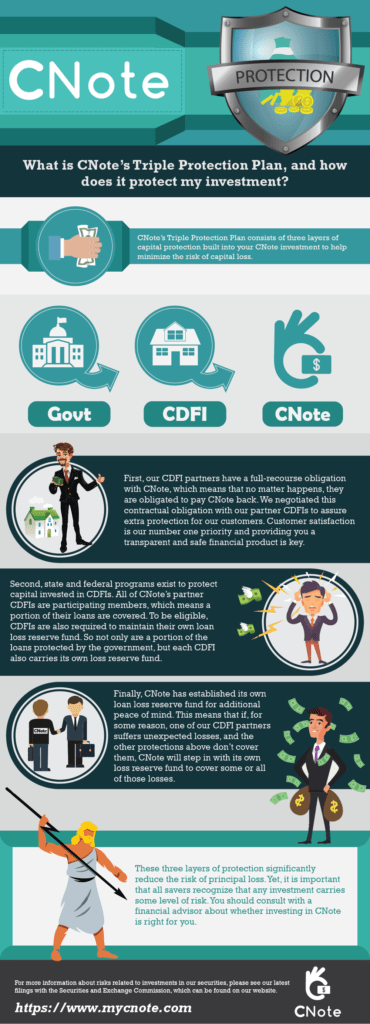
At CNote, we know trusting someone else with your money is a huge deal, that is why we built multiple layers of protection into every CNote account. These layers of redundancy help minimize the risk of capital loss. While our CDFI partners have never lost a single investor dollar, we want you to feel confident about your investment in CNote. Knowing that your investment has a strong history of consistent performance is one thing, knowing that you’re likely protected even if something goes wrong is even better.
The infographic below helps explain CNote’s Triple Protection Plan. If you want to read further, you should review our Risk & Return page.


This means we’ll be pitching at the Innovate and Celebrate conference in San Francisco. We’re hoping a little home-field advantage works in our favor. This is the first time CNote has presented at this event so it promises to be exciting.
The conference is co-hosted by Consumer Technology Association (CTA) (they run another event you might know, CES) and TechCo Media.
We’re looking forward to sharing CNote’s story with even more people, and seeing what some of the brightest and most innovative entrepreneurs are up to. Along with spreading the word about our mission of financial empowerment, we’d be lying if we said we we’rent just a little fired up for some friendly competition. Also, its hard not to discount all the inspiration you come away with after attending an event like this.
Click the very official badge below to see the other semifinalists and cast your vote for CNote!

We’re also excited to announce that of the 100 semi-finalists, 29 have female founders or co-founders. As you likely know, CNote is helmed by our female co-founders, Cat and Yuliya. CNote, is in good company on this list and we’re excited to see more female entrepreneurs get the recognition they deserve. Hopefully, it will be 50/50 in the near future!
Thanks for your support!
-Team CNote
© 2024 CNote Group, Inc. All rights reserved.