Monthly Archives

November 2024

By Borrower Stories, CNote, Community Partners, Migration V1, Small Businesses

Meet Piedmont Community Services, The Behavioral Health Service Provider Taking Care of Its Community

Although his educational pursuits and military service took him away from Martinsville, Virginia, Greg Preston always wanted to return to his hometown and give back to his community. At first, Greg worked at the local Department of Social Services as a counselor, and soon after, he began working part-time at Piedmont Community Services, a behavioral health service provider based in Martinsville. Eventually, that turned into a full-time position, and 25 years later, Greg is the organization’s executive director. “It’s a really rewarding job,” Greg said. “Working here isn’t just a good opportunity to have a good career, but it’s a way to be able to give back to the community.”

Since 1972, Piedmont Community Services has provided a range of behavioral health services to residents of the City of Martinsville and the counties of Henry, Franklin, and Patrick. Those clinical services include mental health, substance abuse, and intellectual disability services and support. The organization has approximately 450 employees, and it oversees 28 different facilities across its geographic footprint. Each year, Piedmont Community Services provides services to more than 7,500 individuals, including adults, children, and youth.

Greg Preston, Executive Director of Piedmont Community Services

One of Piedmont Community Services’ internal mottos is that if the community has a service need that the organization isn’t offering, it’ll build it. For example, Henry County is one of the nation’s epicenters for the opioid epidemic. According to a recent lawsuit, in 2015, Martinsville had more opioid doses prescribed per person than in any other locality in the country. Alarmingly, this statistic is accompanied by increasing cases of Hepatitis C, opioid overdoses, emergency room visits, and child protective placement services.

Given these realities, Piedmont Community Services is continuously creating new services and evolving its existing programmatic offerings to tackle its community’s biggest challenges head on. For example, Piedmont Community Services recently started a mobile unit, which is a vehicle that’s equipped with prescribers, counselors, and nurses. The mobile unit travels around Martinsville and the surrounding area to provide services. Greg and his team are excited about the mobile unit for numerous reasons, one of which is because there aren’t many public transportation options for community members outside of Martinsville, and therefore, this new service will better allow the organization to meet people where they are.

Furthermore, a large component of Piedmont Community Services’ work is educational. The organization has strong partnerships with the local school systems, where it provides prevention and recovery services to youth and young adults. Similarly, Piedmont Community Services works closely with community partners to educate parents and adults in the area so that residents are better equipped to identify and refer friends and family members who might benefit from behavioral health services to reach out to the organization. “Our role is to make sure we take care of our community,” said Greg. “It’s our job to be accessible and to have solid services available that can make a difference in people’s lives.”

A Community Bank “That Understands Our Mission”

Piedmont Community Services relies on a diverse network of local partners, including hospitals, first responders, community colleges, and law enforcement officials. In fact, Piedmont Community Services recently organized a coalition of these community partners, which is now working closely with Piedmont’s prevention department. The coalition’s aim is to provide input on what types of additional behavioral health services are needed in the area.

An important member of that coalition, and one of Piedmont Community Services’ most important and long-standing partners, is Carter Bank. Headquartered in Martinsville, Carter Bank is a state-chartered community bank with $4.4 billion in total assets and locations throughout Virginia and North Carolina. Carter Bank is also a CNote Impact Cash® Partner. CNote helps clients drive Impact Cash deposits to mission-driven and FDIC- and NCUA-insured partners like Carter Bank, generating returns on institutional investors’ cash deposits while supporting financially underserved communities across the country.
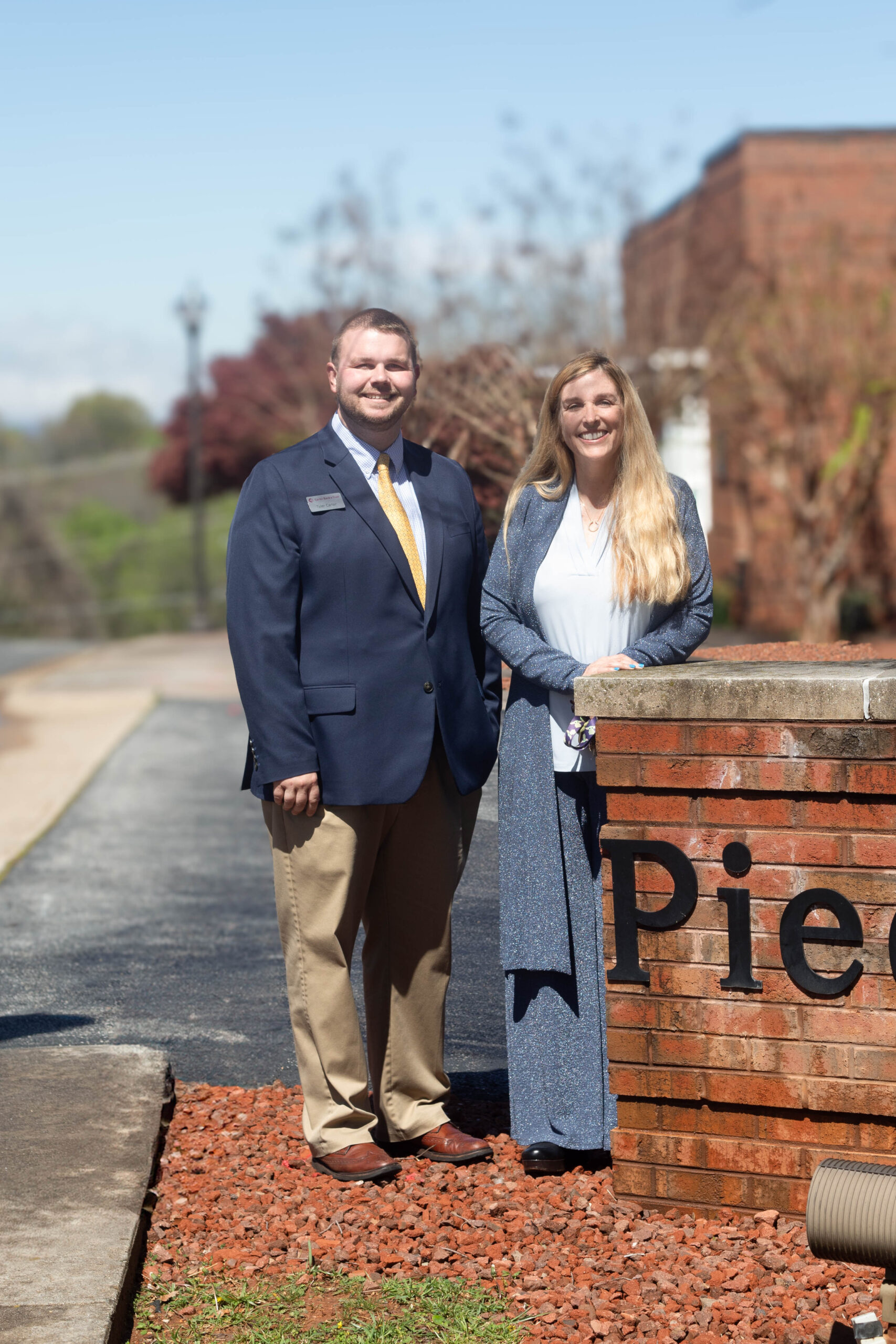
Tyler Carter, Community Reinvestment Administrator at Carter Bank, and Caroline Pilson, CFO at Piedmont Community Services

Caroline Pilson was hired by Piedmont Community Services in 1988. Since then, she’s grown with the organization, and today, she’s the organization’s CFO. According to her, Piedmont Community Services first connected with Carter Bank roughly 30 years ago. At the time, Piedmont Community Services was renovating one of its buildings, and Carter Bank provided it with a low-interest loan. More recently, during the COVID-19 pandemic, Carter Bank helped Piedmont Community Services to secure forgivable Payroll Protection Program loans. “We tried working with several other banks and they weren’t able to make anything happen,” Caroline said. “Carter Bank allowed us to maintain our operations and programs during a difficult time.”

That’s not all that Carter Bank has done for Piedmont Community Services over the years. In 2021, the bank donated $42,000 to Piedmont’s job grant program, which is part of the organization’s community recovery program. Additionally, last year, the bank named Piedmont Community Services the recipient of its Carter’s Care Program. Whenever a new member joined Carter Bank, they paid a $10 fee, which was collected on behalf of Piedmont Community Services. That campaign ultimately resulted in nearly $30,000 being donated by Carter Bank’s members to Piedmont Community Services. According to Caroline, such donations help to show Piedmont’s regulators that its community supports and believes in its services.
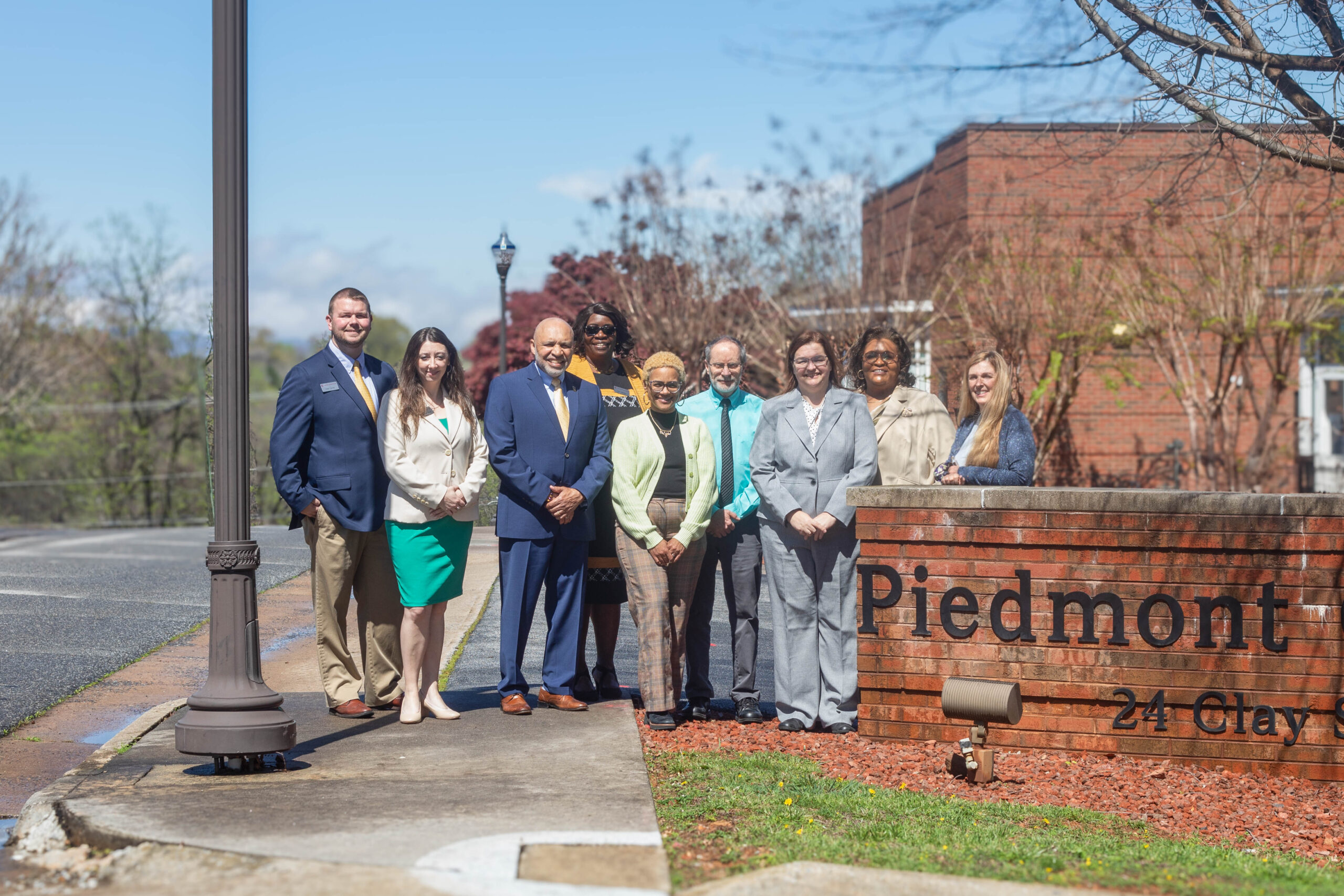
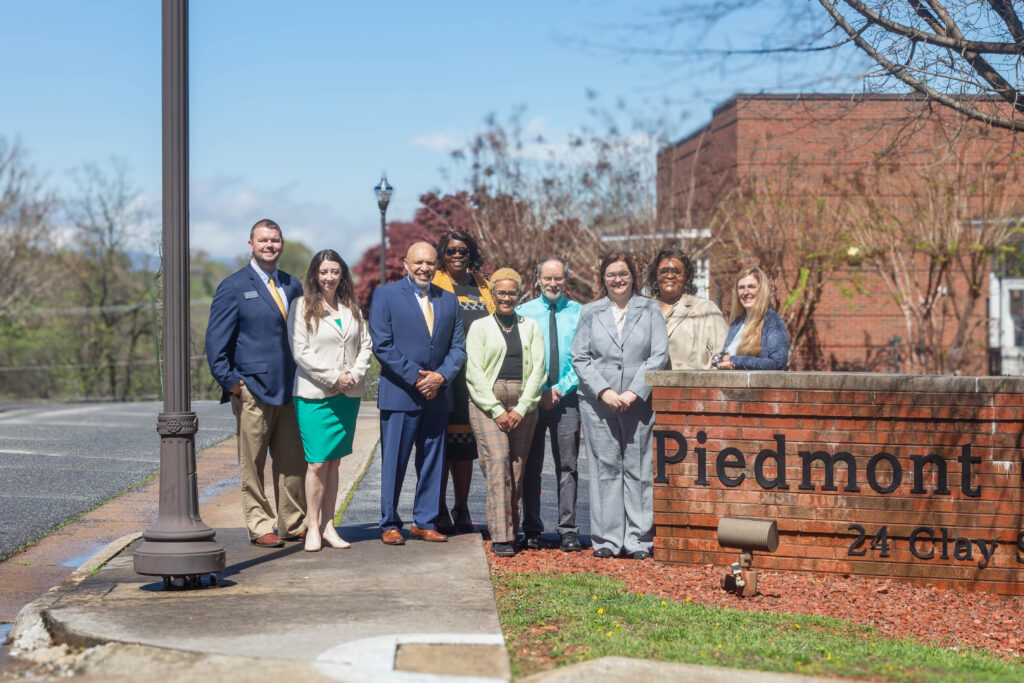
Team members from Carter Bank and Piedmont Community Services outside PCS facility

Today, Piedmont Community Services maintains a $10,000, fee-free line of credit with Carter Bank, which is required of them to meet specific standards set by the Virginia Department of Behavioral Health Services. The bank also works with Piedmont Community Services to integrate financial literacy classes into some of its programmatic offerings, not to mention helping to set up payee accounts for individuals in some of Piedmont Community Services’ residential programs. “It really means a lot to have a partner like them that understands our mission,” said Caroline. “They’ve never let us down on anything that we’ve needed.”

“The Sky’s The Limit”

Unsurprisingly, Greg, Caroline, and their team at Piedmont Community Services aren’t slowing down anytime soon. Currently, the organization is growing its Peer Recovery Services Program, as well as its Community Recovery Program, which is geared toward assisting individuals in recovery with finding employment opportunities. Additionally, Piedmont Community Services is developing a 24-hour urgent care program that would allow clients in crisis or possible crisis to come to a safe location for an evaluation rather than having to go to the emergency room and potentially being hospitalized in a psychiatric unit. Greg and Caroline hope that by creating such a program alongside local law enforcement officials, Piedmont Community Services can prevent clients from having to experience the trauma of being admitted to a hospital during a time of crisis.

The organization also plans to continue to develop and deepen partnerships within the surrounding community, particularly through its Prevention Division, which has tripled in size over the last couple of years. The division’s educational work is just one example of the many ways that Piedmont Community Services is continuing to find ways to iterate and best serve its community. 

We’ll continue to look at our community and the surrounding areas and figure out how to provide a better service, and when we do, we’ll build it,” Greg said. “The sky’s the limit for us.

*CNote Group, Inc. is not a bank, a credit union, or any other type of financial institution. CNote is not a registered investment advisor with the Securities and Exchange Commission (SEC) or a broker-dealer authorized by the Financial Industry Regulatory Authority (FINRA). CNote is not a legal, financial, accounting or tax advisor. CNote does not negotiate interest rates. Impact Cash is not a security or investment. Impact Cash® deposits are insured by the FDIC or NCUA, subject to the terms and conditions of the Impact Cash® agreements. We encourage you to consult with a financial adviser or investment professional to determine whether or not the CNote platform makes sense for you.This information should not be relied upon as research, investment or financial advice. This material is strictly for illustrative, educational, or informational purposes and is subject to change.


By CNote, Migration V1

Impact Cash® Is Now Open to Individual Clients

CNote Expands Access to Impact Investing

CNote is proud to announce that Impact Cash®, one of our most impactful and flexible financial solutions, is now available to Individual Investors. Previously exclusive to corporations and foundations, this milestone expansion allows individuals to join the movement of aligning their cash management with their values. Minimum deposit is $50K. 

What Is Impact Cash®?

Impact Cash® is a secure and scalable cash management solution designed to empower Community Development Financial Institutions (CDFIs) and credit unions while delivering competitive financial returns. This unique product provides 100% FDIC and NCUA insurance coverage, making it one of the safest options for clients looking to align their financial goals with social impact.

Through Impact Cash®, clients not only protect their funds but also drive meaningful change by supporting mission-driven financial institutions that empower underserved communities across the United States.

Why Choose Impact Cash®?

Impact Cash® isn’t just another cash management solution—it’s a gateway to achieving financial returns with measurable impact. Here’s why it’s an attractive option for accredited individual investors:

  1. 100% Insurance Coverage:
    Your funds are 100% insured by FDIC and NCUA, offering unparalleled security for your cash, and peace of mind.
  2. Blended APY:
    Impact Cash® offers a competitive blended APY, combining financial returns with social impact. This product allows you to grow your wealth while actively contributing to community development.
  3. Support for CDFIs and Credit Unions:
    When you place your deposits with Impact Cash®, your dollars directly support CDFIs and mission-driven financial institutions. These organizations play a critical role in driving financial inclusion, providing loans to small businesses, affordable housing projects, and underserved communities.
  4. Flexible Liquidity:
    Impact Cash® is designed to meet the needs of clients who value accessibility and flexibility, making it easier than ever to align your financial goals with your social values.

How It Works

By depositing funds into Impact Cash®, investors gain exposure to a portfolio of mission-driven financial institutions. These institutions work to close the racial and gender wealth gap, finance small businesses, and create opportunities for historically underserved communities. At the same time, investors enjoy the security of fully insured deposits and the ability to earn competitive returns.

Why Now?

The decision to expand Impact Cash® to individual clients reflects CNote’s mission to create a more inclusive economy as we look ahead to 2025. It’s a step toward democratizing impact cash management, giving individuals the tools to make a measurable difference with their cash.

As financial markets evolve, more investors are seeking opportunities that combine profit with purpose. Impact Cash® meets this demand by offering a solution that’s not only secure and flexible but also contributes to building a more equitable financial system.

Ready to Align Your Cash with Your Values?

If you’re interested in growing your wealth while creating a positive social impact, Impact Cash® is the Solution for you. With its unique combination of financial security, flexibility, and measurable impact, it’s never been easier to put your cash to work for good.

Learn more about Impact Cash® by visiting our Impact Cash® page.

Join the Movement

At CNote, we believe in the power of financial innovation to create lasting change. By using in Impact Cash®, you’re not just managing your money—you’re making a difference. Together, we can transform financial capital into a force for good.


Disclosure: CNote Group, Inc. is not a bank, a credit union, or any other type of financial institution. CNote is not a registered investment advisor with the Securities and Exchange Commission (SEC) or a broker-dealer authorized by the Financial Industry Regulatory Authority (FINRA). CNote is not a legal, financial, accounting or tax advisor. CNote does not negotiate interest rates. Impact Cash® deposits are not a security or investment. Impact Cash® deposits are insured by the FDIC or NCUA, subject to the terms and conditions of the Impact Cash® agreements. We encourage you to consult with a financial adviser or investment professional to determine whether or not the CNote platform makes sense for you. Information provided herein is for educational purposes only and is not tailored for any individual investor or client. It should not be relied upon as financial or investment advice. Any projected returns are illustrative, based on interest rates offered currently or in the past, which may be subject to change at any time, and may not reflect the ultimate rate of return. Past performance is no guarantee of future results, and future returns may vary.

CNote | Impact Investing
By CNote, Impact Investing, Migration V1

How Impact Investing Helps Build Stronger Communities

CNote | Impact InvestingIn a world where traditional investments often prioritize profit over purpose, impact investing has emerged as a powerful alternative for those who want to align their financial goals with their values. By investing in projects and organizations that make a difference in underserved communities, impact investors not only receive financial returns but also help build stronger, more resilient local economies.

At CNote, our mission is to channel capital into mission-driven financial institutions that drive meaningful change in the areas that need it most. Here’s how impact investing through CNote can help build stronger communities.

1. Fueling Small Business Growth

Small businesses are the backbone of local economies, but many of them—especially those in underserved areas—struggle to access the capital they need to grow. Traditional financial institutions often view these businesses as too risky, leading to barriers in financing that stifle innovation and growth.

Through CNote, your investment dollars are directed to mission-driven financial institutions that provide loans and financial services to small businesses that would otherwise be overlooked. By supporting these entrepreneurs, investors help stimulate job creation, drive local economic growth, and foster a culture of innovation.

Example: CNote’s CDFIs partner, Pursuit Community Finance, provides loans to small businesses like Alpha Care Supply, a small business providing home modifications for people with disabilities and the elderly. Support from the CDFI allowed the business to expand, hire additional staff, and better serve its community, driving both local job creation and economic development.

Read more about how Alpha Care Supply used their funding to grow their business. 

2. Supporting Affordable Housing Initiatives

One of the most critical issues facing underserved communities is the lack of affordable housing. Rising costs, coupled with limited housing supply, often push low- to moderate-income families out of their neighborhoods, disrupting community cohesion and deepening economic disparities.

Impact investments through CNote play a crucial role in supporting affordable housing initiatives. CNote partners with CDFIs and other mission-driven financial institutions that help finance affordable housing projects, ensuring that more families have access to safe, affordable places to live. When families have secure housing, they can focus on education, work, and community involvement, all of which contribute to stronger, more stable neighborhoods.

Example: CNote’s Impact Cash® program supports community financial organizations that provide resources to critical community programs like the Kauai Rent Relief and Housing Assistance Program (KRRHP). KRRPH provided critical rent assistance during the COVID-19 pandemic, helping local families avoid eviction and stay in their homes. This support stabilized the community during a time of crisis, demonstrating the importance of affordable housing initiatives in building stronger, more resilient neighborhoods.

Read more about the Kauai Rent Relief and Housing Assistance Program here. 

3. Strengthening Local Financial Institutions

Many underserved communities lack access to mainstream financial services, making it difficult for residents to save money, get loans, or build credit. Local financial institutions like CDFIs and credit unions are often the lifeline for these communities, providing essential financial products and services that help residents thrive.

CNote supports these mission-driven institutions, enabling them to expand their services and reach more people. When local financial institutions are well-capitalized, they can offer more loans, create specialized programs for their communities, and provide financial education, all of which lead to long-term economic growth and stability.

Example: CNote’s partnership with a CDFI supported DREAM Charter School in East Harlem secured funding to build a state-of-the-art facility, providing hundreds of students in a low-income area with access to high-quality education. This investment not only strengthened the local community by offering educational opportunities but also showcased the critical role local financial institutions play in supporting transformative community projects.

Learn more about Dream Charter School 

4. Fostering Economic Resilience and Inclusivity

Impact investing doesn’t just help individuals—it also fosters a sense of inclusivity and resilience across entire communities. By directing capital to historically underfunded areas, CNote helps level the playing field for people of color, women entrepreneurs, and other marginalized groups who have traditionally been excluded from economic opportunities.

This kind of investment empowers underserved communities to become self-sustaining, creating economic resilience that can withstand the challenges of broader economic downturns. When community members have the resources and opportunities they need to succeed, they are more likely to invest back into their neighborhoods, building a cycle of sustainable growth.

Example: CNote’s partnership with a CDFI supported Finale, a pop-up restaurant in Oakland, was able to receive the funding needed to expand. The restaurant, founded by Black women entrepreneurs, gained critical financial support to bring more diversity and inclusivity to the local food scene. By fostering growth in a traditionally underfunded area, this investment not only boosted the local economy but also helped create a more resilient and inclusive community.

Read more about how Finale used CDFI funding to expand

5. Measuring Impact Beyond Financial Returns

At CNote, we believe that success goes beyond financial returns. Our impact measurement tools provide investors with tangible insights into how their dollars are making a difference in the real world. From the number of jobs created to the affordable housing units built, CNote tracks the positive outcomes of investments to ensure impact.

This transparency not only helps investors see the real-world effects of their capital but also reinforces the idea that investing can—and should—be a force for good.

Investing in Stronger Communities

By choosing impact investing through CNote, you are making a conscious decision to support stronger, more resilient communities. Whether it’s fueling small businesses, supporting affordable housing, or strengthening local financial institutions, your investment dollars go beyond simple returns—they help create lasting, positive change.

CNote makes it easy for both individuals and companies to invest in the future of underserved communities. Together, we can build a world where every community has the resources it needs to thrive.

CNote | Closing the Funding Gap Supporting BIPOC-Owned Businesses in the U.S.
By Community Partners, Migration V1

Supporting BIPOC-Owned Small Businesses: The Challenges and Opportunities for Growth

Across the United States, BIPOC (Black, Indigenous, and People of Color) entrepreneurs are building businesses that strengthen communities, create jobs, and contribute to the economy. These business owners share the same dreams as any entrepreneur: to grow their businesses, serve their customers, and build something lasting. But the path to success can look very different for them. They encounter barriers—often systemic that make securing the funding needed for growth a constant challenge.

CNote | Closing the Funding Gap Supporting BIPOC-Owned Businesses in the U.S.Facing Funding Challenges

When BIPOC business owners seek funding, they often face more obstacles than their white counterparts. A 2018 Federal Reserve study found that 53% of Black-owned businesses did not receive the full amount of business funding requested compared to 24% of white-owned businesses. (source: Federal Reserve). For many BIPOC entrepreneurs, this gap represents more than a financial setback—it limits the capacity to hire employees, invest in necessary equipment, or expand to new locations. These financial roadblocks can restrict growth and, at times, put the very future of the business at risk.

The Revenue Gap: Doing More with Less

Even with hard work and strategic planning, BIPOC-owned businesses often operate with slimmer profit margins. For example, a Brooking Institution study reported that Black-owned businesses earn an average annual revenue of $1,031,021, while non-Black businesses bring in $6,485,334 on average (source: Brooking Edu). Similar patterns appear for Hispanic-owned businesses, which also see lower-than-average revenues. These disparities translate to limited financial resilience, meaning that many BIPOC entrepreneurs have less room to maneuver when faced with economic disruptions or unexpected expenses.

The COVID-19 Impact: Amplifying Financial Pressures

The COVID-19 pandemic presented an unprecedented test for small businesses, with BIPOC-owned businesses bearing a disproportionate share of the burden. A National Bureau of Economic Research report found that between February and April 2020, Black-owned businesses saw a 41% decrease, compared to a 17% decrease for non-black-owned businesses (source: National Bureau of Economic Research). Hispanic and Asian-owned businesses also faced declines of 32% and 26%, respectively, as industries like retail and food service—where many BIPOC entrepreneurs operate—were hit hardest by pandemic-related closures and restrictions.

Bridging the Gap with the Wisdom Fund*

To address these disparities and support BIPOC entrepreneurs, especially women of color, CNote created the Wisdom Fund*. This unique investment initiative partners with mission-driven financial institutions across the country to support providing access to capital for BIPOC women entrepreneurs. Since its launch, the Wisdom Fund* has supported funding for nearly 300 loans to BIPOC women entrepreneurs, totalling over $21 million. Through this support, the Wisdom Fund* is helping to bridge the funding gap, allowing BIPOC women to not only build businesses but also strengthen their communities, create jobs, and pave the way for future generations of diverse entrepreneurs.

OurPlace Residential Services: A Story of Impact

The entrepreneurial nurses behind OurPlace Residential Services envisioned creating a supportive housing space in Minneapolis, a concept that hadn’t been realized in the area before. Despite thorough planning, one barrier loomed: securing the capital needed to purchase and renovate an apartment building. Multiple banks turned them away due to a lack of collateral, but one bank finally referred them to Meda, recognizing it as a project Meda would be eager to support. 

True to its mission, Meda, a CDFI committed to empowering BIPOC entrepreneurs and revitalizing neighborhoods that is supported by CNote’s Wisdom Fund*, backed the project from the start. Meda tapped into its network to locate a suitable property, secured funding for the $2.5 million acquisition and renovation, and connected with partners like the City of Minneapolis to ensure the venture’s success. Thanks to Meda, OurPlace has welcomed its first clients, expanding to 15 staff and building a model that could help combat housing instability and homelessness across the Twin Cities. As co-founder Murwo shared, “We couldn’t have done it without Meda…they made this happen.” 

Read OurPlace’s full story here: https://wpstaging.mycnote.com/blog/meda/ 

Supporting BIPOC-owned businesses is more than an economic imperative; it’s a commitment to building a fairer, more resilient economy. Programs like CNote’s Wisdom Fund*, along with the essential work of mission-driven financial institutions, are crucial in bridging the funding gap and empowering entrepreneurs who have historically been overlooked. By expanding access to capital for BIPOC entrepreneurs, we enable them to strengthen their communities, create jobs, and contribute to a more inclusive future. 

Learn more about CNote’s Wisdom Fund here: https://wpstaging.mycnote.com/solutions/wisdom-fund/ 

*Available to accredited investors only. Returns are not guaranteed. CNote Group, Inc. (“CNote”) is not a bank, a credit union, or any other type of financial institution. CNote is not a registered investment advisor with the Securities and Exchange Commission (SEC) or a broker-dealer authorized by the Financial Industry Regulatory Authority (FINRA). CNote is not a legal, financial, accounting or tax advisor. CNote offers unregistered securities consisting of various promissory notes (“Notes”) to eligible investors pursuant to Regulation A and Regulation D under the Securities Act of 1933, as amended. For more information on risks related to investing in our Wisdom Fund Notes see our  Wisdom Fund Private Placement Memorandum. Neither the SEC nor any state securities regulator has passed upon or endorsed the merits of any investment in CNote’s offerings. Investments in our Notes are not bank deposits and are not insured by the Federal Deposit Insurance Corporation (FDIC), the National Credit Union Administration (NCUA), or any other governmental agency. Investing in our Notes involves risk of loss, including the principal invested. We encourage you to consult with a financial adviser or investment professional to determine whether or not the CNote platform makes sense for you. Information provided herein is for educational purposes only and is not tailored for any individual investor or client. It should not be relied upon as financial or investment advice. Any projected returns are illustrative, based on interest rates offered currently or in the past, which may be subject to change, and may not reflect the ultimate rate of return for any particular investor or client. Past performance is no guarantee of future results, and future returns may vary.

By Community Partners, Migration V1

At Hope Credit Union, Climate Change Is The Deep South’s Wealth-Building Opportunity Of A Lifetime

When it comes to our shared climate reality, Hope Credit Union’s members are familiar with the ever-expanding narrative. After all, they’re living it. Across the Deep South, summers are getting hotter, power outages are becoming more common, and electric vehicles (EV) are being plugged into more and more homes. Members, however, aren’t just experiencing these shifting dynamics—they’re talking about them.

According to Tyler Archie, the Vice President of Strategic Initiatives and resident subject matter expert on environmental impact for Hope Enterprise Corporation, he and his team are all ears. In fact, explicit member feedback spurred Hope Enterprise Corporation and Hope Credit Union (collectively “HOPE”) to point financial products and community economic development programs towards greenhouse gas reducing technologies and projects. “In focus groups community members tell us how we can help improve their lives and communities,” he said. “They tell us that they are excited about technologies like hybrid cars, EVs and heat pumps; they want to breathe cleaner air; and they also say that they are interested in doing their part to slow climate change. It’s our job to make sure that those financial health and wealth-building opportunities are available and affordable to them.” 

Affordable, reliable and sustainable: report compares utility performance • Arkansas Advocate

That’s exactly what Hope Credit Union has been doing. Since 1994, Hope Credit Union has provided financial services, leveraged resources, and engaged in advocacy that strengthens the financial health and wealth of people in under-resourced communities in Alabama, Arkansas, Louisiana, Mississippi, and Tennessee. For the past 30 years, the credit union has strived to find new ways to address the intergenerational wealth gaps that exist throughout its footprint, whether that’s been through lending for affordable housing, community facilities, or community partnerships

More recently, the way that HOPE is approaching building generational wealth is through green lending opportunities, including residential and commercial solar financing. For example, on April 22nd, 2024, Hope Enterprise Corporation (HEC), which is part of the broader HOPE family of community development organizations, was selected as one of 60 applicants to participate in the United States Environmental Protection Agency’s (EPA) Solar for All program. The EPA awarded HEC a state-level award for $93,670,000 in Arkansas and $62,450,000 in Mississippi. According to the EPA, the $7 billion program will create new or expand existing low-income solar programs, which will enable more than 900,000 households in low-income and disadvantaged communities to benefit from distributed solar energy. More specifically, these programs will further the Greenhouse Gas Reduction Fund’s objectives by reducing greenhouse gas emissions while lowering electric bills for overburdened households in 25 states and territories that have never had statewide low-income solar programs before.

That includes Arkansas and Mississippi, where HEC was selected to deploy state-level, Solar for All awards. HEC’s Solar for All proposal included financing models for solar and battery storage on single-family homes and multi-family affordable housing, as well as community solar.  

All three pathways are designed to achieve monthly utility bill savings of at least 20% for low-income households, while at the same time supporting a job market for solar installers. One goal of the multifamily approach is to lower energy costs for low-income tenants as a way to help those families eventually make the transition from renting to home ownership.

According to Tyler, although the price of power in HOPE’s Deep South footprint is relatively cheap compared to other regions in the United States, the energy burden—or the percentage of a household’s income spent on energy—is among the highest in the country. That leaves families with less savings and vulnerable to unexpected expenses. Solar for All can create an opportunity to put utility bill savings in the bank. “Through Solar for All, we can create $400 in savings that most families are missing to help insulate them from unexpected life events,” Tyler said. “If we can help people achieve financial health, you’ve got the foundation to move into wealth-building opportunities.”

The Opportunity of Climate Change

All of HOPE’s green lending strategies hinge upon innovative financing, strategic partnerships, and its experience and expertise in serving disadvantaged communities. That’s one of the reasons why the credit union became a CNote Climate Cash™ partner. Climate Cash™ is a deposit solution enabling corporations to enjoy FDIC or NCUA insurance and competitive returns while contributing to carbon-reduction lending activities. Climate Cash™ enables corporations to deploy cash in the form of deposits into a network of mission-driven banks and credit unions like Hope Credit Union to combat climate change. Importantly, participating corporations can monitor, administer, and track reporting of their Climate Cash™ deposits through a single interface. 

HOPE plans to expand its climate lending beyond solar. The credit union is currently working on creating a home energy efficiency lending opportunity, and it’s preparing to pilot an EV-lending program. According to Tyler, the future value of EVs goes beyond transportation. That’s because EVs, as he puts it, are “massive batteries rolling around on wheels.” By bringing EVs into the affordability conversation for its members, Hope Credit Union members will have the ability to bolster resiliency efforts in a part of the country that’s already experiencing power outages associated with stronger and more unpredictable weather patterns.

Tyler views the transition to sustainable energy as both a crisis and as the wealth-building opportunity of a generation. For him, it again goes back to what HOPE members are already saying: EVs are more fun to drive, heat pumps are nice to have, and the future can be better. Tyler compares the potential of consumer finance to unlock consumer demand to that of General Motors’ first automobiles and Apple’s iPhone. “Financing is the thing that can really unlock consumer behavior,” he said, “and the American consumer can dramatically accelerate climate change mitigation efforts if the financing is done right. I think that’s what we’ll see: market demand and people’s interest in enjoying both a higher quality of life and financial savings that result in adoption of sustainable technologies and a path for financial health and wealth in our low-income communities.”

Learn More:

  • Climate Cash™ is enabling corporations to enjoy FDIC or NCUA insurance and competitive returns while supporting carbon-reduction lending activities.
  • Hope Credit Union, a certified Community Development Financial Institution (CDFI), is dedicated to enhancing financial stability and fostering economic growth for individuals and families in underserved communities across the Deep South. Since 1994, Hope has provided vital financial services, leveraged resources, and engaged in advocacy to strengthen the financial health and wealth of people in under-resourced areas.
By CNote, Impact Investing, Impact Metrics, Migration V1

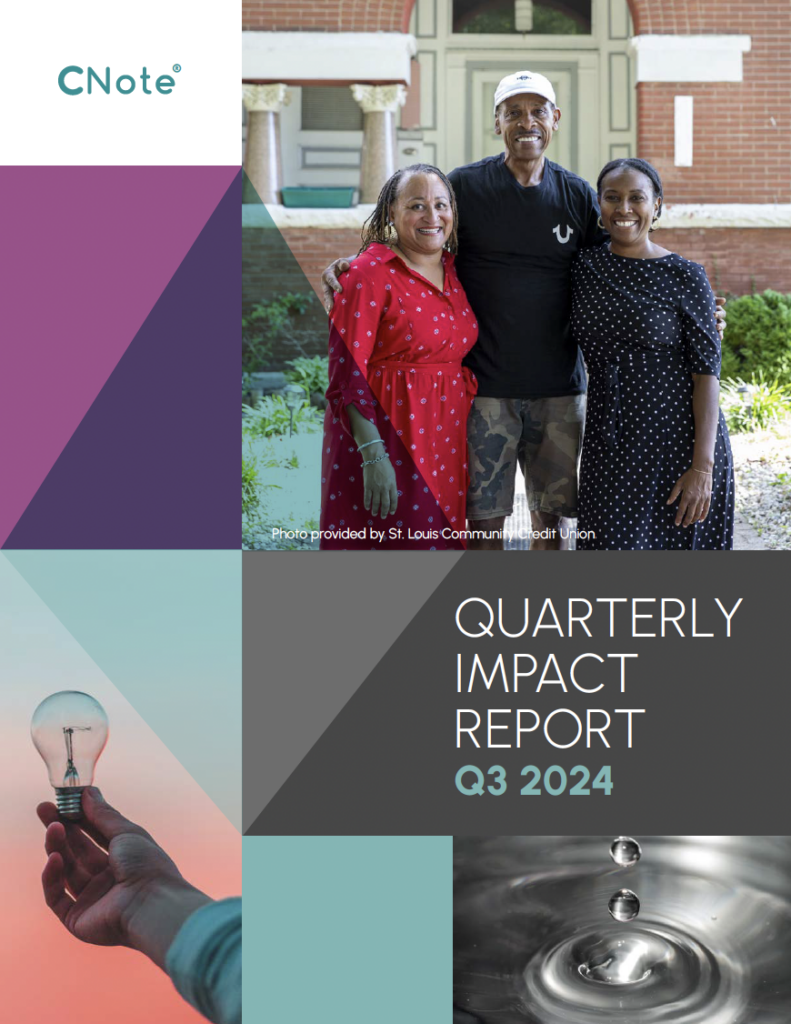
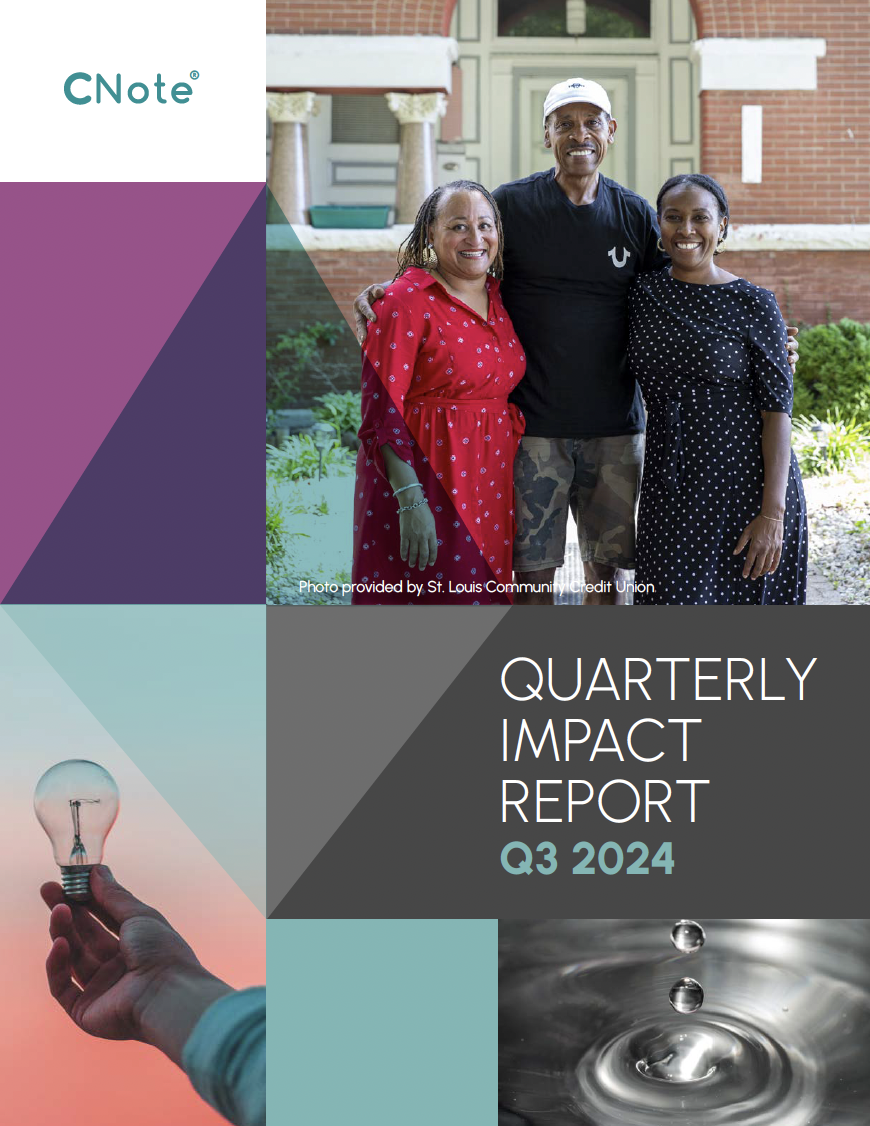
CNote’s Q3 2024 Public Impact Report

CNote is thrilled to share our Q3 2024 Impact Report, highlighting impactful stories, significant progress, and fresh insights from our mission-driven partners. Here’s what’s inside:

  • Spotlight on HOPE Credit Union in North Memphis: Discover HOPE’s transformative partnership with The Works, revitalizing the historic Klondike neighborhood through Northside Square—a mixed-use development that will provide affordable housing, educational facilities, and healthcare access.
  • Affordable Housing Innovation with HAC: In rural Pennsylvania, the Housing Assistance Council (HAC) is addressing senior housing needs with the Village of Hope. This project, driven by the MAGIC (Multi-Ability, Multi-Generational, Inclusive Community) paradigm, provides affordable housing with inclusive design for seniors and families alike.
  • Wisdom Fund Updates: Learn how the Wisdom Fund is advancing capital access for women of color entrepreneurs. Hear from Jodi Morris, an impact-focused investor, about her dedication to supporting this fund and driving economic empowerment.
  • And More!

Additional Highlights:

  • Affordable Housing Collaboration and Outcomes: This quarter, CNote shares a focused look at affordable housing outcomes across our portfolio, spotlighting how partners are leading with innovative, community-based solutions to address the nation’s affordable housing needs.
  • Resilient Financial Institutions: Our partner credit unions and banks are leading with resilience, ensuring sustainable outcomes across critical impact areas like affordable housing, small business growth, and green financing.

As a certified B Corporation and Delaware public benefit corporation, CNote’s mission remains steadfast: to build a more inclusive economy by channeling capital into under-resourced communities through impact-driven financial institutions. Our framework enables these institutions to serve their communities sustainably and effectively.

Read the full report to see the powerful impact our partners are creating and join us on the journey toward lasting economic and social equity.

By CNote, Migration V1

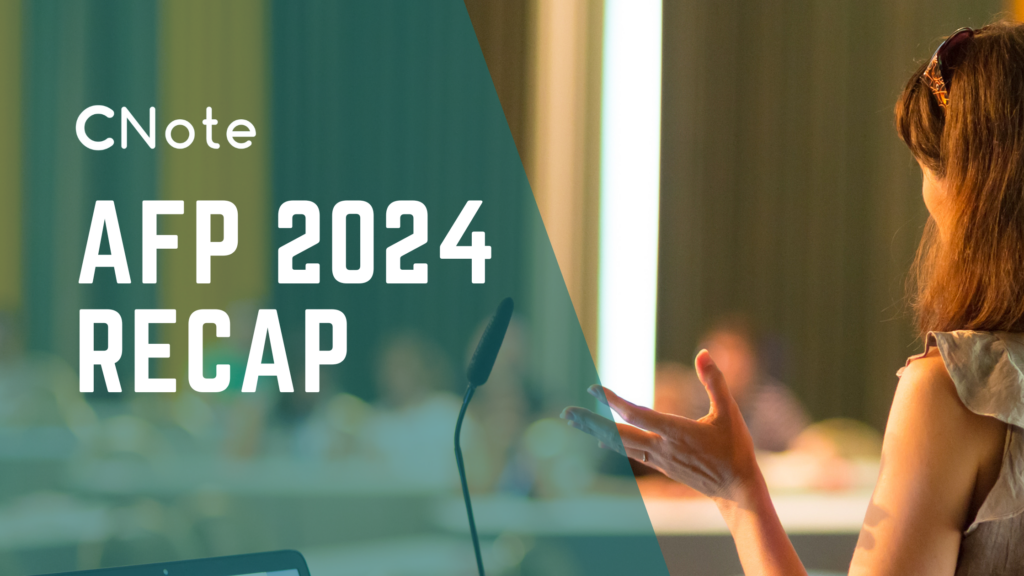
Key Takeaways from AFP 2024: Treasury Trends and Decarbonizing Cash

Last week, the national AFP 2024 conference wrapped up, bringing together the brightest minds in corporate finance and treasury. CNote was proud to participate, hosting a pivotal presentation alongside Xylem and Block titled “Decarbonizing Cash: Treasurers are Key in Cutting Climate Emissions.

During this session, CNote’s CEO, Cat Berman, moderated a discussion on the role treasurers can play in sustainability by leveraging insured deposits for carbon reduction. The presentation featured insights from Xylem’s Director of Treasury, Aaron Johnston, and Block’s Investment Portfolio Manager, Michael Nourafshan. They shared their experiences in aligning treasury strategies with sustainability goals, including how they manage risk, and financial performance, and measure success in decarbonizing their cash holdings.

Read about how deposits can foster sustainability in communities like Flywheel Development, in Washington D.C.

In addition to leading this impactful session, CNote spent time listening and engaging with industry leaders at AFP, where three key trends emerged that will shape the future of corporate treasury:

1. 2025 Yield Predictions: Interest Rate Cuts Ahead

One of the most discussed topics at AFP 2024 was the outlook for interest rates in 2025. Many treasury professionals expect the Federal Reserve to lower rates, with predictions ranging from 4% to as low as 3.5%. Although the exact figures are still up for debate, there’s a strong consensus that the era of high rates is coming to an end.

For CNote, this trend underscores the importance of providing secure, yield-bearing solutions, especially as treasurers look to protect their organizations’ cash reserves in a lower-rate environment. CNote’s Impact Cash and Climate Cash™ solutions* offer insured deposits that not only provide safety but also deliver steady returns, even as rates fluctuate. With a focus on impact investing, it allows treasurers to meet their financial goals while supporting community development.

2. Safety and Soundness: A Continuing Priority

In light of recent banking challenges and ongoing economic uncertainty, safety and soundness remain top priorities for corporate treasurers. At AFP, this theme was discussed across multiple sessions, as treasurers are increasingly focused on protecting capital while still seeking opportunities for growth.

CNote’s offerings* are designed to meet these needs head-on. By providing insured deposits through mission-driven financial institutions, we offer corporate treasurers a way to safeguard their cash with the added benefit of contributing to community impact. In an environment where security is paramount, treasurers can rest assured that CNote’s cash management solutions provide the reliability and peace of mind they’re looking for.

3. AI and Automation: Striking the Right Balance

Another major trend from AFP 2024 was the increasing role of AI and automation in treasury operations. Many organizations are adopting automation to streamline processes and increase efficiency, but there’s also recognition that not every task should be automated. Human judgment and expertise are still critical in areas like risk management and strategic decision-making.

For CNote, this trend aligns with our commitment to balance technology efficiency and human-led relationship management and expertise. While AI can enhance efficiency, particularly in cash flow management and analytics, there’s no substitute for the expertise needed to make informed, values-driven financial decisions. CNote’s platform, while tech-forward, is built on the belief that impactful finance requires both innovation and intentionality.

Looking Ahead

As we reflect on our time at AFP 2024, we’re excited to take the insights and trends we’ve gathered and apply them to the remainder of the year. From preparing for changes in interest rates to enhancing the safety of corporate cash management, and finding the right balance between automation and human expertise, CNote is well-positioned to help treasurers navigate the evolving financial landscape.

CNote looks forward to continuing these important conversations and supporting our clients with innovative solutions that align their financial goals with meaningful impact.


*CNote Group, Inc. is not a bank, a credit union, or any other type of financial institution. CNote is not a registered investment advisor with the Securities and Exchange Commission (SEC) or a broker-dealer authorized by the Financial Industry Regulatory Authority (FINRA). CNote is not a legal, financial, accounting or tax advisor. Impact Cash® and Climate Cash™ deposits are not a security or investment. Impact Cash® and Climate Cash™ deposits are insured by the FDIC or NCUA, and subject to the terms and conditions of the Impact Cash® agreements. We encourage you to consult with a financial adviser or investment professional to determine whether or not the CNote platform makes sense for you.This information should not be relied upon as research, investment or financial advice.