Monthly Archives

September 2023

By Case Study, CNote, Migration V1

Expanding Access to Capital | UniBank and CNote’s Partnership for Inclusive Growth

CNote is proud to share a new case study with UniBank: Expanding Access to Capital | UniBank and CNote’s Partnership for Inclusive Growth

Before partnering with CNote, UniBank was striving to meet the growing demand for banking services and access to capital among Asian American business owners, many of whom are immigrants.

The management team often wondered whether it would be possible to receive deposits from ESG-minded companies, organizations and individuals outside of its target market. However, without the relationships and proper infrastructure, it did not seem plausible.

CNote’s Impact Cash® emerged as the ideal solution to address UniBank’s challenge of connecting with new sources of deposits. By facilitating partnerships with corporations and impact investors, CNote’s innovative program emphasized long-term community impact and sustainable growth.

“The deposits we’ve received from CNote’s program have increased our capacity to serve the our customers, enabling us to provide more loans and support to small businesses and individuals. We hope that this program will have a greater role in driving sustainable growth and fostering economic development, empowering our customers to succeed in their ventures and build generational wealth.” ~ Simon Bai, EVP and Chief Financial Officer at UniBank


By Borrower Stories, Low Income Designated Credit Union, Migration V1

How Karla Villanueva Grew Her Gymnastics Studio with Her Credit Union’s Support

Karla Villanueva-Bernal has been passionate about gymnastics and practiced the discipline throughout her life. Her dream of opening her own gymnastics studio was finally realized in 2012 when she and her husband started what was then called Karla’s Gymnastics. 

Karla Villanueva-Bernal, Owner of Garden Island Gymnastics

Karla started teaching one class every Saturday in the All Saints Red Barn, a multi-use space in Kapaa, Kaua’i. They had four-panel mats, one bar, a balance beam, and two ledges—just enough to accommodate ten young students. 

During this time, Karla worked full-time at a local financial institution, while her husband, Danny, worked in the travel sector. But Karla’s goal was always to offer higher-level gymnastics for girls and, ultimately, to provide the only USAG program based in the USA Junior Olympics Program on Kaua’i. 

Karla and Danny built and grew their business on word-of-mouth and reputation. 

After three years at the Red Barn, they found a 2400-square-foot warehouse space to rent in Kapaa and later a 4700-square-foot warehouse at the same locations. They rebranded, opening as Garden Island Gymnastics, embracing an incredible opportunity for them to expand and level up their game.

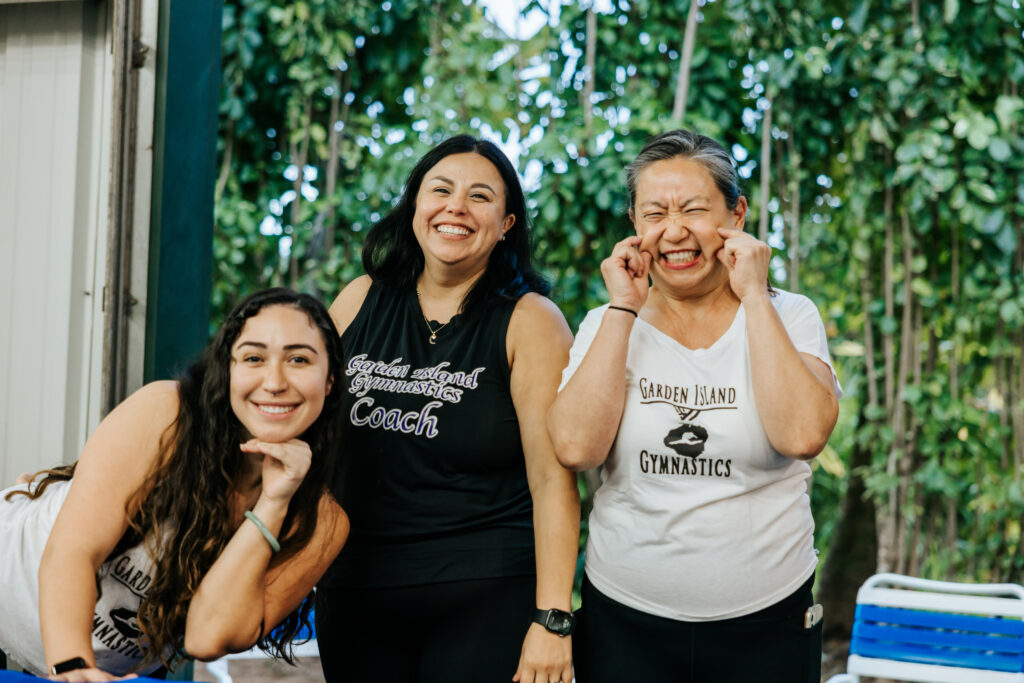
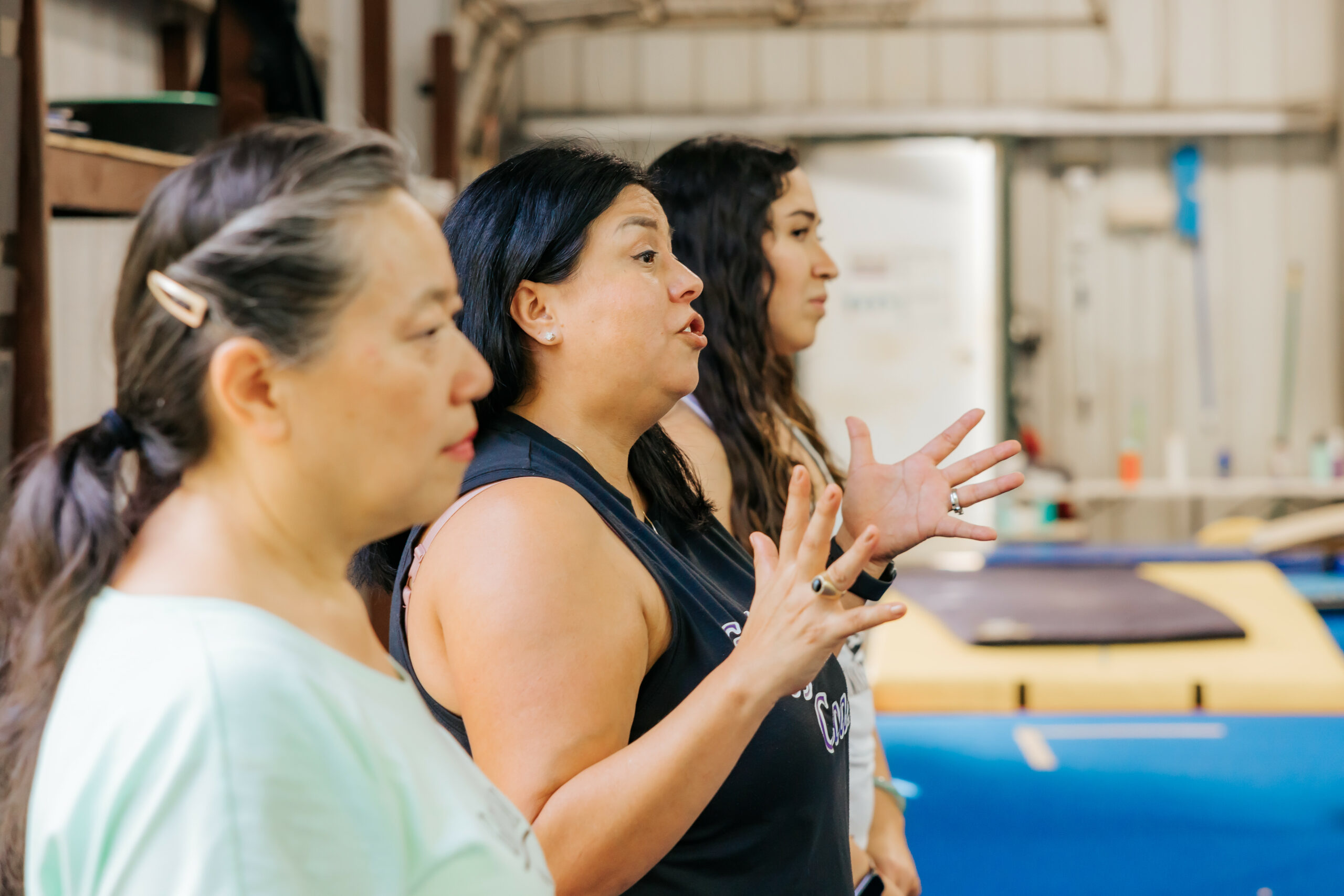
The Garden Island Gymnastics coaches supervise a class

How KFCU Saved Karla and Danny’s Dream

Though they were living their dream, it wasn’t easy. Running a small business in Kaua’i is expensive, and they needed solid financial advice and guidance to make it work. 

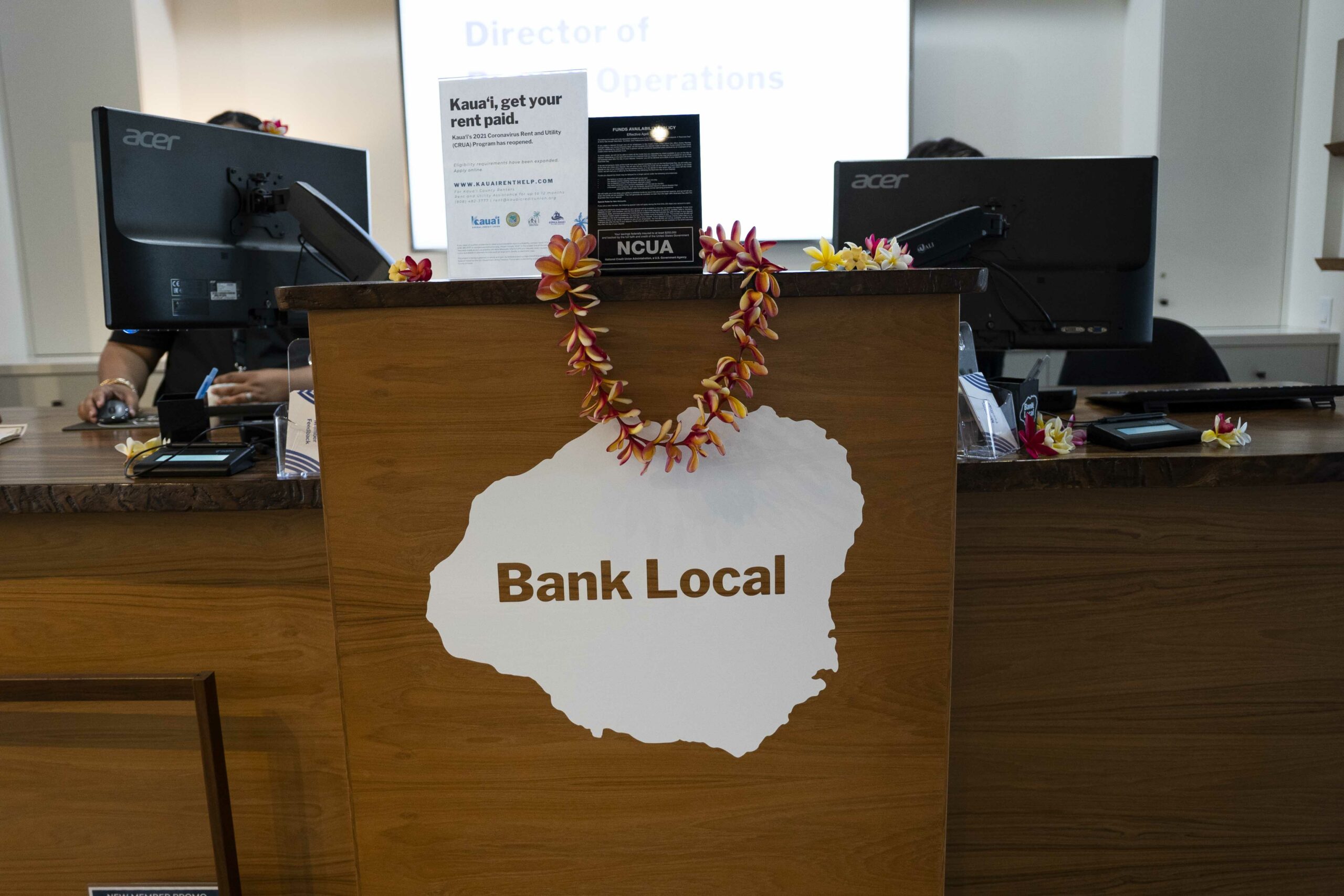
When Covid hit, Karla and Danny’s bank shut its doors for 67 days and had no answers for them. The situation could have been dire. Fortunately, the couple had a friend who worked at Kaua’i Federal Credit Union (KFCU), the island’s only Community Development Financial Institution (CDFI).

Whereas Karla’s financial institution could not help, advise, or provide resources for the business, KFCU was ready to step up. The credit union quickly facilitated a PPP loan to keep them afloat during the pandemic, along with two $5000 grants, one no-interest loan, and another through the Cares Act. 

KFCU didn’t know any better what was going to happen over the ensuing months, but they were willing to go above and beyond to get behind Karla and Danny and get them the financial aid they needed to stay in business. They asked, “how can we help?” and then showed up in ways that made all the difference in Karla and Danny’s life. 

“I think as an institution, their philosophy is ‘how can we help?’ where some financial institutions would approach it more like, ‘how can we build our portfolio and maximize profits for our shareholders?’ KFCU is really about helping the community, and it’s not just a marketing tool—that’s their philosophy. And it comes from the top down. Monica, the CEO, she was amazing. Her mindset and leadership are infused throughout the whole organization.”

One of the reasons KFCU was able to help is because they are a CNote Impact Cash® Partner. CNote deploys Impact Cash® dollars to mission-driven and FDIC and NCUA-insured partners, like Kaua’i Federal Credit Union, generating returns on institutional investors’ cash allocations while supporting financially underserved communities across the country. 

Karla and Danny’s experience with KFCU was so positive that they didn’t stop with the PPP loan they had received. They also refinanced their home for the down payment and obtained a commercial loan for the balance, acquiring a 5000-square-foot facility from which they could realize their vision of growing gymnastics on the island. 

Karla outside the new Garden Island Gymnastics location

Building Back Stronger: Envisioning the Future

KFCU had never done commercial loans before. Karla and Danny were their first commercial clients.“I asked the VP, Sean Kaley, ‘Do you do commercial loans?’ and they said, ‘You know what? We are just starting the program and you are going to be our first.’”

The real estate was zoned agricultural-commercial, which played well with Karla and Danny’s ideas. They’d have a world-class gymnastics studio indoors. Outdoors, they’d maintain a small farm operation where they would grow vegetables and food to sell, which would be allocated toward scholarships, travel, and competition fees for the kids they train, many of whom would not otherwise be able to participate.

Now that Karla owns the building they operate in, she and Danny can put money into the property and outfit it to their standards. Karla also wants to do more classes and therapy for kids with special needs, as she feels every child should have a chance to experience and enjoy gymnastics regardless of their financial circumstances. 

From their humble beginnings in the Red Barn with ten students on their roster, they now have over 100 kids and are setting their sights on obtaining college gymnastics scholarships. 

Karla describes their experiences through Covid and beyond as a “George Bailey” moment—that’s the lead character’s name from that old Jimmy Stewart film, It’s a Wonderful Life. At the end of the movie, Bailey realizes what a big impact he’s had on the people in his community and those who lived in it when they rally to his side. The true message of the film is delivered at the end when George reads an inscription in a book that says, “no man is a failure who has friends.” Those words, that sentiment, certainly apply in Karla’s case. 

“These clients had become part of our family, and they did not want us to go under. It was an incredible gesture. I think the point I’m trying to make is that our foundation for success has been the community. They have given us so much. It’s more than just a business transaction. It was the same with our credit union. If it wasn’t for KFCU and their willingness to work through this with us—even when there was no template—our business may not have survived the pandemic.” 

Learn More:

  • CNote is a women-led investment platform that empowers individuals and institutions to invest locally to further economic equality, racial justice, gender equity, and address climate change.
  • Kaua’i Federal Credit Union helps the people of Kaua’i by keeping money on the island for a stronger financial future for our people. They offer their members the financial services and products that are right for them at preferable rates and at little or no cost, ensuring the wellness and wealth of future generations.
  • Garden Island Gymnastics is the only USAG Competitive Kauai Gym
By Borrower Stories, Community Partners, Low Income Designated Credit Union, Migration V1

How Kaua’i Federal Credit Union’s Rent Relief Program Has Stabilized Local Small Businesses—And Local Culture

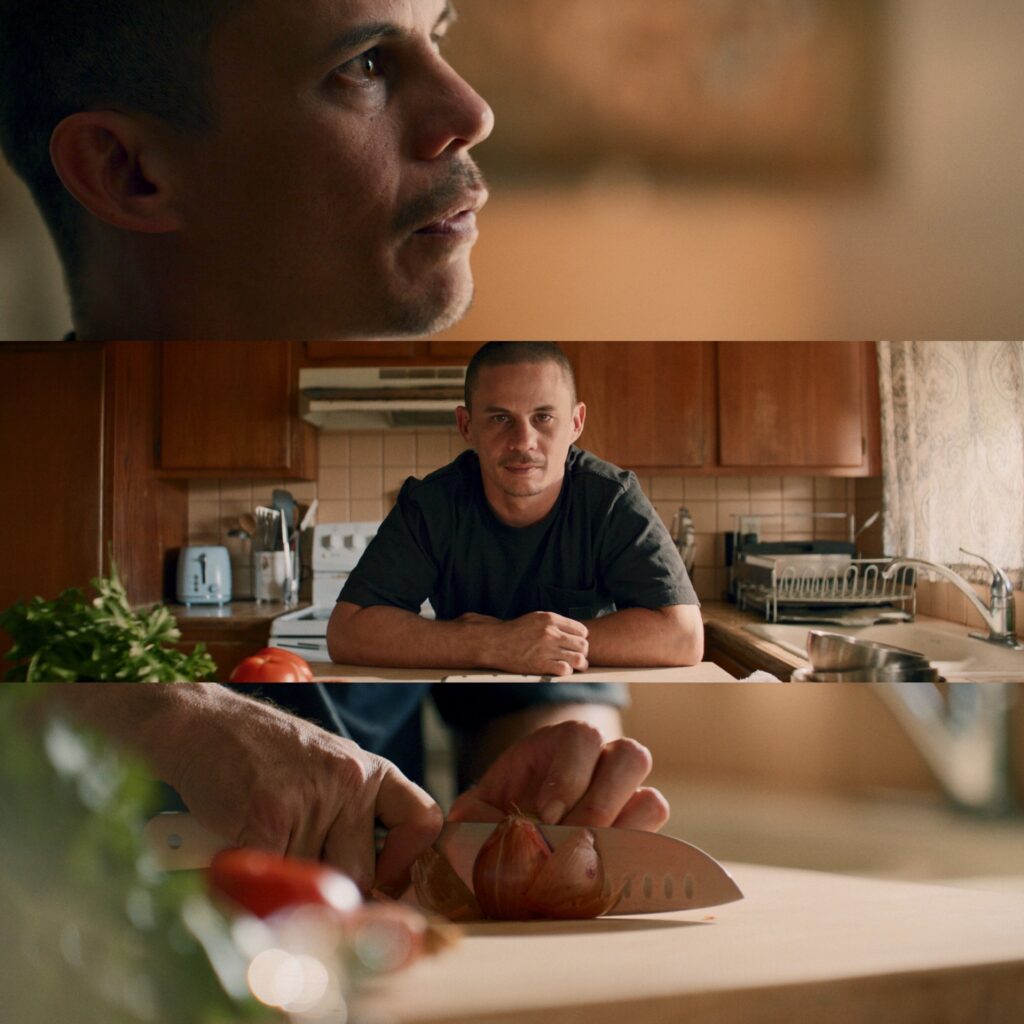
The COVID-19 pandemic turned Chef John Paul Gordon’s life upside down. One day, John Paul was an executive chef catering to Kaua’i’s tourists, the next day, he was unemployed. After more than 20 years of being a chef, John Paul felt like COVID-19 stole his identity away from him overnight. Despite wanting to get back to work, John Paul says that there was no work to go back to—at least nothing that could provide him with the six-figure income he needed to survive on an island where a loaf of bread costs $7, and where rents are always on the rise.
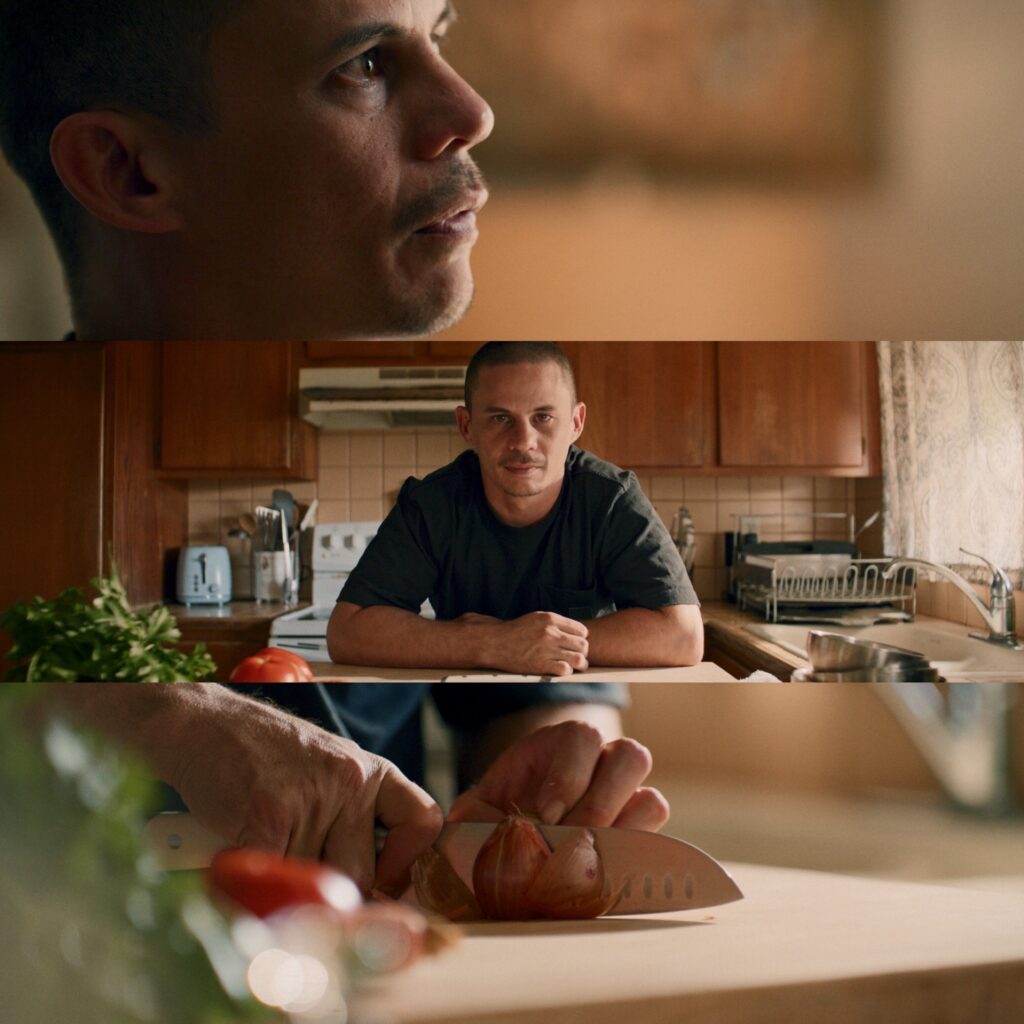
Chef John Paul Gordon. Photo Credit: Kauai Federal Credit Union

During the COVID-19, Kaua’i’s median home price ballooned from $800,000 to $1.8 million. Although that was fueled in part by COVID-19 refugees from the mainland, it’s part of a larger issue, in which wealthy investors have been gobbling up Kaua’i’s modest housing stock. In 2020, 70% of the homes sold on Kaua’i went to owner-investors purchasing property as non-primary residences. In 2021, that number grew to more than 80%. Therefore, with homeownership out of reach for many locals like John Paul, people have to work two or three jobs, (where they earn some of the lowest wages in the country) to try to make ends meet in a tumultuous rental market that seems primed to evict them. “The rent situation out here is insane, especially with inflation,” John Paul said. “I’ve dealt with this problem here my whole life. I can’t tell you how many times I’ve had to move because the house that I was renting got bought.”
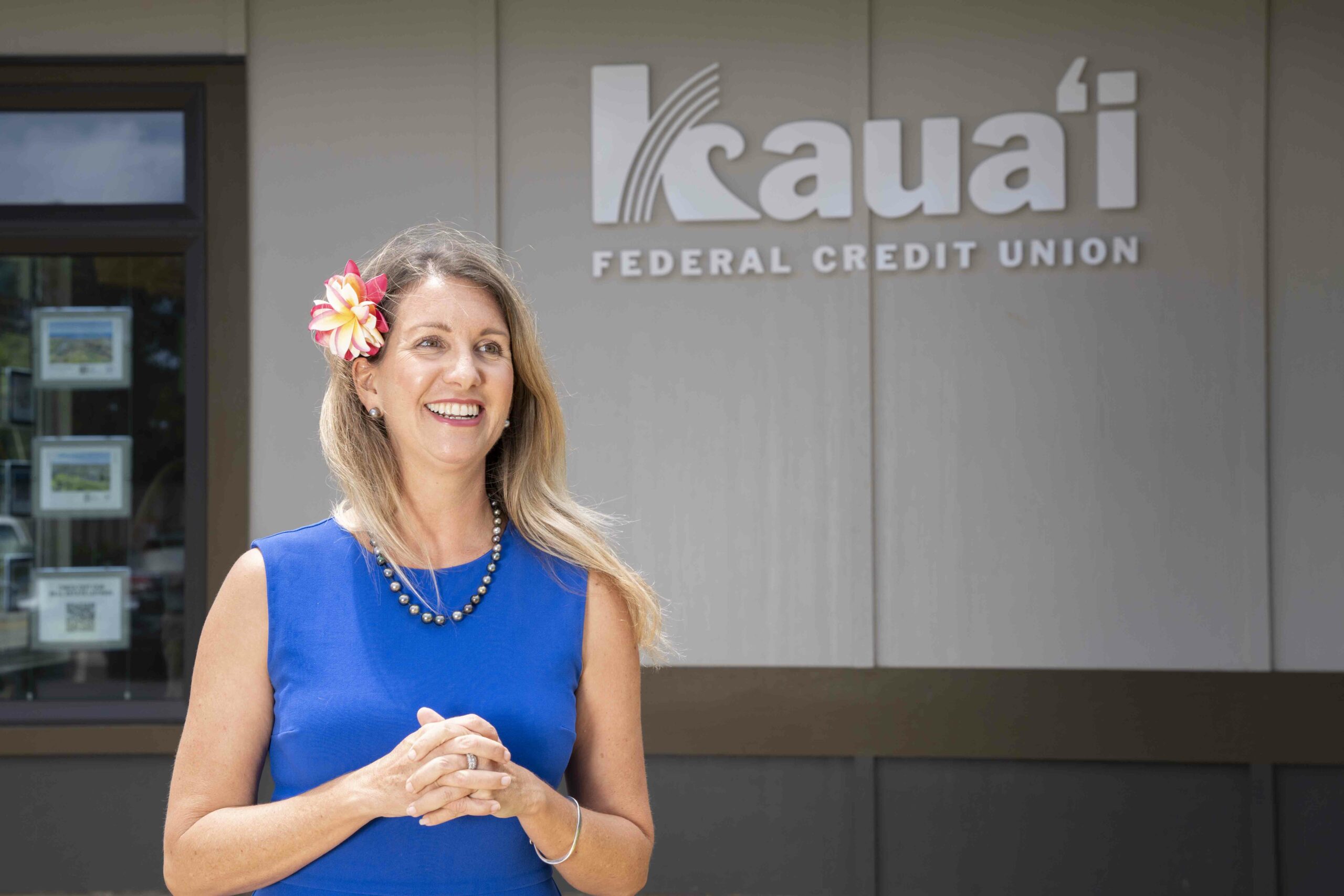
Dana Hazelton, Community Development Officer at Kaua’i Federal Credit Union

Dana Hazelton is similarly familiar with Kaua’i’s rental market. Dana is a Community Development Officer at Kaua’i Federal Credit Union (Kaua’i FCU), the only Community Development Financial Institution-certified (CDFI) credit union on the island. Dana oversees the credit union’s Rent Relief and Housing Stability program, which aims to create housing security for all Kauaʻi residents, regardless of whether they’re members of the credit union or not. As someone who was born and raised on Kaua’i, Dana knows firsthand just how difficult it can be to make ends meet on the island. Dana is a registered nurse, and she spent a decade “working in the trenches” of her community, providing end-of-life care and, later, in-house pediatric care to people experiencing absolute poverty. 

Over the course of a few years, Dana pivoted away from nursing and into education. However, despite finding joy in her work, she knew that if she was going to help people achieve better health and educational outcomes, then she was going to need to help them escape persistent cycles of poverty. Ultimately, that’s how Dana learned about credit unions, and that’s how she got to where she is today at Kaua’i FCU, where, as a CDFI, she and her team have the “flexibility … to radically empower and transform communities around Kaua’i,” and where Dana gets to use capital instead of medicine to heal people.

A Business Model Built Around Community Impact

That was especially true during the COVID-19 pandemic, when Hawai’i was flooded with federal dollars to drive economic impact at the county level. One such initiative was the rent relief program, which saw the state receive $100 million to distribute to nonprofits. The issue, however, was that Hawai’i couldn’t find enough nonprofits to help distribute the funds. The state went to the Hawai’i Credit Union League to ask every credit union in the state to help deploy the rent relief program; however, Kaua’i FCU was the only credit union on Kaua’i to step up and say yes. “We’re not a normal credit union,” Dana said. “Community impact is our business model, so if we see a need, we figure it out.”

The Kaua’i Federal Credit Union Team

Because of the administrative fee associated with deploying these funds, as well as a get-back-to-work grant that allowed Kaua’i FCU to hire new employees, Dana knew that the better she and her team did at running the rent relief program, the more income they could generate to support Kaua’i FCU’s members, expand product offerings, and distribute funds to the community. The win-win-win business model proved to be enough motivation for Dana and her team to succeed, as Kaua’i FCU became the number one provider under the Aloha United Way network in the State of Hawaii. Within two and a half months, the credit union deployed approximately $6 million. 

Unsurprisingly, when the second round of rent relief stabilization funds were announced, the County of Kaua’i again asked Kaua’i FCU to be the provider. “We won this $22 million contract in partnership with the County of Kaua’i, and we were told you probably can’t spend it down and do this,” Dana said. “I was like ‘you don’t know how badly people need this in our community.’ If there’s anything I know working as a nurse for 10 years, I know how to reach people, remove barriers, and meet people where they are.”

To get the word out, Dana and her team connected with trusted community leaders, they printed announcements in local newspapers, and they flooded the airwaves. However, most of Kaua’i FCU’s outreach has been word of mouth, with Dana and her team visiting grocery stores, gas stations, beaches, and small businesses. They’ve even forged a partnership with the public library system, and the CDFI has been intentional about doing community outreach in the Pacific Islander and Filipino communities. Kaua’i FCU strategically set the rental relief cap to $4,500 per month to take into account the rent increases it predicted would follow the island’s eviction moratorium. Additionally, the CDFI made the funds available to as large a swath of the population as possible, including to multifamily and multigenerational households, roommates, non-English speakers, and individuals who didn’t have formal lease agreements.  

By February 2022, Kaua’i FCU’s Rent Relief and Housing Stability program successfully spent down its contract funds. It took Dana and her team less than a year. The milestone meant that Kaua’i FCU was able to unlock another multi-million dollar tranche of remaining rental relief funding, which the CDFI has until 2025 to use. “When your teachers and nurses and doctors and restaurant workers don’t have anywhere to live, that’s an issue,” she said. “We’re in a major housing crisis, and so any capital we get literally changes lives. It stabilizes not only our economy, but our culture, and it prevents homelessness.”

‘The Freedom To Fail’

In the years to come, Dana hopes that Kaua’i FCU can help Kaua’i address its dearth of primary residences, whether that’s through building affordable housing, creating a secondary housing market, starting a first-time homeowners program, and/or developing deed restriction programs that buy back homes in order to keep them in the community to support the local workforce. Regardless of what housing solutions Kaua’i FCU and its partners push for, Dana knows that it’s going to take an unprecedented wave of capital to make it happen. She also knows that with the right partnerships, anything can happen. “I know it sounds impossible,” she said, “but if we could get a pool of $200 million, we could transform our community, build generational wealth, and everybody could win. That’s direct social impact.”

Photo Credit: Kauai Federal Credit Union

Although it’s too early to know how Kaua’i will tackle its housing shortage, for rent relief recipients like chef John Paul, they’re just happy to have made it through the last couple of years under one roof. With the money he was able to save through the rent relief program John Paul was able to take on close to $50,000 in debt to open his own restaurant, Table at Poipu. Within three months of opening, John Paul was debt free, and in his first year, John Paul projects Table at Poipu to make $1.6 million in revenue. Better yet, he’s been able to employ and provide full benefits for nearly 30 employees. In October, John Paul  purchased the restaurant where he used to work: The Bistro at Kilauea. “I now have a secure job,” John Paul said. “I have a secure place to live, and if it wasn’t for this program, me and my 30 employees wouldn’t be doing as well as we’re doing now. I can only imagine the impact that it’s had on the rest of the island.”

John Paul is back to paying $5,000 a month for his two-bedroom, one-bath rental duplex, but he’s thankful that he had 15 months of rent relief. It helped him both to get through the trials and tribulations of the COVID-19 pandemic and to make his dreams of owning his own restaurant come true. “The rent relief program gave me the freedom to fail,” he said, “and I just went for it.

Photo Credit: Kauai Federal Credit Union

Learn More:

  • Kaua’i Federal Credit Union helps the people of Kaua’i by keeping money on the island for a stronger financial future for our people. They offer their members the financial services and products that are right for them at preferable rates and at little or no cost, ensuring the wellness and wealth of future generations.
  • CNote is a women-led investment platform that empowers individuals and institutions to invest locally to further economic equality, racial justice, gender equity, and address climate change.
By Community Partners, Migration V1

How Indian Land Capital Company Is Strengthening Tribal Sovereignty, One Loan At A Time

Rjay Brunkow, an enrolled member of the Turtle Mountain Band of Chippewa Indians, has dedicated his career to economic development within Indian Country. Rjay served as an investment banker for Wells Fargo, focusing on government infrastructure, before serving as Solicitor General for the Mille Lacs Band of Ojibwe and chief legal counsel for his own tribe. However, in 2015, after having negotiated two separate casino agreements and dealing with gaming legalese, he had an epiphany. “I came to the realization that I could do a lot more good for a tribe on the finance side than I ever could do as legal counsel,” Rjay said. “I started looking around for an opportunity.”

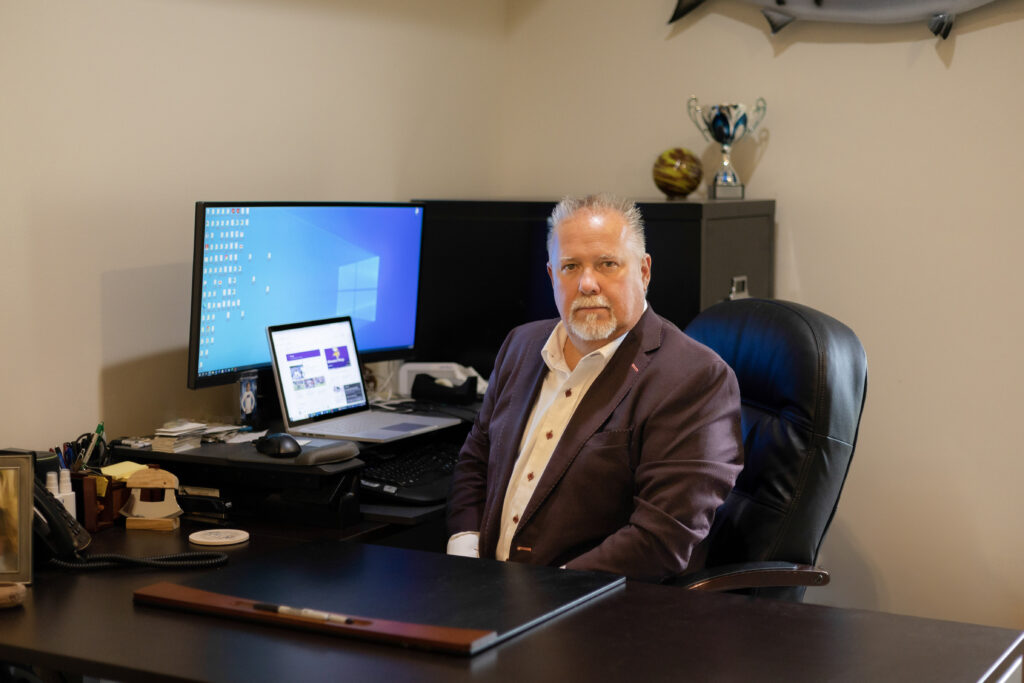
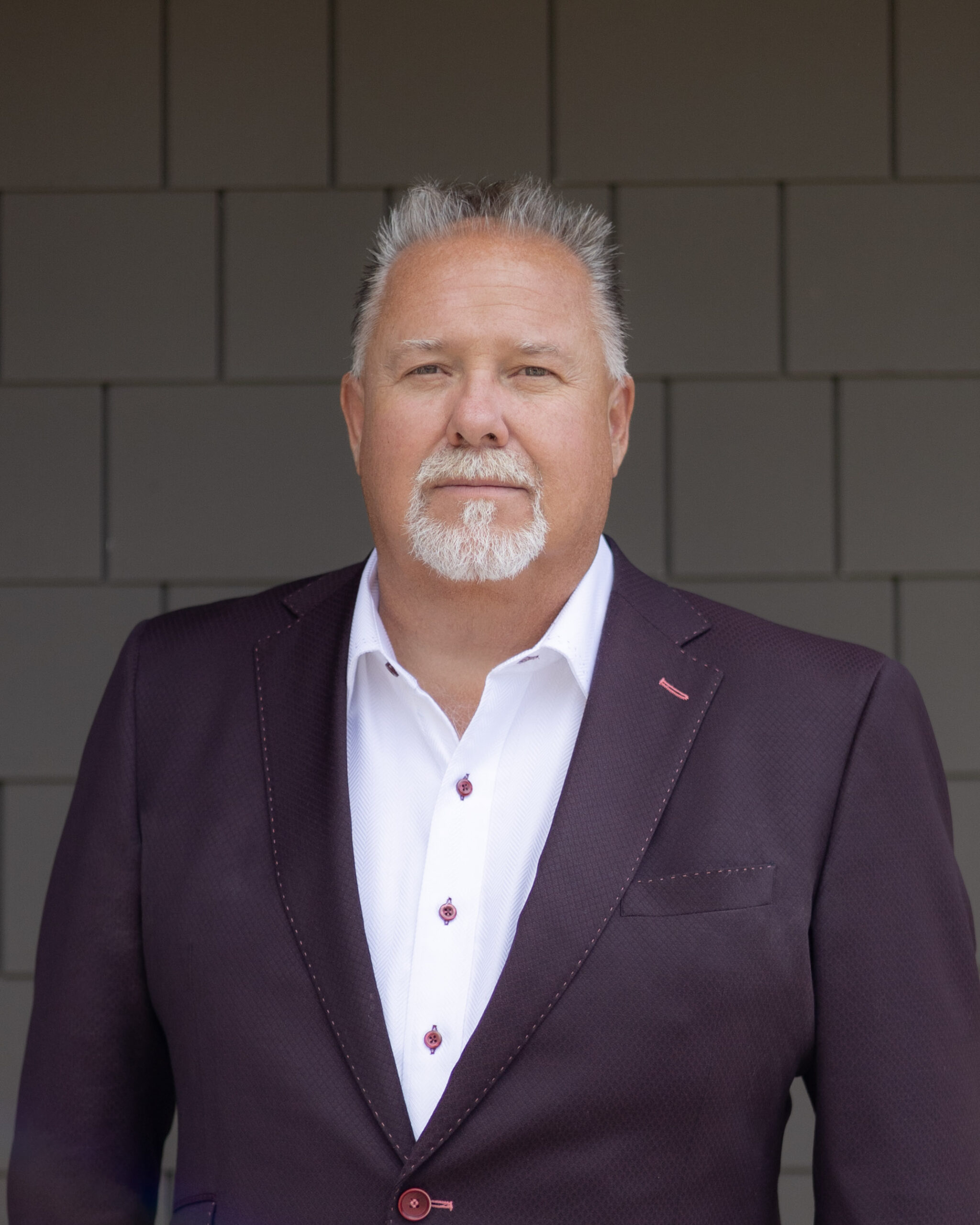
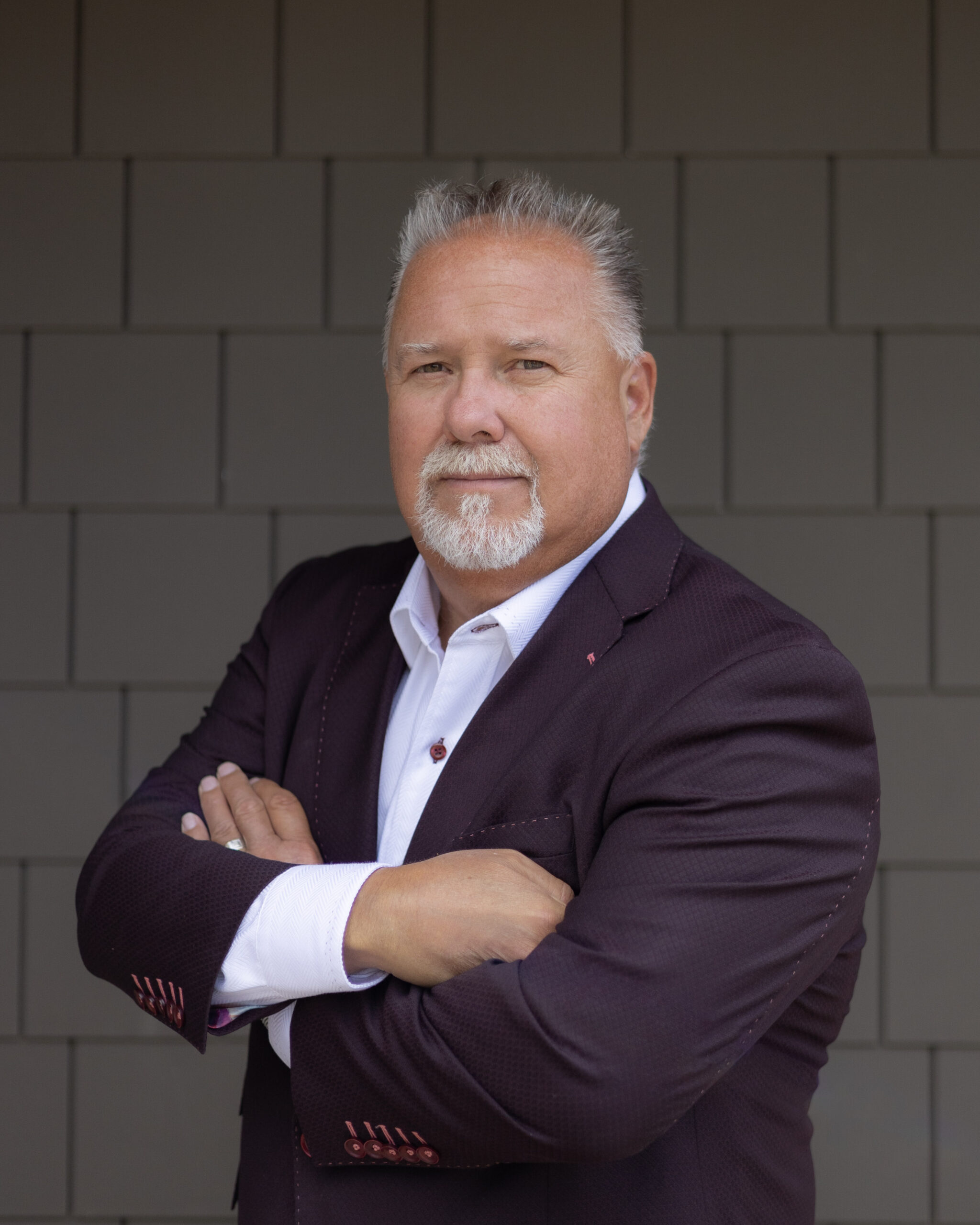
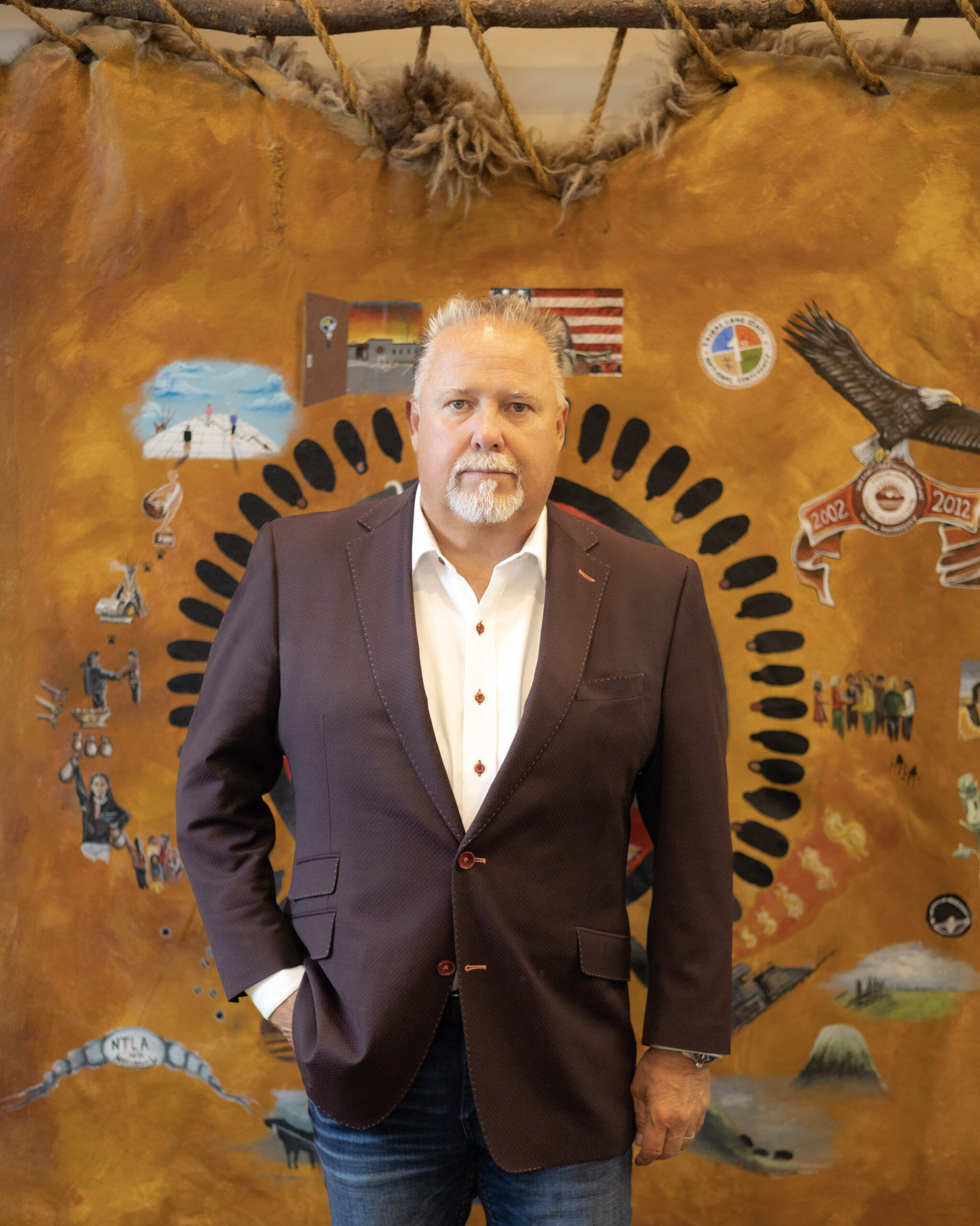
Rjay Brunkow, CEO of Indian Land Capital Company

As it would turn out, Rjay’s next opportunity presented itself to him thanks to a quick internet search by his now-wife. Indian Land Capital Company (ILCC) was looking for a new CEO. The job description felt like a perfect fit, and Rjay applied; however, he had one concern: despite spending his entire life in Indian Country, he’d never once heard of ILCC or its work. To Rjay, that was an issue. During his interview with the organization’s board of directors, Rjay said that if he was hired, then the board needed to be prepared to spend a lot of money on marketing. Rjay’s honesty struck a nerve with the board, and he was offered the job.

ILCC was created in 2005 by the Indian Land Tenure Foundation (ILTF), a national, community-based nonprofit that serves American Indian nations and people in the recovery and control of their rightful homelands. ILCC is a certified Native Community Development Financial Institution (CDFI) that provides alternative loan options to Native Nations for tribal land acquisition and economic development projects. As a Native-owned and operated business, ILCC understands the unique needs of Native Nations and creates customized, flexible loan packages that suit the specific needs of the tribe and the unique circumstances of the purchase. ILCC also works with the Indian Land Tenure Foundation to provide technical assistance to tribes as they develop and execute land acquisition strategies.

Part of ILCC’s mission is to help Native nations to recover, manage, and gain jurisdiction over 90 million acres of alienated tribal land. That includes assisting Native nations in consolidating undivided interests in land with fractionated ownership, and eliminating what’s called “checkerboarding,” or mixed patterns of land ownership and jurisdictions on Indian reservations. A large portion of ILCC’s loan portfolio is with tribes located in Northern California; however, the CDFI lends nationwide, including in places like Arizona, Idaho, Minnesota, Oklahoma, South Dakota, Washington, and Wisconsin.

Incredibly, in its 18-year existence, ILCC has never had a tribe default on a loan. Despite that perfect repayment percentage, traditional lenders haven’t started deploying more loans to tribes. Instead, according to Rjay, for most of ILCC’s loans, the tribes have been turned down by the traditional banks that they’ve had decades-long relationships with, making the CDFI the only lender willing to work with them. “ILCC came about because of the lack of capital in Indian Country,” Rjay said, “and we were started to help prove to big banks that tribes were good credit and would make their payments. That hasn’t been getting through to banks, but we’re thankful for their ignorance, because ILCC is there to fill those gaps.”

Since Rjay joined ILCC in 2015, the CDFI has consistently deployed three to four loans each year. Most of those loans go to first-time borrowers, and ILCC’s deals range in size from roughly $1 million to $10.5 million, with a typical loan amount being approximately $2.5 million. According to Rjay, all but two loans in ILCC’s portfolio are land acquisition loans. That isn’t to say that the CDFI isn’t open to other economic development-related loans. With the exception of casino loans, ILCC is interested in taking on any loans that have to do with strengthening tribal communities and sovereignty and building tribal infrastructure. However, regardless of the kind of loan that ILCC deploys, they tend to be among the most momentous moments in the history of the tribe.  

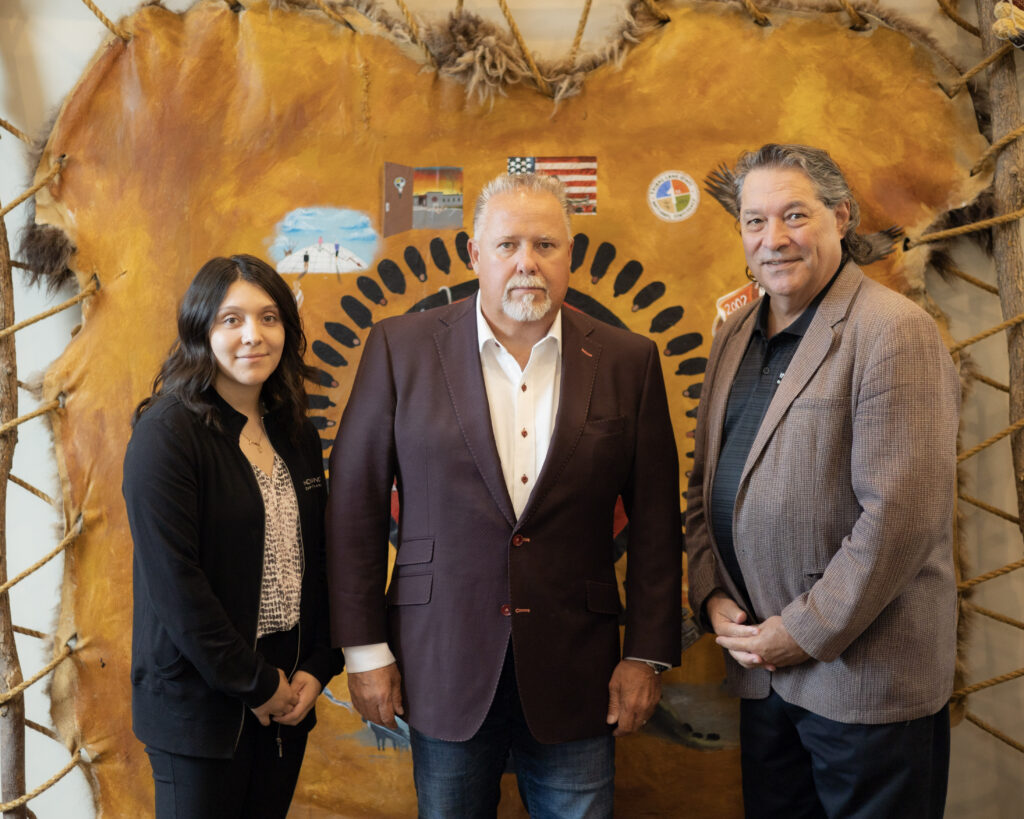
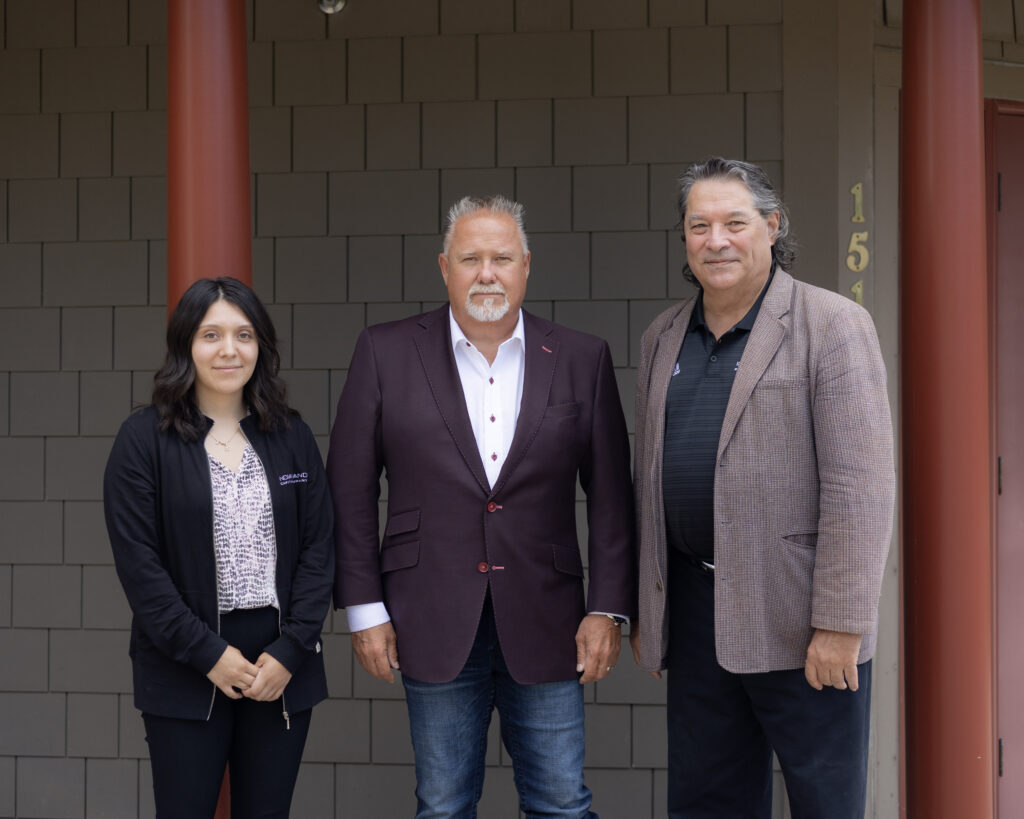
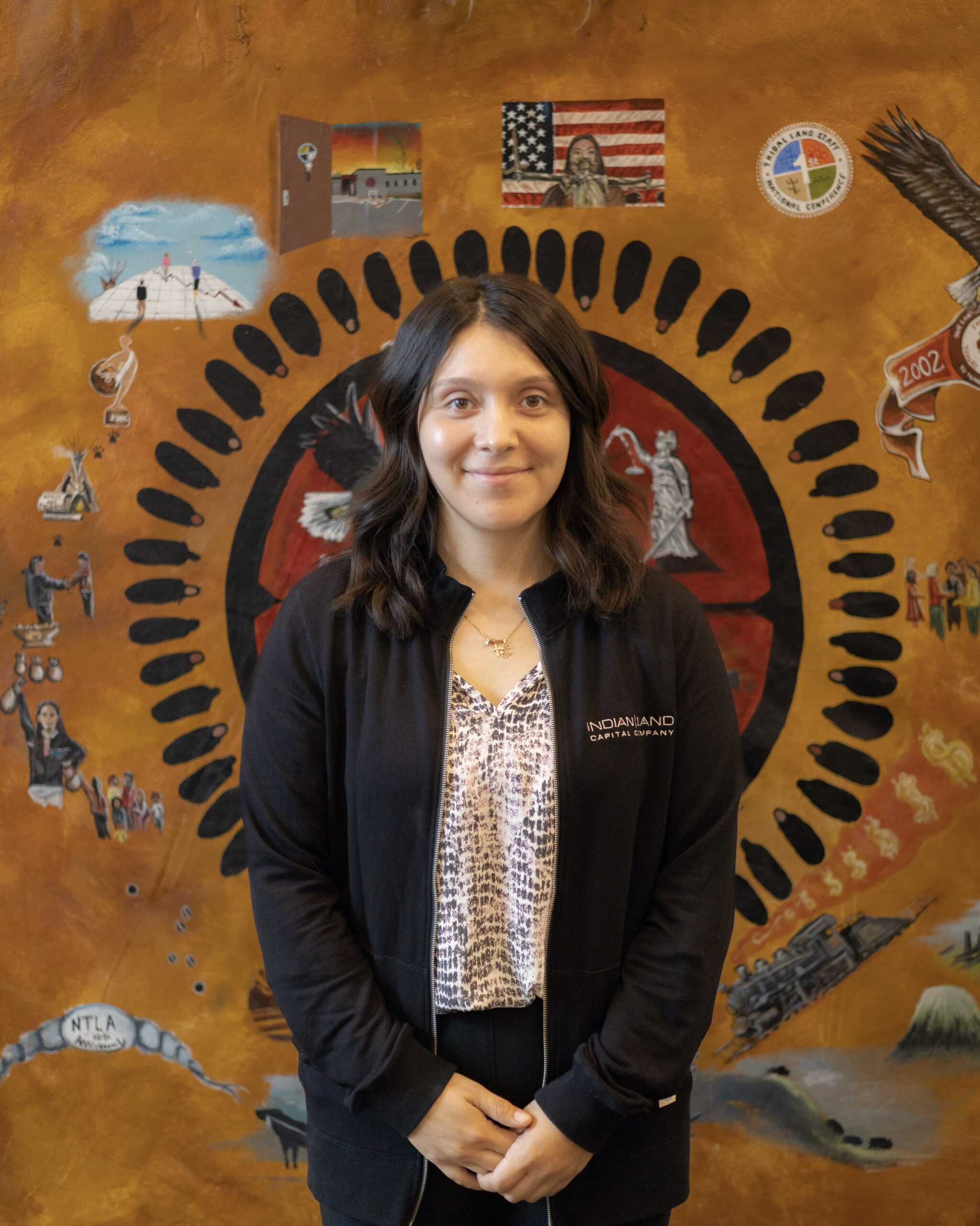
(From left to right) Gabriela Campos, Accounting Assistant, Rjay Brunkow, CEO of ILCC, and Cris Stainbrook, President of Indian Land Tenure Foundation.

More Capital, More Impact

According to Rjay, ILCC knows that it can scale its impact, and it would love to deploy more loans in Indian Country; however, the CDFI currently doesn’t have the capital necessary to do that. In fact, Rjay calls capital the CDFI’s only constraint, saying that the minute money comes in, it goes out the door to a tribe in the form of a loan. Therefore, ILCC is constantly looking to raise capital. 

Going forward, however, Rjay has ambitious goals to change the way that the CDFI raises capital, allowing ILCC to access larger amounts of money at better rates. One forthcoming strategy is to approach “big-money tribes” to back up loans to ILCC by guaranteeing the CDFI’s debt. According to Rjay, ILCC has good relationships with many regional banks across the country; however, ILCC can’t qualify for the loan amounts it wants (e.g. $50 million), because the CDFI doesn’t have the resources to put up as collateral. Big-money tribes, on the other hand, do. 

Additionally, ILTF and ILCC are already in conversations with several foundations who are interested in providing similar guarantees. Securing such backing wouldn’t just be a win for ILCC, it would also be a win for these foundations, as they would otherwise have a very difficult time connecting with and gaining the trust of tribes. “We have instant credibility with tribes because we’re Native-owned and Native-run,” said Rjay. “We understand tribes, and we understand how to honor their sovereignty. Another organization is going to have to work 100 times harder to get a tribe’s trust.”

Unsurprisingly, Rjay spends a lot of time on the road, visiting tribes, speaking with potential partners, and attending tribal land dedication ceremonies. For most of his tenure at ILCC, Rjay has actually been the CDFI’s sole employee. Earlier this year, however, ILCC hired its first half-time employee: an in-house loan portfolio manager who does loan administration. It’s an important first step in growing ILCC’s loan portfolio.

Even with the new addition to the ILCC team, Rjay’s job description hasn’t changed: underwrite debt, raise capital, and keep the board of directors happy. “I found a job that pays me to travel around the country and talk to tribal leaders about their hopes and dreams to make their community a better place for their tribal members,” Rjay said. “That’s what I get to do for a living, and it’s the most rewarding thing I’ve ever done in my life.”

Learn More:

  • CNote is a women-led investment platform that empowers individuals and institutions to invest locally to further economic equality, racial justice, gender equity, and address climate change.
  • Indian Land Capital Company is a Native-owned, Certified Native Community Development Financial Institution (CDFI) providing alternative loan options to Native Nations for tribal land acquisition and economic development projects.
By Community Partners, Low Income Designated Credit Union, Migration V1

How Comunidad Latina Federal Credit Union Is Empowering Undocumented Immigrants to Achieve Financial Stability

For many, Azul Sanchez’s story is a familiar one. According to Azul, as the daughter of undocumented immigrants, she was supposed to be another statistic: a Latina who graduates high school and starts working a warehouse job to help her parents. However, that didn’t end up being the case. 

As both a first-generation American and a first-generation college student, Azul enrolled in classes at the same time that she took her first job as a commercial bank teller. It took Azul 16 years to finish college, which she pursued in parallel to her career in the financial sector. Azul transitioned to credit unions and became a branch manager, an assistant vice president, and eventually a director of branch operations. “Being the first generation in this country, I didn’t have any guidance,” she said. “I didn’t know where to start, but I always say that banking turned my life around. I didn’t have a degree, but I had opportunities to keep moving up. I want my team to have the same opportunity I had.”

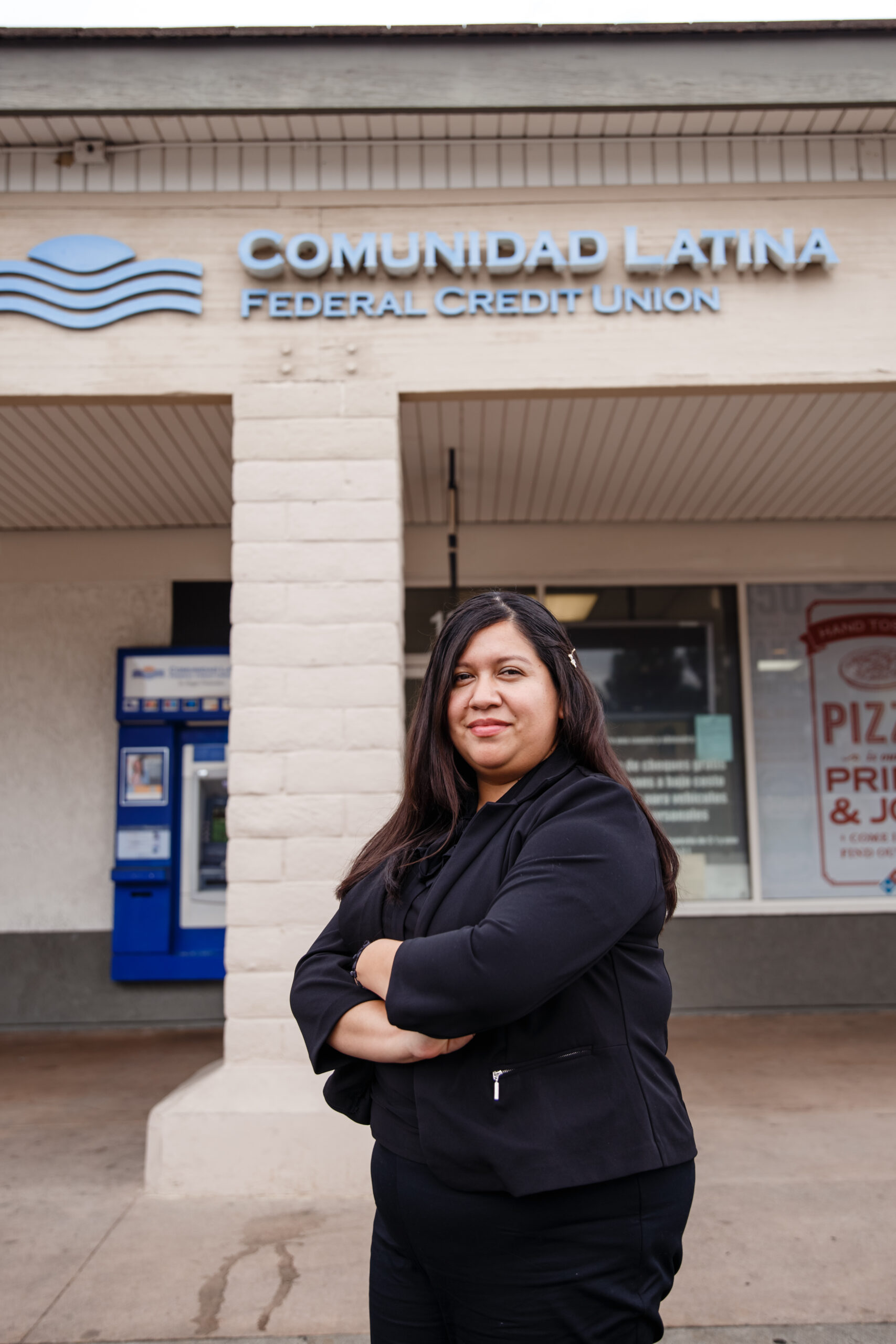
Azul Sanchez, CEO of Comunidad Latina Federal Credit Union

One of Azul’s mentors is Eric Orellana, the former CEO Comunidad Latina Federal Credit Union. When Eric retired in 2022, Azul applied for the position. Despite not having experience as a CEO, she was drawn to the position because she wanted to be able to give back to her community.

Comunidad Latina Federal Credit Union was started in 2006 with the mission to serve its community “by offering unique, empowering, affordable financial services with compassion, care, and dignity” to individuals who aren’t documented and who don’t have a social security number. Approximately 98% of Comunidad Latina’s members are undocumented; however, not all of the credit union’s members identify as Latino. To qualify for membership, individuals must live, work, worship, or attend school in the city of Santa Ana, or through an immediate family member that is a current member. They must also have a Matrícula Consular de Alta Seguridad, an identification card issued through the Mexican government to nationals residing outside of the country, and an Individual Taxpayer Identification Number (ITIN), which is issued by the IRS to be used on a tax return by those without a Social Security number. Currently, Comunidad Latina has approximately 1,600 members, which is approximately 10% larger than it was in 2022.

Comunidad Latina’s members face a number of challenges, including those that come with being undocumented, DACA recipients, and/or first-generation Americans. Additionally, many of the credit union’s members are either underbanked or unbanked, live paycheck to paycheck, and come from cultures where it’s taboo to discuss finances with others. More than 90% of Comunidad Latina’s members have an annual household income of less than $50,000, and in most cases, its members work two or three jobs to be able to afford their living expenses. “Many of our members don’t trust the banking system,” Azul said. “We have members who literally keep their money under their mattress.”

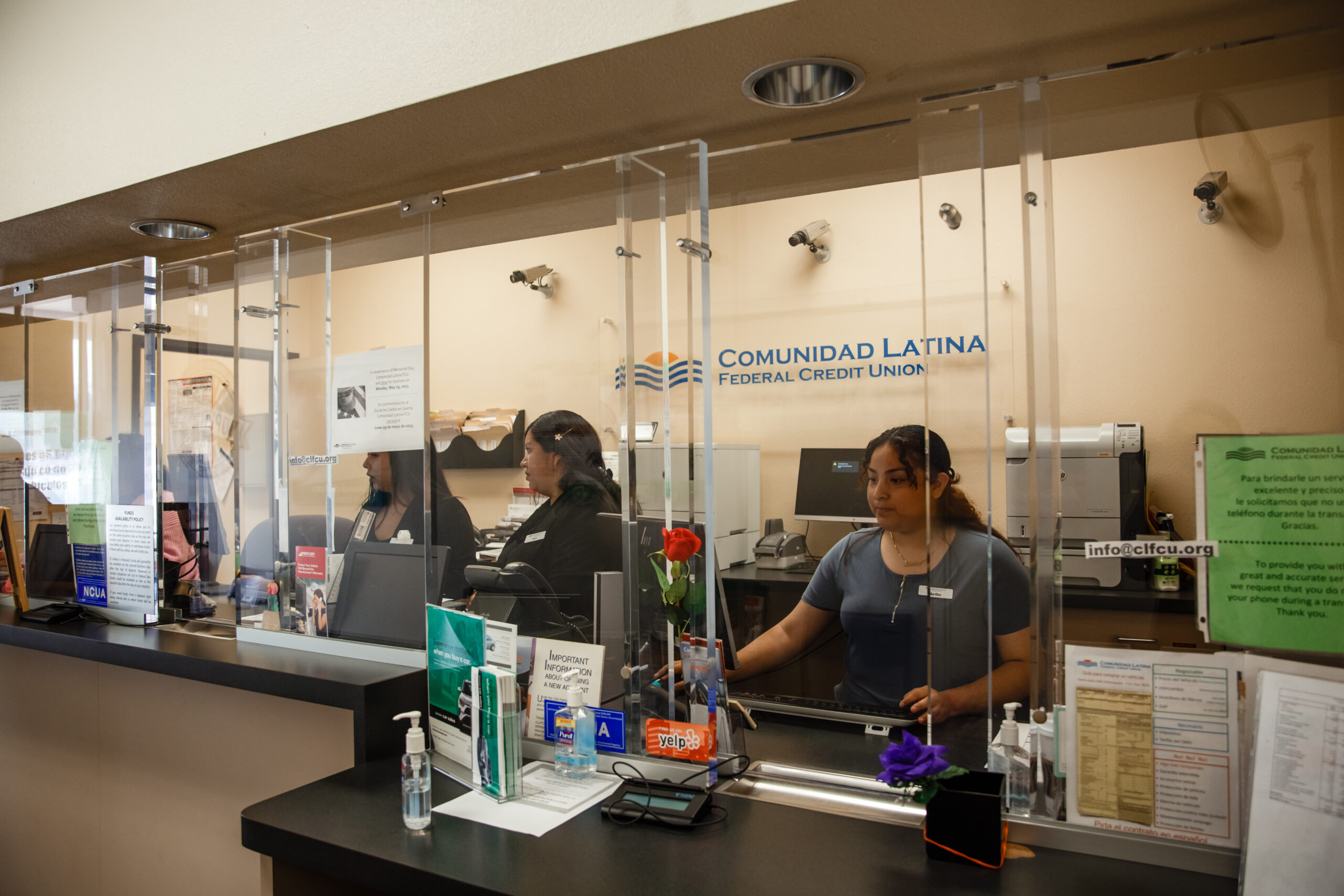
Team members from Comunidad Latina help a member.

Given those realities, one of the most important things that Comunidad Latina has to do with its members is build trust. The credit union does that by being intentional about whom it hires. For example, each of Comunidad Latina’s five employees, including Azul, understand the challenges of their community because they also belong to the community. Similar to Azul’s own story, two of the credit union’s employees are students. Importantly, Azul tries to instill the belief in all of her team members that if they have a desire to learn and help their community, then one day, they too can become the CEO of a credit union.

Unique Community, Unique Products

Despite Comunidad Latina’s small team and limited resources, the credit union is able to offer high-impact products to its community. One such product is its Share Secured Loans program, which the credit union adopted from, and tailored to, its community’s practices. Tandas are rotating savings and credit associations (ROSCA) popular in many countries around the world, including throughout Latin America. In short, a tanda is a way for people who know each other to collaboratively save and lend money to each other. For example, if 10 friends agree to contribute $100 each month, every member of the tanda will get to collect $1,000 at some point during those 10 months. Depending on which month a member collects their money, tandas act as a short-term, zero-interest loan, a way to plan for a big expense, or an opportunity to save money over time.

Comunidad Latina does something similar to tandas for its Share Secured Loans program: individual members save and lend money to pay-off a loan before they receive it. The reverse loan allows members to not have to worry about coming into the credit union with a deposit to use as collateral for a loan. Additionally, because these loans have an interest rate of 3.5% (compared to between 12% and 20% at big banks), this product also creates opportunities for members to build their credit as they plan for big expenses. “We created these loans, because that’s what our members understand,” Azul said. “Being able to understand our members and to provide guidance while allowing them to preserve their dignity is very important to building trust with them.”

Another way the credit union is able to support its members is by helping them to think beyond their financial wellness to other aspects of their lives. Azul has attended countless resource fairs, where she’s forged relationships with community partners. That has allowed her to build upon Comunidad Latina’s curated database of community resources that range from English courses and citizenship classes, to medical services and college enrollment assistance.
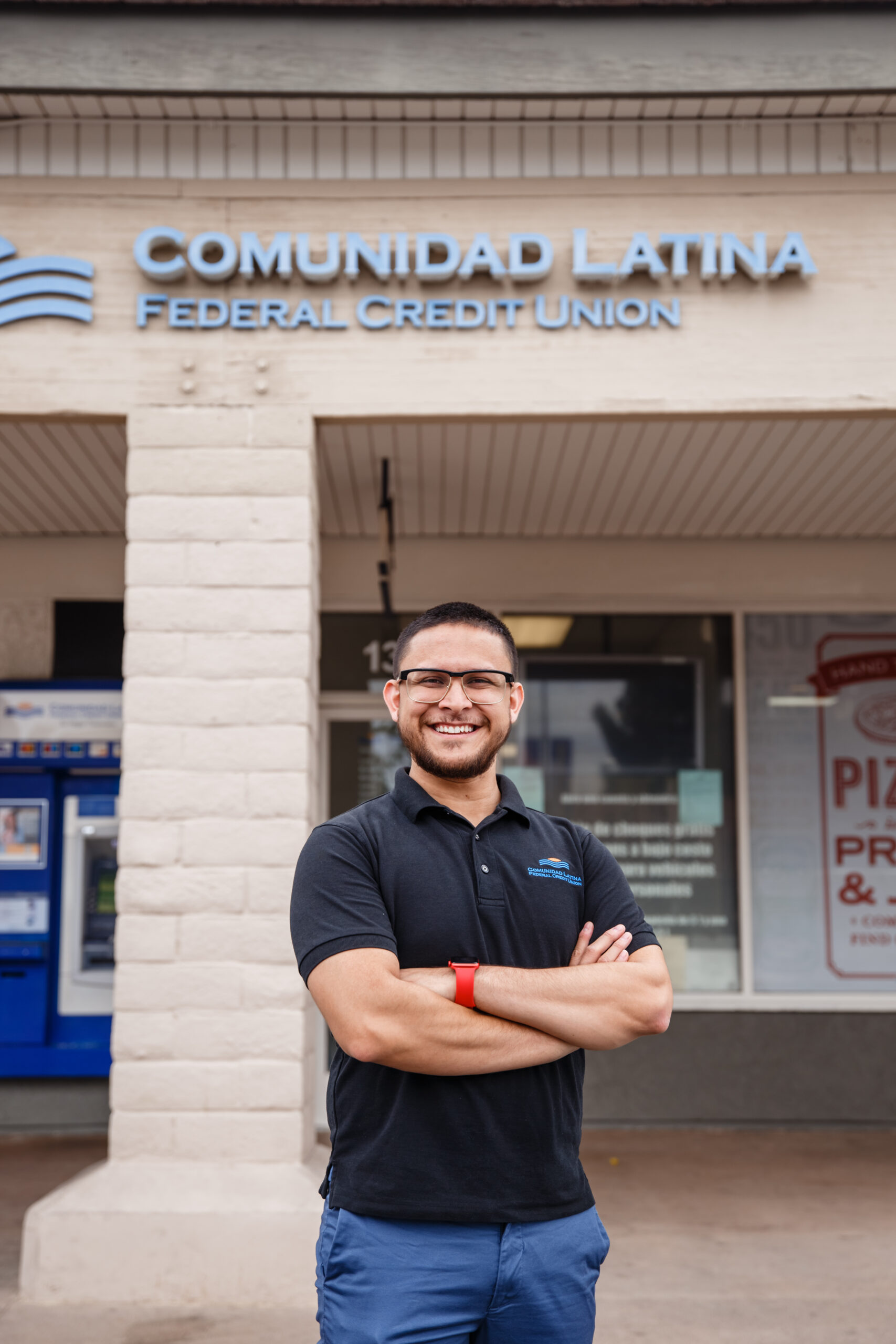
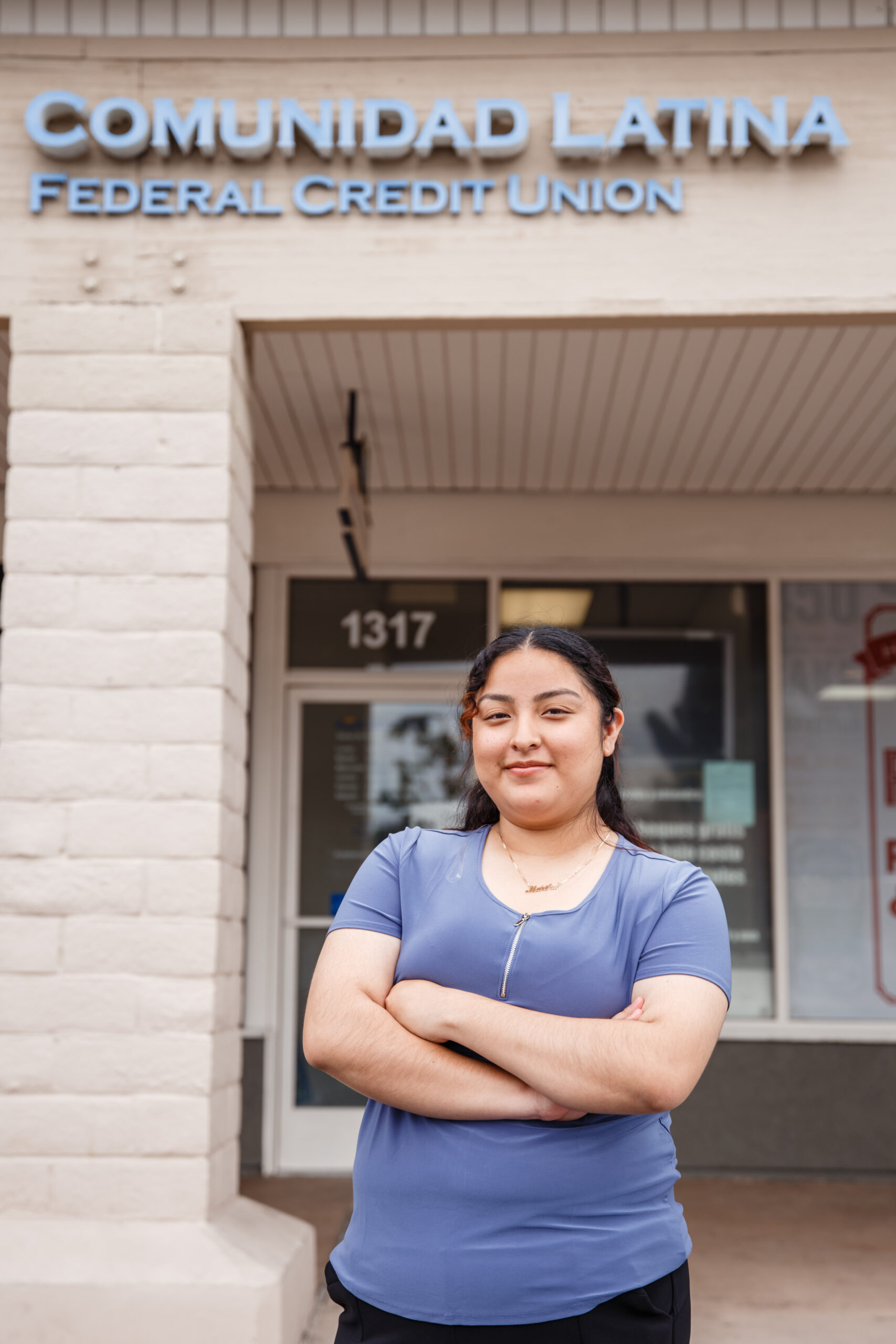
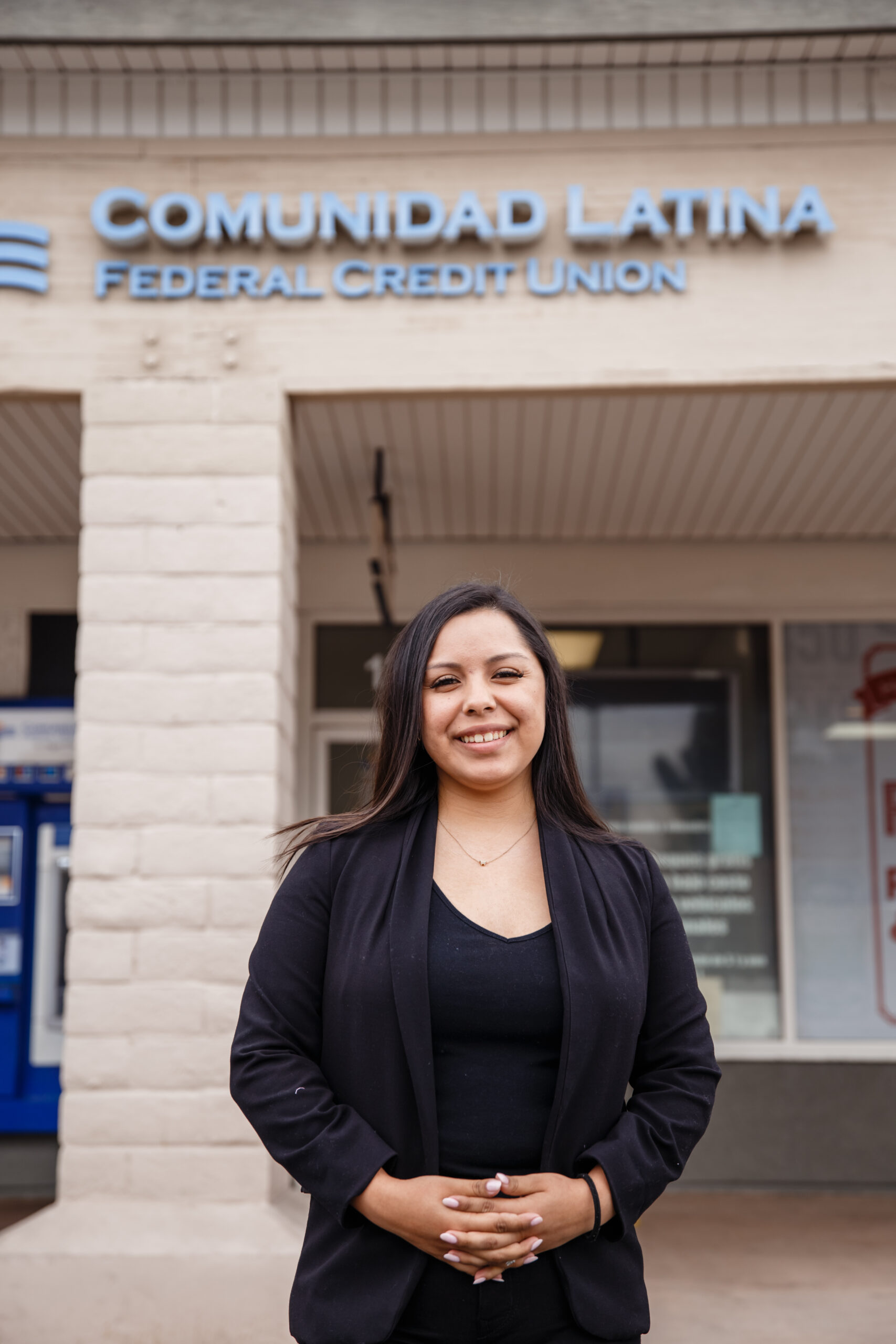
Through those same community partnerships, Comunidad Latina is frequently invited to lead financial literacy classes and workshops to youth and adults in Santa Ana, many of whom have never had a bank account. During their six-week classes, Azul and her team strive to empower participants with skills, knowledge, and awareness about their financial goals and wellness so that they can achieve financial stability. The classes cover topics like credit, savings, and budgeting, but Comunidad Latina also encourages participants to think about how their values align with their financial decisions. 

A large component of these classes involves participant-learning circles, which provide individuals a safe space to ask questions and obtain guidance on how to overcome financial challenges. Each participant is also paired with a mentor, who supports them throughout the entire six weeks. At the end of the class, participants have to present a vision board along with an outline of how they’re going to achieve their goals in order to graduate. 

According to Azul, unlike other financial institutions, the reason why Comunidad Latina leads these financial literacy classes isn’t to boost membership. “We do these classes wanting people to have financial stability and the financial freedom that they need and want,” she said. “If that means they’re going to open a membership at the credit union up the street or at a bank, that’s okay. I just want community members to be equipped with the tools that they need to be able to be successful.” 

Education is Everything

When asked about her vision for Comunidad Latina’s future, Azul shared her three goals for the credit union. First, she wants Comunidad Latina to develop its use of technology so that it can empower community members to take advantage of the digital transformation taking place in the financial services industry. By doing so, the credit union will be able to be more efficient, thus elevating its members’ experiences. Secondly, Azul wants to continue to grow and build trust within Comunidad Latina’s community through new and existing partnerships with other organizations. Lastly, Comunidad Latina’s CEO hopes to be able to one day open another branch somewhere else in Santa Ana so that the credit union can have a second location to serve more members. 

One of Azul’s favorite quotes is from Nelson Mandela, who said: “Education is the most powerful weapon which you can use to change the world.” To Azul, the words capture the work being done by her team at Comunidad Latina. “We’re doing everything we can to educate as many individuals as possible so they can help make this community stronger,” she said. “I ultimately believe with all my heart that that will reflect in a better world. That’s what motivates me. That’s why I work here.”

Comunidad Latina’s Team, (from left to right) Albert, Maria, Azul, Juliana, Diana, Martha.

Learn More:

  • Comunidad Latina Federal Credit Union (CLFCU) is a not-for-profit financial institution serving the community of Santa Ana, California. Their mission is to Serve their community by offering unique, empowering, affordable financial services with compassion, care and dignity.
  • CNote is a women-led investment platform that empowers individuals and institutions to invest locally to further economic equality, racial justice, gender equity, and address climate change.