To say that Jamie McCall is passionate about research is an understatement. Fortunately, as the Vice President of Economic Development Policy at Carolina Small Business Development Fund (CSBDF), a statewide community development financial institution (CDFI) based in Raleigh, research, policy analysis, and program evaluation are at the core of what Jamie gets to do each and every day.
 Through his research, Jamie explores the importance of small- and medium-sized businesses for sustainable and effective regional growth, and besides peer-reviewed articles, organizational white papers, and presentations at national conferences, Jamie has also authored several academic book chapters on topics related to community economic development. In addition to his role at CSBDF, Jamie is an adjunct instructor within the University of North Carolina at Chapel Hill’s School of Government, where he received his Master of Public Administration.
We caught up with Jamie to talk about his unique research, and we got the chance to hear his thoughts about the idea of CDFI self-sufficiency, the need for better impact reporting, and how the CDFI industry can elevate the role of research.
CNote: Can you talk a little about your background and how you found your way to CSBDF?
Jamie McCall: After graduate school, I started working for the state government’s nonprofit development corporation as a research analyst. When any public or quasi-public entity says they are engaging in “economic development,” it almost always means a focus on recruiting large businesses. Thus, most of my work involved supporting business recruitment and/or expansion efforts. I got to work on things that were interesting and challenging, but I didn’t have a passion for it. I knew what the research says: small business is the cornerstone of community economic development. I started looking for other positions, and one of my former colleagues was on the policy and research committee here at Carolina Small Business Development Fund. She said, “you’re gonna love it.” I applied and obviously took the job. I was immediately thrown into a world that I was not familiar with, but it was a world that I was really excited about. Though I knew CDFIs were essential actors for holistic and sustainable development when I took the job I was only vaguely aware of the industry.

CNote: How do you explain CDFIs to someone who’s never heard of them?
Jamie McCall: I usually give the example of a big business like Amazon. Even when they were early on in their growth, if they needed money to do something like build a new warehouse, they could go to a bank. As a company, they’re stable, and so they have no problem getting credit for expansion purposes. But when you deal with small- and medium-sized businesses, which are really the foundation of regional economies, in most cases, they cannot get any sort of financing to start or grow what they’re doing. That’s because those businesses don’t have enough scale to be financially stable enough that banks find them to be good targets for financing. They don’t fit traditional lending profiles, and for the most part, banks view those businesses as being higher risk.
CDFIs come into the picture because they do not have that sort of framework of profit motivation that banks have. There are of course for-profit CDFIs, but they are the exception and not the rule. So, the role of CDFIs is to come in and fill in that gap for businesses that are higher risk. They don’t make loans with the goal to make money, but they know that those businesses are going to take that loan money and they’re going to expand, add staff, and buy things. For every $1 that you give a small business that does that, there are multiple dollars in return in terms of economic impact. So, if a CDFI does its job well and a business is able to grow and expand, then that business can now access more capital from the traditional banking system. And from there, it’s sort of like a snowball effect. It often seems strange to people that debt is an economic development tool, but it’s really how you get businesses to grow.
 CNote: Can you talk a little more about that multiplying effect with regards to small business lending impact in your region?
Jamie McCall: For our last fiscal year, for every dollar that went out, the return to the economy was $1.01. With a $1.01 multiplier, you are doubling your money in terms of economic impact. That multiplier changes a bit from year to year, which is why we conduct yearly economic impact analyses. In some years, it’ll be lower or higher, and it’s very industry-dependent. We know that it is hard to measure the economic impact of small businesses, which is why one of my lines of research is also looking at social impact multipliers. If a CDFI does its job correctly and a small business is given a level of debt that it can handle, then what you end up with is successful entrepreneurs who become embedded in their community. These small businesses end up building these really robust social networks with other small firms, with their suppliers, and within their community. We saw with COVID how the businesses that were able to survive were those that have those really strong social networks in place. So, there’s both an economic return on investment and a social return. The social return is much harder to measure, but I think it’s just as important.
CNote: Can you explain that idea of social capital network a little more? Why is it so important?
Jamie McCall: When you look across the CDFI industry and people talk about impacts, it’s most often expressed as the number of jobs created or saved, amount of capital lended, number of loans, the average size of loans, and things like that. Those are not necessarily bad indicators. They are one type of indicator, but they do not tell the full story. I often say that jobs are not the primary impact of CDFI work, because if we go in and we give people lots of loans and they create lots of jobs, the question which usually comes up is what is the “quality” of those jobs. But we know in general small business jobs they’re not going to be as good as a similar position would beat larger corporations. To me, the question that we should be asking is: how do the people in those jobs improve the community?
For example, we know that when people work in a small business, they tend to come from that community and they tend to live and work in the same place. That’s extremely important for community economic development because that allows relationships not just between small businesses and other small businesses, but relationships between small business employees and their community to really develop. Those interactions have such a high return on investment. Importantly though that return is mostly social (and not economic) because what they do is increase levels of community trust. It also increases trust in institutions, which is really important, especially for urban problems like trying to find ways to lift people out of poverty, because people have a legitimate distrust of institutions.
What we have found again and again, and what the research shows, is that social networks have immense economic value, but that value is hard to measure. It’s not that jobs aren’t important: we want to create jobs. But, we have to acknowledge the limitations of that. As a CDFI researcher, I would much rather say we didn’t create a single job, but we increased trust in this community and its institutions by two percentage points. That has a much higher impact than creating 200 jobs.
CNote: As a researcher, what role do you think research has to play in the CDFI industry, and what research gap are you trying to fill?
Jamie McCall: I think people, and especially policymakers, tend not to view CDFIs to be as integral to community economic development as they really are, and that’s where I think the role of research and education comes in. CDFIs do not have a foundation of research like other economic development interventions do. I can give you volumes on affordable housing. I can give you volumes on business recruitment. But when it comes to CDFIs, especially small-business-oriented CDFIs, there’s nothing. For me, that’s what I want to do: lay out why these institutions are important and why supporting small business is important, empirically. It’s not just me. The Federal Reserve’s community development division has lots of great work here in this area, and some CDFIs have research staff, but because CDFIs are low-capacity organizations, most of them don’t have research staff. Even those that do, they’re still capacity constrained.
What I’ve found with CDFI research, however, is there’s a lot of good qualitative research that I think is really important, but there’s no willingness to engage critically with it. I want people to ask me critical questions about what I’m doing in terms of research because that’s the only way we get better. I would much rather somebody in the CDFI industry find a flaw in an article I’ve written than somebody in Congress. That kind of engagement isn’t a personal attack. For example, we recently had an article on CDFI program evaluation accepted at Community Development and six independent peer reviewers who are experts in this area reviewed it. Their job is to basically tear it apart, but what that does is essentially make sure that the quality of the research is unquestionably high. No peer review system is perfect, but I’m willing to subject my work to the highest levels of scrutiny, and I think that as an industry, we need to do more of that. If we do, we’ll be in a much stronger position.
CNote: What are your thoughts on CDFIs who’re aiming to be self-sufficient, financially sustainable organizations?
Jamie McCall: I think that’s probably one of the hardest things to do in the CDFI world. Most of the things that we do that help people the most are not profitable. What happens when CDFIs are self-sustaining, they sort of have these lines of business that maybe aren’t what you would consider to be targeting traditional CDFI borrowers. For example, let’s say a CDFI engages in some profitable line of business that really in some way benefits larger, white-owned businesses, but then they use that money to benefit smaller minority-owned businesses that are more in line with CDFI demographics. Are they doing good? To me, the main challenge with self-sufficiency is that it requires that sort of activity, and I don’t think we have enough research or data to really confirm if this is a net positive or not.
In an ideal world, I think CDFIs should be subsidized. This isn’t an activity that is innately profitable, but it does a lot of good for the money that you put into it. So, in a perfect world, CDFIs would receive public subsidies, and although sufficiency is admirable and I think it should be a goal, I don’t know how you do it in a way that doesn’t cause net bad or net harm, at least not until we’ve done more research on it. That’s an example of where we need research and why we need to do research on these kinds of questions.
 CNote: Any current research or recent findings that you want to share with us?
Jamie McCall: Yes, the peer-reviewed article on CDFI program evaluation I mentioned earlier, which was accepted at Community Development. I’m excited about it because it is the first article in many years that looks at CDFIs specifically and not in the context of something larger. Like I said before when you look at most types of economic development interventions, there’s a body of literature I can point you to, but I can’t do that with CDFIs. From a policy perspective, that’s important to long-term sustainability.
In this article, we explore the role of program evaluation for CDFIs and try to outline some best practices. What we found is, besides capacity constraints, funders of CDFIs often have competing demands for what they want in data and evaluations. There is no validated sort of model of evaluation or agreed-upon performance metrics for the industry, so everybody uses different definitions, so you can’t compare anything. What we suggest in this article is that this is the starting point for a serious conversation: this isn’t going to be solved overnight.
CNote: What’s holding CDFIs back from doing the kind of impact evaluations that you talk about in your research article?
Jamie McCall: I believe CDFIs want to do evaluations, but they’re not incentivized to do them, and evaluating impact costs time and money. So you have very few CDFIs that do any sort of robust evaluation work in the first place. Then funders either inconsistently use the evaluations that do exist or worse, they use them as sort of a weapon if the evaluation doesn’t show good things. So, CDFIs are like “well, nobody asked for one, and if it ended up being bad, we’d probably be punished for it, so we’re just not going to do an evaluation.” That means we just keep doing this thing where we talk about the amount of money we give in loans, and what percentages went to what demographics, and how many jobs were created or saved. That frustrates me extremely because the work that CDFIs do is so much more. And I am the first person to admit that it’s so hard to measure, and the smaller the CDFI, the more limited the resources, the harder it is. The theory of change that most CDFIs are operating from is extremely complex. But that doesn’t mean you can’t start somewhere. You acknowledge the limitations and say “we care enough about the communities we serve that we have to start somewhere because it’s far better than what we’re doing.”
I want to stress that this isn’t a criticism of CDFIs. Throughout the Community Development article for example we say that CDFIs are vital to community economic development. The question is not whether or not CDFIs are important. They are. The question is not whether or not CDFIs are having a positive impact. They do. The question is how can we better show that in a manner that creates a positive feedback cycle for CDFIs to get more resources and be more effective.
CNote: Thinking about impact, what kind of impact or impact metric do you think doesn’t get enough attention in the CDFI industry?
Jamie McCall: I can provide evidence up and down about the social capital impact that CDFIs have and how people’s lives are positively influenced by their work, but I’m never asked for that. I’m asked for how many loans, what percentage went to minorities, what’s the default rate, and how many jobs were created. And I understand why those types of questions are the ones that get asked. Because the goal is to take people that have really, for either institutional or personal reasons, been unable to access credit and make sure the capital goes to those places, and I understand the need for that, but it cannot stop there.
The next question should be “what was the net impact,” and with so few exceptions, nobody ever asks that. And again, I am not saying that is an easy question to answer. I get that CDFIs are financial institutions, but if I’m being asked about default rates, I should also be asked about what impact we were also able to make. Instead, it’s almost like any sort of thought about impact or how these things have improved the lives of the community is thought of as something that’s good if it happens. But it often doesn’t seem like the primary objective. So what we end up with is a very odd incentive structure where the CDFIs that are the most successful are those that tend to act most like banks.
It’s not their fault: the incentive structure we have does not always encourage mission-oriented lending. To me, that’s a problem, because mission-oriented lending is the entire reason why the CDFI designation was created. If CDFIs are incentivized to simply do more loans, it can encourage things like giving loans to people who could go down the street to the bank and get one. That is why I am against merely counting loans as impact. I would much rather give 50 loans where we have built a relationship with somebody to where they really know that we’ve invested in them and they want to invest in their community then give 1,000 loans to people who have no idea who we are and who just fill out an application on the website.
CNote: With recent announcements about the federal award program and increased investor interest, do you think it’s accurate to say that CDFIs are having a moment?
Jamie McCall: I know the Vice President has made CDFIs one of her issues of importance, and I think, to my knowledge, that is the first time that that has been done since probably the Riegle Act was signed during the Clinton administration. The challenge is keeping that level of high visibility support up. I think in order to really take advantage of this moment in the policy cycle, what CDFIs have to do is take this opportunity to be honest and say, “in our industry, evaluating our impact is hard, but we believe it’s important. Here’s what we can show now, and here’s our commitment to continuing to show the story of the people we support in the future.” CDFIs aren’t a partisan issue, but today, I think that you have to be very intentional in that in a way that’s bipartisan.
I also think that, for example, with the PPP loans, which were very profitable for CDFIs, we need to have a retrospective on that, because CDFIs are going to have to deploy forgivable loans again in the future, god forbid after another Hurricane Katrina-type scenario or another pandemic. There have been questions about whether or not PPP loans got CDFIs away from their core mission. I think that’s a valid question, especially with forgivable loans that were available so widely and not just targeted at marginalized constituencies. We need to have a retrospective to make sure that in some future time, we can do those types of things in a way that doesn’t hurt the other things that we should be doing.
CNote: How can the CDFI industry elevate the role of research?
Jamie McCall: When I think about CDFI research, the case studies I’ve seen are really impressive. That kind of qualitative research is usually what CDFIs produce to show their impact, and they do a good job at highlighting that. Because when done correctly, CDFI methods of intervention can change lives. That fact is one of the reasons why CSBDF’s slogan is “We are dreamcatchers.” But what I have struggled with is sort of attempting to acknowledge that good part, and then have people have a willingness to have a conversation about these other issues around impact measurement and evaluation. These issues are things that need to be elevated by the industry. I know that there have been attempts in the past, and again I know it’s hard, but this is something that could be elevated by organizations like OFN. This is also something that the really big CDFI funders should step in and say “we care enough about this that we’re going to do things like fund research because we want to better show the impact of CDFIs. We currently can’t, so let’s find out ways to do it.” Then we could make more than incremental improvements.
The responsibility for these issues is not just CDFIs’. It’s everybody involved in this industry: it’s the advocacy organizations, it’s the funders, it’s the regulators. They all have a role. That has to be recognized, and there has to be this agreement that it’s worth the very hard work of trying to improve things. I dream big.


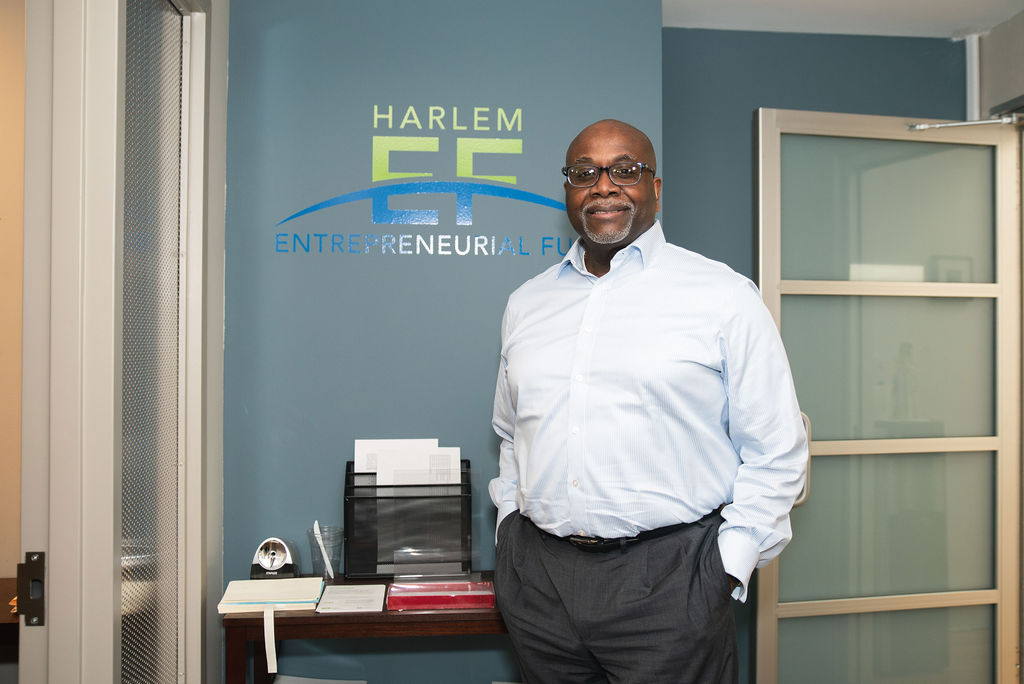
 Hamil enrolled in Project Reap, where he met another participant who happened to be the director of lending at HEF (HCC manages a significant real estate portfolio). The two became good friends, and in early 2019, Hamil began to volunteer with HEF to help it build its portfolio. His solid work drew the attention of both the board and the management, who in turn offered him a position as a senior loan officer, providing loans to small businesses in Harlem, Upper Manhattan, and certain parts of Queens. Hamil was in turn promoted to chief operating officer, and in September 2020, he became president and CEO of HEF — 19 months after first coming on board as a volunteer.
 HCC established HEF in 2007 to provide low-income and minority entrepreneurs with supportive loan capital and technical assistance in Harlem, Washington Heights, Inwood, and the Bronx. Lending operations began in the summer of 2008, and HEF was certified by the U.S. Treasury Department as a Community Development Financial Institution (CDFI) in 2012, and as a Community Development Entity (CDE) in 2021. Since its inception, HEF has originated 257 loans for over $4.4 million and helped create or retain over 650 local jobs. HEF has successfully raised over $1.5 million in grant funding from public and private institutions. According to Hamil, the CDFI originates loans anywhere from $1,000 to $250,000. Approximately 70% of HEF’s clients are restaurants and retail businesses, and slightly less than 10% of the CDFIs clients are part of what HEF calls its credit builder loan portfolio: a program designed to help entrepreneurs who have good ideas but poor credit.
 Another one of HEF’s programs is called Opportunity for Growth, which is based on the Interise Streetwise “MBA” curriculum. The highly interactive program runs for between three to four months, and existing business owners get the chance to meet weekly with outside consultants and managers to come up with a three-year plan to make their businesses better. Hamil says that not only is the program very desirable and highly sought after by business owners in the community, but the program has helped to generate significant business for HEF, as participants who complete the program are eligible for a special, reduced interest rate on a loan from HEF.
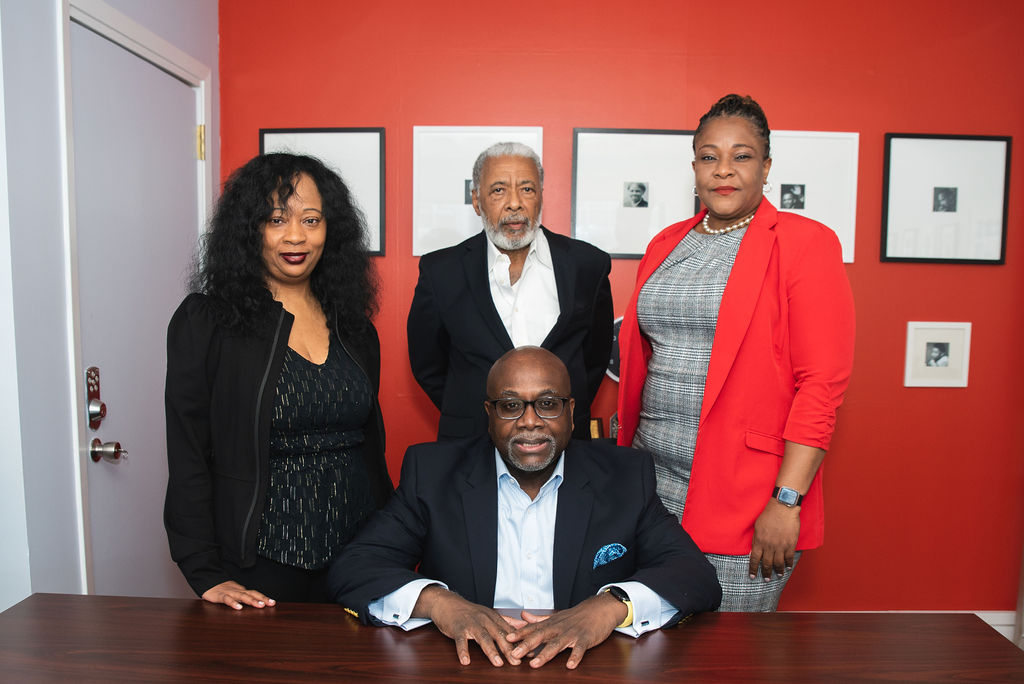 Because there are few lenders in Harlem — outside of traditional big banks — doing PPP loans, Hamil says HEF has seen tremendous growth in its portfolio over the past 12 months. That growth propelled Hamil and his team to join Opportunity Finance Network, which opened up further opportunities through Google, Wells Fargo, Capital One, PNC, and Bank of America for HEF to access external capital. That allowed Hamil to restructure HEF so that “it looks like any other fund,” and he’s anticipating getting SBA approval for HEF to become a microlender any day. Additionally, Hamil has made a point to forge new partnerships both within and far away from Harlem, including with New York City’s Small Business Services, New York State’s Empire Development, African American Alliance of CDFI CEOs, the Black Chamber of Commerce, BNP Paribas, and Lendistry.
 Interestingly — especially when taking into account Hamil’s long tenure in the world of finance — HEF’s CEO wants the organization to, in a way, be viewed by its community as a “mini bank,” or, as Hamil puts it, “Harlem’s Own-CDFI.” “I want it to be a place that people talk about when thinking about where to go to get a small business loan,” he said. “I want my organization’s number to be at the top of the speed dial. I want Harlem Entrepreneurial Fund to be where people can walk in the door, be treated fairly, and have their stories listened to. I want it to be a destination.”