
Monthly Archives

June 2019

By Borrower Stories, Migration V2

Meet Donica Johns, Inventive Mother and Entrepreneur

Donica Johns, a New Orleans native, has fond memories of going to Belladonna Day Spa with her mother when she was younger. Looking back, she never thought she would go on to create a line of skincare products let alone create a line of skincare products that would be sold on Belladonna’s shelves, but today, that’s Johns’ reality.

Finding a Solution

When her youngest son began to struggle with severe eczema in 2013, Johns was told by physicians that he’d need regular steroid shots to keep his breakouts in check. She wasn’t opposed to the treatments, but she was concerned about the potential long-term effects of the injections. The concerned mother wanted something safe, natural, and sustainable for her baby.

Johns poured herself into researching natural skin products, and she began experimenting with mixing her own natural butters and oils to alleviate her son’s eczema. It took her about a year before she found the right formula that worked best for him. “I didn’t go to school to be an esthetician,” Johns said, “but I read a lot of books. I couldn’t cure my son’s eczema, but his breakouts are far and few between, and he’s not missing out on school.”

Friends, family members, and even her son’s doctor took note. “The doctor said keep doing what you’re doing, because it’s really working,” Johns said. A friend suggested that she sell her small farm-sourced, organic concoctions on Etsy, and in 2014, Johns launched her first online marketplace. By the beginning of 2015, she had her own website and her own skincare line of about six or seven products, from the original cream that she developed for her son to a beard oil she created for her husband.

Natural Mixologist was not just up and running: it was taking off. Although Johns began fielding inquiries and taking orders from as far away as Europe, her skincare line remained “a side hustle.” She was still working full time as a bartender. “I had people wanting my products in their stores, and for the first time I said, ‘well, maybe this is something really real,’” Johns said. In 2016, the concerned-mother-turned-entrepreneur quit mixing cocktails and threw herself into Natural Mixologist, turning her side hustle into her main hustle.

The Missing Ingredient

Her business’ rapid growth came with a host of challenges. Johns’ biggest issue? She couldn’t figure out the branding she wanted for Natural Mixologist. That’s when she connected with TruFund, a Community Development Financial Institution (CDFI) that invests in small businesses in New York, Alabama, and Louisiana. CNote partners with CDFIs like TruFund in communities across the country, funding loans to small businesses and empowering local entrepreneurs like Johns.

TruFund provided the resources for Johns to be able to hire a branding and marketing specialist who had previously worked for Sephora, one of the beauty and skincare industry’s most recognizable companies. “I showed her my branding, and she was like, ‘you’re basically a five out of ten,’” Johns recalled. “I was floored. I bawled out in tears.”

However, there was a silver lining to Johns’ feeling of devastation: the chance to zero in on her target customer. “She was really able to guide me,” Johns said. “Hiring her really did help me focus on what I needed to do to change my business and to make it to where it could be viable. She helped me to get to the point where I could stand on my own two feet. That was really important.”


TruFund also assisted Johns in redoing Natural Mixologist’s website, which, according to Johns, was “all over the place.” She participated in TruFund’s Women In Business:  An EmpowHERment Program which provides innovative financial solutions, hands-on education and business advisory services to small businesses like Natural Mixologist.  Six months after participating in the program, Johns had a more polished, cleaned-up brand. It’s that same website that Johns says is helping to drive her business’ growth and visibility: she recently acquired an account to do private labeling for a California-based company solely based on her website’s design.

“The assistance TruFund gave me helped me to realize the things I was doing wrong with my branding,” Johns said. “I was trying to do too much, and I didn’t know my customer base and I hadn’t figured out what I wanted my brand to stand for. When you’re an entrepreneur, you feel very isolated, and that no one is guiding you. You’re just doing it all by yourself, and you’re not hearing from professionals about what works and what doesn’t work. You really need that feedback. TruFund helped me to get that feedback and to focus.”

Growing Her Business, Growing Her Community

Today, thanks to TruFund’s support, Johns knows her target audience: individuals who are trying to live a healthier lifestyle for themselves and their families. Her new-found, laser-like focus has allowed her to market more effectively, and Natural Mixologist’s products are now in more than a half dozen stores around New Orleans. Interestingly, it was through discovering her target audience that Johns set a benchmark for herself — getting her products into Belladonna, the same local spa she visited growing up.

“It’s one of the best spas in the country,” Johns said. “When they accepted my products into their store, it was the most exciting day for me and my business. Entrepreneurs should have a benchmark of what they think success is. This was my benchmark. When they accepted my products, I felt like I made it. It gave me this confidence to reach out to other companies. It’s been amazing, because I’m getting the acceptance I never thought I’d be able to receive.”

Setting Even More Ambitious Goals

Johns is still riding that confidence well into 2019. Natural Mixologist will have a presence in the new Louis Armstrong New Orleans International Airport when the terminal opens this fall, and Johns has her sights set on finding a larger production facility, hiring more employees and getting her products into Sephora or Art of Beauty, national beauty chains with access to even bigger markets. “That’s my next really big benchmark,” Johns said. “I feel like because I got into Belladonna, I can get in anywhere.”

Regardless of how big Natural Mixologist grows, Johns will forever remain in New Orleans, even as she hustles to fill wholesale orders and keep up with demand. Her main storefront is near the Marigny district, right off of Saint Claude, in a very old neighborhood that’s going through a transition.

“I purposely chose this neighborhood because of that transition,” Johns said. “I want to help my community grow, and I want to do that by growing my business and by creating economic opportunity for others. We’re trying to change people’s ideas that they can build economic wealth, and that this community can sustain a business.”

Learn More

  • Natural Mixologist
  • TruFund – is a 501 (c) 3 certified Community Development Financial Institution (CDFI) headquartered in New York City with field offices in Alabama and Louisiana. TruFund tailors its financial and technical assistance to the unique needs of each site—from contractor mobilization lending in New York and Louisiana to rural Black Belt initiatives in Alabama.
  • CNote – Interested in helping create another story like Donica’s? CNote makes it easy to invest in great CDFIs like TruFund, helping you earn more while having a positive impact on businesses and communities across America.
By Impact Investing, Migration V1

Impact Investing and the United Nations Sustainable Development Goals

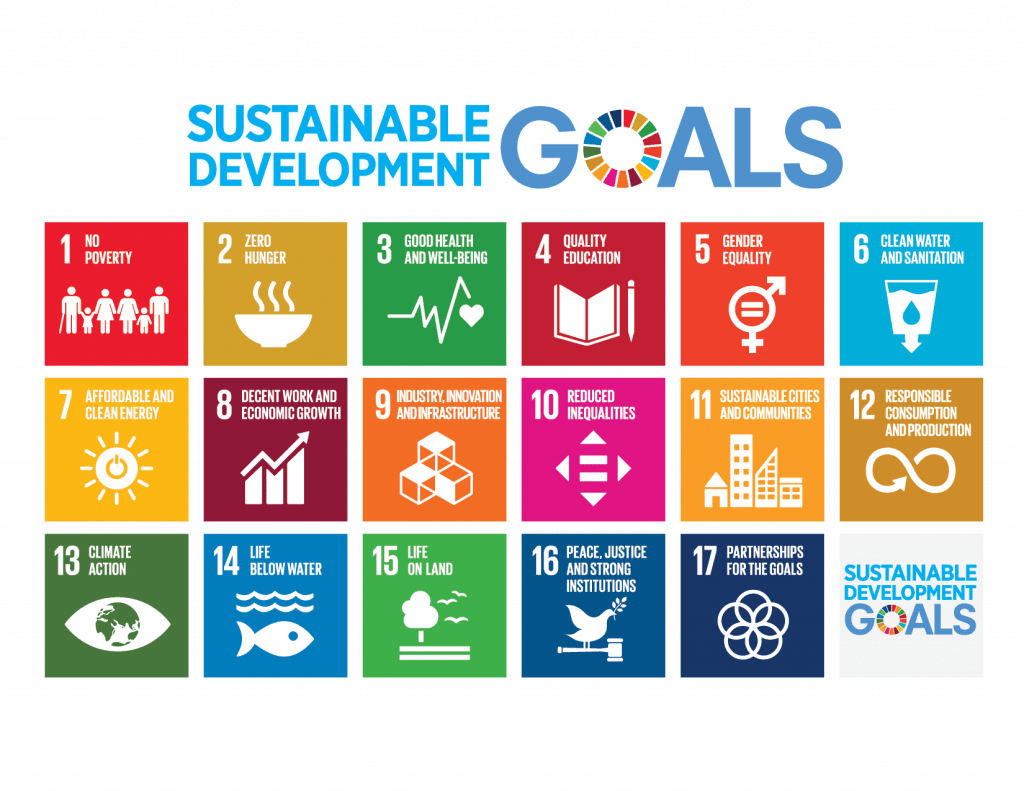
Impact Investors are increasingly adopting the United Nations Sustainable Development Goals (SDGs) as their own. This can involve mapping investments to specific SDGs or even more thorough strategic alignment through the design of financial products specifically for their achievement. However, there is still a lack of awareness across the financial sector, particularly in the United States, as to what the SDGs are and how Impact Investors should interact with them.

Generic Logo for Sustainable Development Goals

One thing for sure is that financing the United Nations Sustainable Development Goals (SDGs) will involve considerable investment across sectors. Uniquely, the Impact Investing industry has the potential to play a pivotal role in the process of achieving these ambitious goals. The following article seeks to clarify some of the key points about the SDGs and raise awareness in the field.

UN Sustainable Development Goals

The 17 Sustainable Development Goals (SDGs) were adopted by all 193 UN Member States in 2015 as part of the 2030 Agenda for Sustainable Development. These goals were intended as an urgent call for action to solve the world’s greatest development challenges. Ranging from an end to poverty and reduced inequality to tackling climate change and preserving the world’s oceans and forests. Each goal has individual targets and indicators as a means to benchmark progress. To illustrate, Goal 1, No Poverty has five numbered targets. The first of those targets is that “By 2030, eradicate extreme poverty for all people everywhere, currently measured as people living on less than $1.25 a day.” These ambitious goals are aimed at driving sustained change that will dramatically improve the living conditions not just for humans, but many forms of life on the planet. 

Financing the SDGs

To realize the SDGs will take partnerships not just government, civil society, and business but also the financial industry. It is estimated that achieving the SDGs will take between US$5 to $7 trillion with a $2.5 trillion investment gap in developing countries. Private funding and impact investing hold significant potential to close this gap as investors can leverage large amounts of investment capital.

Mapping: The process of matching investment goals or outcomes to corresponding UN Sustainable Development Goals. For example, an investment project in a developing country that increases access to clean water for both domestic and commercial applications might be mapped to goals 3, 6, 9 and 10.

Many of the world’s most prominent financial institutions have begun to explore Impact Investing strategies, including Dutch pension fund PGGM and Swiss bank UBS. The Impact Investing industry is rapidly mapping their investment goals with the SDGs, aligning their strategic goals and shaping investment products designed to achieve them.


‘Investability’ of the SDGs

The ‘investability’ of the SDGs is a hotly debated topic, as they are widely thought to be designed primarily for use by governments. However, a 2016 report by ShareAction, UNPRI and the Baring Foundation found that 60 percent of institutional investors surveyed felt that “taking action to support the SDGs aligned with their fiduciary duties” and could “create opportunities for greater returns.” The top four SDGs identified by C-Change with the greatest potential to do this were Infrastructure (Goal 9), Economic Growth (Goal 8), Climate Change (Goal 13) and Sustainable Energy (Goal 7)

A report by UBS, In Challenge Lies Opportunity, links long term investment themes with corresponding SDGs calling out particularly investable areas such as waste management and recycling. Additionally, some Impact Investment firms, such as Dutch pension funds PGGM and APG, have rated the ‘investability’ of the SDGs and identified investment opportunities accordingly. Despite this, it is widely agreed upon that each SDG has varying levels of ‘investability’ and not all make for clearly competitive investment cases.


Drivers of Impact Investing for SDG Achievement

Impact Investing has the benefit of being targeted towards regions and sectors where traditional foreign direct investment has typically had difficulty reaching, for instance, frontier markets such as Africa or underserved communities in the United States. Additionally, these investments often target sectors that have experienced difficulties garnering investment historically, such as health and rural development. The SDGs are very focused on the improvement of these regions and sectors and so Impact Investment better aligns with the goals than traditional investment approaches.

The Dutch SDG Investing (SDGI) Agenda Report, argued that the SDGs offer a “simple and attractive entry point” for those investors not yet involved with SDG or Impact Investing from which they can build out their portfolios. Whilst the Global Impact Investing Network stated that  Impact Investors can use the SDGs to “refocus and re-energize their existing activity.”    


Barriers of Impact Investing for SDG Achievement 

Conversely, a Center for Global Development Report found that the Impact Investing marketplace is highly fragmented which makes coordination difficult and increases transaction costs. The speed of development and evolution of the field creates issues that inhibit co-financing and the sharing of due diligence, this reduces the attractiveness of investment. Additionally, the lack of market infrastructure and favorable regulation in a majority of the Impact Investing marketplace is a hindrance to its development and also the ability to support the achievement of the SDGs.

The primary issue in the marketplace is a lack of data to measure progress. Traditional investments rely on the ability to benchmark opportunities against industry standards. Without this data, it is difficult to attract traditional investors. As well as this, there is an inconsistency of metrics between funders, creating additional issues. The Dutch SDGI Report found that there has been a growing movement in the last few years of standard setting and data aggregation, including the adoption of big data methodologies, in the hopes of mainstreaming SDG investing.


Overcoming these Barriers

Despite the numerous barriers to Impact Investing and the achievement of the SDGs there are many ways to overcome them. ShareAction recommended a number of these methods in their report, “Transforming the World” including; “making the goals relevant to investors, regulatory action, better company reporting and transparency, increased capacity for action amongst investors, demand from clients, support from other actors and tackling short-termism.”

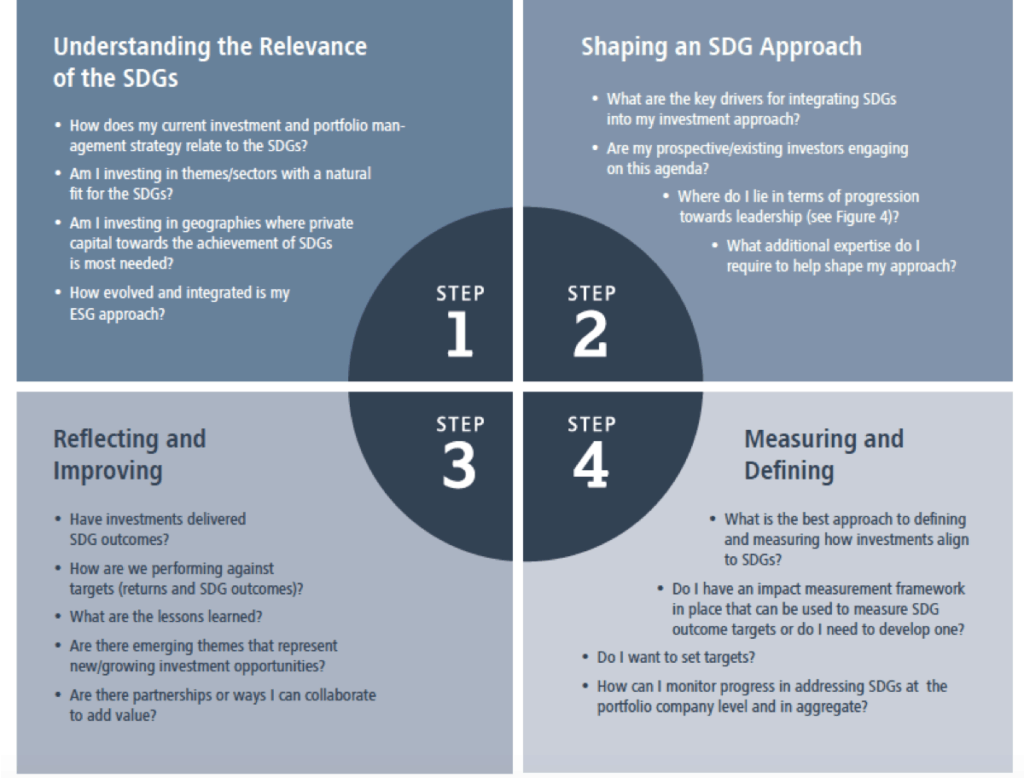
Increased availability of evidence, data, metrics and benchmarks were also flagged as essential to overcoming these key barriers to SDG achievement. The EMPEA has suggested a step-by-step question approach to helping investors consider how they can more fully engage with the SDGs and conquer these barriers.

Source: EMPEA SDG Working Group EMPEA SDG Working Group. 2018. “Private Equity’s Role in Delivering the SDGs: Current Approaches and Good Practice.”, 11.

SDGs as a Common Language or Framework

The most important addition that the SDGs can bring to the Impact Investing industry is in the process of standardization. The United Nations Principles for Responsible Investment (UNPRI) considers the SDGs as, “the globally agreed sustainability framework”.  It is now general consensus in the industry that the SDGs are a good common framework or language through which to communicate the world’s greatest challenges. The SDGs can assist investors to understand, “the sustainability trends relevant to investment activity and their fiduciary duties.”

The prevalent question in the industry now is not whether to consider the SDGs but how to do so appropriately and meaningfully. There is increasing research into this process. Impact Management and Measurement organizations, such as the Impact Management Project and GIIN IRIS+, are working on this. However, this is a constantly evolving space with no “silver bullet” defined as of yet.


SDGs Looking Forward

With such ambitious goals come challenges in achieving them and taking the extra step of linking them to investments and finding a clear way to measure success. Nonetheless, there has already been significant progress for individual goals and targets. Take for example the progress in regards to global poverty:

In 2016, just under 10 percent of the world’s workers were living with their families on less than $1.90 per person per day, down from 28 per cent in 2000. In the least developed countries, nearly 38 per cent of workers in 2016 were living below the poverty line.

As more and more resources get behind these goals from investors, public entities and private donors, the hope is that this framework can drive massive change to improve the lives of billions of people across the globe. How investors allocate resources in support of these goals has the potential to massively accelerate global progress.

By Borrower Stories, Migration V1

Meet Clara Richardson-Olguin, Entrepreneur, Philanthropist and Flooring Enthusiast

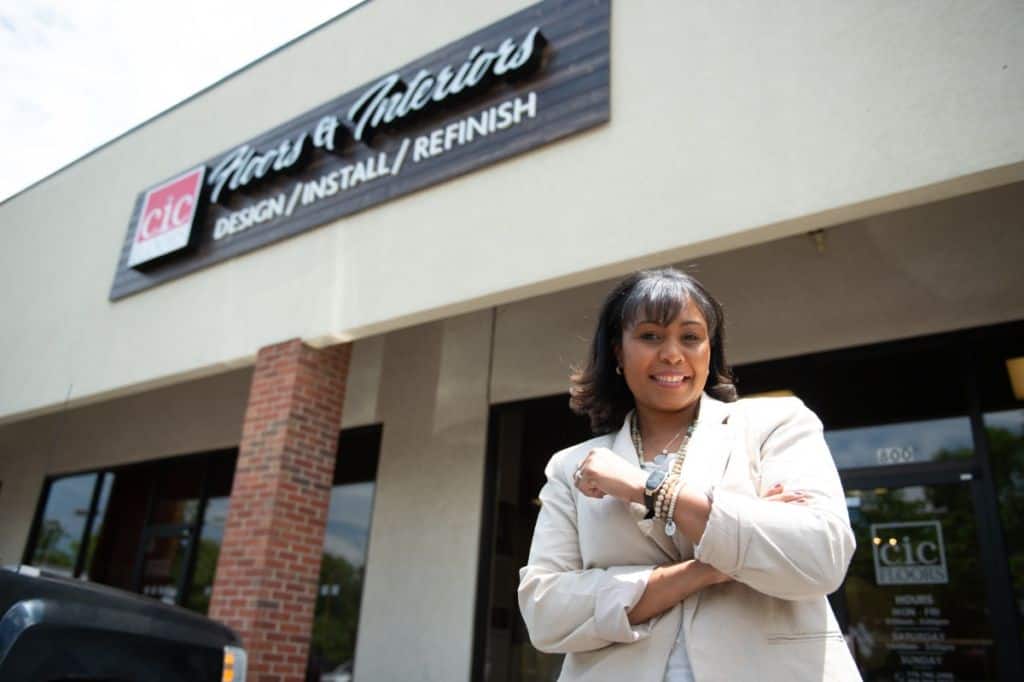
Growing up in the Dominican Republic, Clara Olguin was passionate about many things: music, dance, theatre, and justice. She even has a law degree from the Dominican Republic and a bachelor in Music Management/Voice from Georgia State. However, it wasn’t until the early 2000s that she became passionate about floors. And not just dance floors.Clara in front of CIC Floors storefront

While Clara was out promoting her annual music show Vivelo! (Live it!), Olguin met her future husband, Cesar, who worked in the flooring installation industry. “You dance salsa on good floors,” Olguin laughed. A year later, the two wed, and as the couple started to grow their family, they simultaneously decided to grow their family business, CIC Floors, which Cesar had founded in 2003.

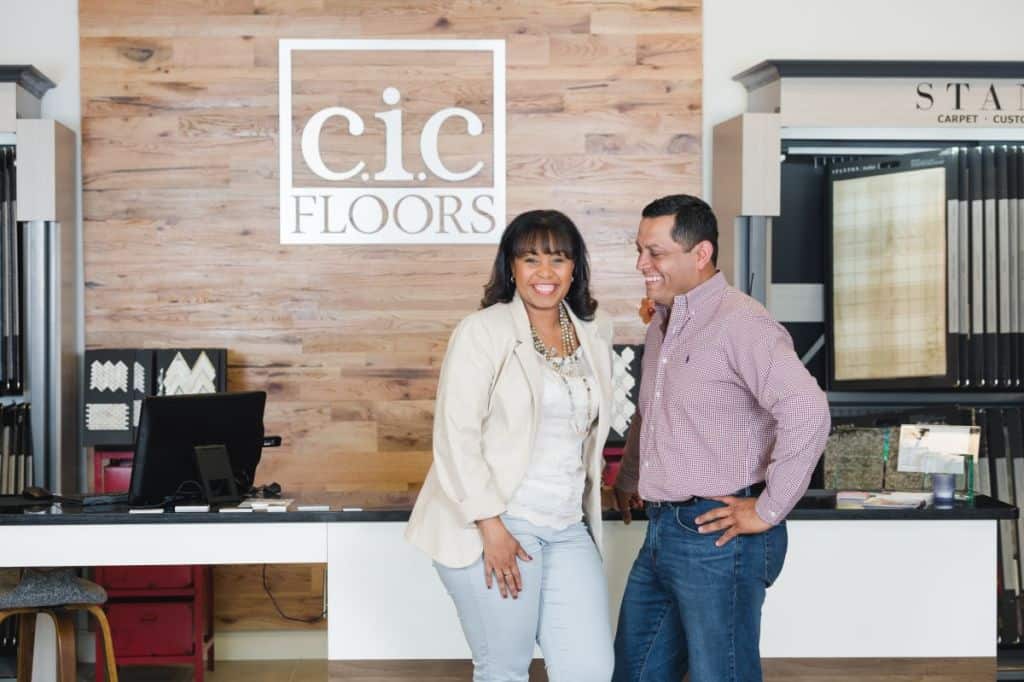
Clara and Cesar

The Path To Growth

Five years ago, after years of primarily doing installation work, Clara and Cesar decided to open a showroom; however, several banks weren’t willing to approve their loan application. That’s when a friend referred the couple to Access to Capital for Entrepreneurs (ACE), an Atlanta-based Community Development Financial Institution (CDFI). CNote partners with CDFIs like ACE in communities across America, funding loans to small businesses and empowering local entrepreneurs like Clara and Cesar.

The Team Behind CIC Floors

ACE helped CIC obtain a small business loan to rent a small space for its showroom, and two years later, CIC received a second loan from ACE that helped triple the company’s revenues.

Although Olguin credits ACE with allowing CIC Floors to open its first showroom and to grow, it didn’t take long for the small business to outgrow the tiny warehouse space. “We were grateful for the opportunity and trust and money ACE gave us,” she said, “but the showroom was packed, and we didn’t have space to receive all of our customers. We had people waiting outside. Once one client would leave, another could come in.”

More so, as the company continued to get bigger and bigger, it also began to expand its offerings, from carpeting to tile to wallpaper. Plus, as the sustainability movement continued to gain momentum, CIC began fielding more requests for eco-friendly products, and more and more designers asked to bring customers into the store for consultations. “The store was just too small,” Olguin said. “We needed a new location.”

Building On Their Vision

Clara and Cesar found a new space on Peachtree Industrial Boulevard, in Norcross, Georgia and started developing designs for the new showroom. Once again, ACE stepped in and helped CIC Floors get the funds it needed to take its next step as a small business, and last year, CIC opened its new 6,000-square-foot location as a one-stop wall and flooring destination for customers, designers, architects and builders. In honor of their roots, the couple brought in flamenco dancers into the store to celebrate their grand re-opening.

Olguin says the new showroom is a dream come true. And business is booming. Whereas CIC Floors hit its first million right before opening the new store last year, it’s increased monthly sales from $55,000 to $91,000 since opening the new showroom. According to Olguin, it’s also attracting clients with larger budgets than at their previous store. The increased revenue is allowing Clara and Cesar to expand CIC’s team. The two are looking to add two more employees to their staff of three full-time and two part-time employees, in the near future.


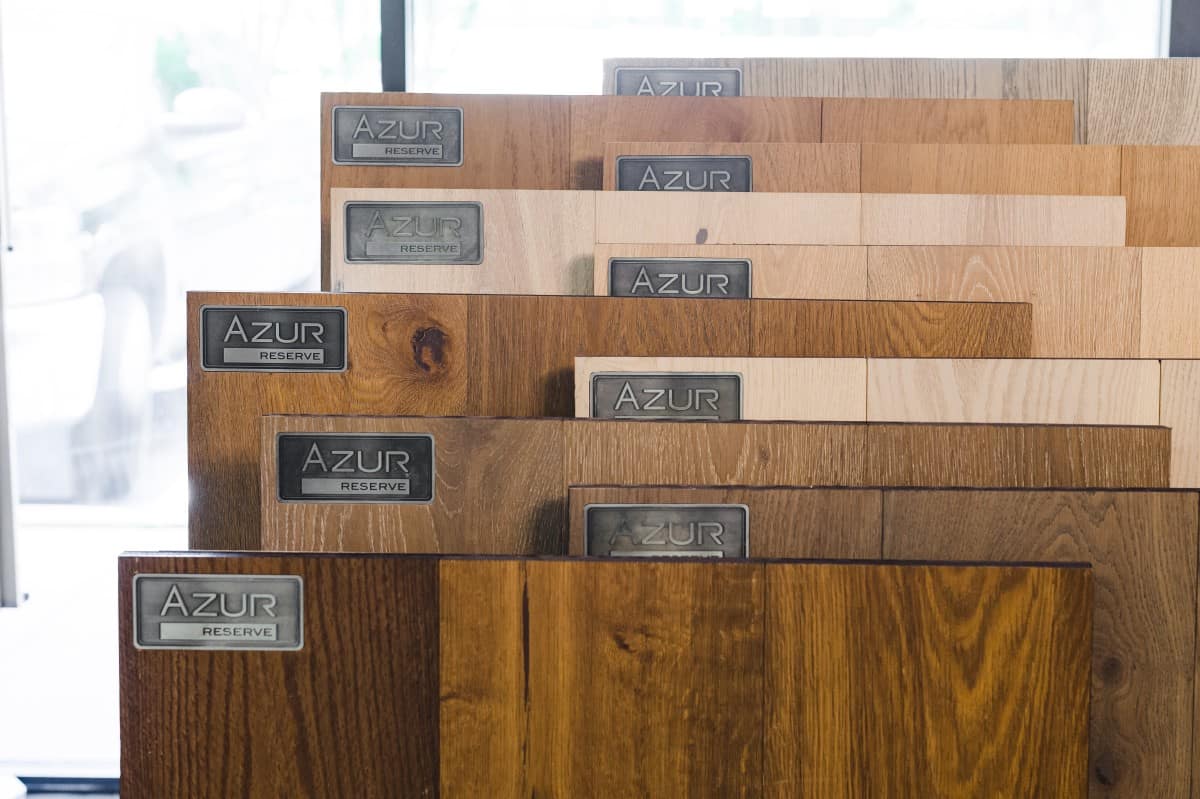
“For me and my husband, creating floors and supporting our clients in their home renovations or building their new home should be a celebration,” Olguin said. “This is the place where you will dance as a couple, where your kids will play, and where your pets will lie down. Floors are the foundation of your home, and they have to be a special place.”

Given Olguin’s celebratory outlook on the products and services CIC provides, it’s not uncommon to see customers, clients and designers walking around the showroom with a glass of wine or a mimosa as they compare tiles, color palettes, and flooring options. “We have a lot to offer,” she said, “and we don’t care as much about the number of sales we get as we do being able to offer one-on-one relationships with customers. The numbers are important to us, but the relationships are more important.”

Help From A Trusted Partner

Olguin’s confidence is rooted in ACE, which provided CIC with access to both a “marketing guru” and a finance expert. ACE also helped CIC acquire multiple business certifications, including Minority Business Enterprise and Women’s Business Enterprise certifications, and the CDFI nominated CIC to be a part of The Georgia Mentor Protégé Connection and later the Goldman Sachs 10,000 Small Businesses program, from which Olguin recently graduated.

CIC’s new location

“I cannot say enough about the networking and connections ACE has made for us,” she said. “Because of them, we got into the Goldman Sachs program, and they helped us to further develop our business and to forecast our growth for the next five years. That’s why I feel so confident today. I know where I’m going. I know where we’re heading.”

Next Steps and Giving Back

Clara and Cesar’s long-term goals for CIC Floors are centered around their five-year plan, which includes supporting their clients, offering exclusive product lines, growing the business, and supporting the community. The company already donates a portion of its annual earnings to various causes, including the Jeannette Rankin Foundation, Georgia Goal Scholarship Program, Inc., and Children’s Healthcare of Atlanta. However, going forward, CIC’s owners want to explore opportunities to support the flooring installation workforce through classes and trainings, especially for non-native English speakers and refugees. “To us, being a part of our community and giving back makes sense to us,” Olguin said. “It’s who we are.”

Learn More

  • CIC Floors
  • Access to Capital for Entrepreneurs (ACE) – ACE is an SBA Microloan Intermediary, a USDA Intermediary Relender and a certified Community Development Financial Institution (CDFI).
  • CNote – Interested in helping create another story like Clara and Cesar’s? CNote makes it easy to invest in great CDFIs like ACE, helping you earn more while having a positive impact on businesses and communities across America.