Monthly Archives

December 2018

By CNote, Impact Metrics, Migration V2

CNote’s 2018 Year End Summary

2018 Impact Metrics At A Glance

Over 1,400 Jobs Created/Maintained

Over 250 Small Businesses Funded

For Each Dollar Invested in CNote:

43
%
went to women-led businesses (WLB)
60
%
went to minority-led businesses (MLB)
58
%
went to Low to Moderate Income (LMI) communities

A Few Words From CNote’s CEO

2018 was a time of significant growth for CNote. The total number of users on our platform grew substantially and we took on institutional investments from amazing partners like the Sierra Club Foundation.

This influx of capital meant we were able to deploy more assets to our network of non-profit lenders across America. Those CNote-investment dollars funded loans that helped individuals pursue their dreams of starting small businesses, helped build affordable housing, and helped to bring economic development to communities that need it most.

Our intention is to continue to deliver competitive financial returns while generating measurable and significant positive social impact. To that end, we’ve roughly doubled our impact metrics from 2017, across the board. While pleased with the 800 jobs created/maintained in 2017, we are thrilled that we nearly doubled that number to more than 1,400 in 2018.

Additionally, our growing network of partners that now covers 37 states, allowed us to deploy capital with even more intention in 2018. This meant that for every dollar you invested in CNote we were able to deliver significant targeted impact. To illustrate, historically around 4.4% of all small business funding goes to women-owned firms. 1 Meanwhile 43% of CNote’s investment dollars were deployed to women-led businesses, almost 10x the norm. It is radical shifts in capital access like this that will build a more inclusive and robust American economy–which is our overarching mission at CNote.

Finally, on the financial front, starting in January 2019, the rate of return on all CNote accounts will be increasing to 2.75%. This is in furtherance of our goal to prove that impactful investing can be profitable as well.

Wishing you a prosperous and impactful 2019!

Cat Berman

CEO

Some Small Business Success Stories From 2018

*Note that pro-forma numbers were updated to final impact numbers on March 6, 2019, after receiving finalized impact data from our CDFI partners. Previously, the above numbers were pro-forma calculations based on Q3 performance and the total capital deployed in Q4.
By Borrower Stories, Migration V2, Wisdom

Shavon Marley – Marley Trucking – An Opportunity Borne From Adversity

There’s a saying that goes, “If you bought it, a truck brought it.” That may only be true 73.7% of the time, but either way, there are a lot of truckers out there in the U.S. delivering the things that we use and rely on every day. Over a million, in fact.

Marley Transport & Trucking is one of those trucking companies. Yet, when we interviewed founder Shavon Marley, we found the incredible story behind this company is what makes it stand out from the crowd.

Shavon Marley, Owner & Founder of Marley Trucking

A family-operated business

True to its name, Marley is largely a family-operated business. Shavon Marley started the company. Later, her husband took the primary role as head of operations and dispatch. Her dad was the first driver they hired, bringing decades of experience and industry connections to the table. Her uncle, who had gotten involved in trucking through her dad, is their second driver; and their third and most recent, added due to a higher volume of work, is a friend of a friend.

Marley may be one trucking company out of millions, but it’s more than a business, it’s a family, both literally and figuratively. Needless to say, this small company, which continues to grow, is not only having a significant impact on Shavon’s family but her community as well.

Marley Trucking Team

For Shavon and her husband, it was a dream long in the making. Originally Shavon worked full time in sales, and her husband in cable and satellite installation, a demanding job that required him to work six days a week outdoors. “My husband and I were high school sweethearts also,” she told us. “…We always had this thing where one day we would figure out how to have our own business and set our own schedules, and be able to travel and be able to work from wherever we travel.”

That was the dream. But it was not until the onset of some difficult and unexpected circumstances that Shavon began to take action, turning her dream into a reality.

Tenacity in the face of pressure and adversity

Hyperbaric oxygen therapy room (Photo credit: mayoclinic.org)

The above image is of a therapy session occurring in a hyperbaric oxygen chamber. In 2016 Shavon would find herself spending a lot of time in these tanks: she was diagnosed with breast cancer in April of that year.

Others may have balked in the face of such hardships, but Shavon made the most of it. Her treatment allowed her “a lot of time away from work, and also a lot of time to think,” she told us with a laugh. Therapy sessions would last 7 hours each and occur 2-3 times a week — all without the distraction of electronics. She used the time to ruminate at length about the business she and her husband had always wanted to start.

“I’m picking up on inspiration everywhere.” -Shavon Marley

But she didn’t only think. She found herself engaging in conversation with some other patients. “I’m in this tank with all old people — but a really good group of old people.” This included business owners, people experienced in the trucking industry, and even a woman who had started a welding business and could provide advice in thriving in a male-dominated industry. “I’m picking up on inspiration everywhere,” Shavon told us. “So I’m going into this tank with my pen and paper, and I’m getting my questions answered.”

For some specific concerns, however, the people she was close to didn’t have all the resources she needed. “I didn’t really have immediate people within my trust circle I could go to and say, ‘How do I do this? What do I need to know? Does the loan make sense?’…I just didn’t know what to do.” Meanwhile, there was an increasing source of pressure in her ever-growing absence away from work, and her husband’s own job whose hours were long and kept them apart at such a challenging time.

Marley Trucking, a story of teamwork

But her father, a seasoned trucker, always believed in her. “He’d always tell me, ‘You’re a big girl, you’re smart, you can figure it out, you can figure anything out…’ — Okay, well, if I figure it out,” Shavon recounted, “then I solve all these problems.” With some help, she did.

One big part of the equation was assistance from Carolina Small Business.

Figuring it out with Carolina Small Business

When Shavon first connected with Scott Wolford of Carolina Small Business Development Fund, the business she had in mind was a dump truck business. Eventually, this would evolve into the transport and trucking business of today. Needless to say, there was extensive thinking, collaboration, and planning along the way, but Scott’s guidance helped see her through.

Scott found a driven, hardworking client in Shavon. “I think he could tell I’d never written a business plan before,” Shavon recounted. “But I think he picked up on the fact that I’ll research any and everything until I figure it out.” He directed her energies by coaching her on writing the business plan, providing tools and resources, and bringing certain costs and considerations to her attention — “all the things that you really have to kind of put some time into forecasting when you’re starting a business.”

In April of 2018, all of the hard work came to fruition. Shavon received a loan which was able to support her new business and fund insurance for the trucks in her growing enterprise. On April 30, 2018, Marley Transport & Trucking pulled its first load. Since then Marley Trucking has continued to grow and establish itself as a reliable transportation option across North Carolina.

The fast-growing fleet

Conclusion

There were still challenges after launch, such as finding brokers, meeting a high volume of work, and navigating the logistics of intermodal hauling. But Shavon used her trademark grit and research abilities to pull through. Now Marley Trucking has three drivers and does intermodal hauling from the Port of Wilmington.

Recently, Shavon and her husband took a trip to Mexico. Her husband would check his laptop in the mornings, but the afternoons would be devoted to hitting the beach. Working from wherever and whenever they want — their dream had finally come true.

“I don’t think we could’ve done any of that…without the funding,” Shavon told us. “We certainly wouldn’t have been able to grow.”

Learn More

Marley Trucking is based out of Raleigh, NC. If have transport needs in North Carolina, they can be reached at 919-757-5425.

Carolina Small Business fosters economic development in underserved communities through access to capital, business services, and policy research. Since 2010, the non-profit community development financial institution has invested more than $50.7 million through 661 loans to small businesses across North Carolina helping to create or retain more than 2,267 jobs.


By CNote, Migration V2

We’re raising rates in 2019!

CNote has always been committed to delivering tangible social impact while providing competitive financial returns. In 2019, we’re increasing the return on all CNote accounts to 2.75% as we work to prove that investing in a better world can still be profitable.

Impact + Financial Returns

We’ll continue to deliver the same great impact along with assuring that the capital we provide our non-profit partners is affordably priced and will continue to support sustained economic development in communities across America. CNote’s ultimate mission is to help close the wealth gap in America by increasing access to capital for communities that were commonly cut off from traditional funding sources.

Maria Harrington, Owner of Casa de Español, a CNote small business success story

As CNote’s CEO Catherine Berman noted, “For a long time, doing something good with your money wasn’t always the smartest financial decision. We’re challenging that thinking. In 2019, we’re making it even more financially rewarding for our members to invest with their values. If you’ve got extra cash sitting in an account paying you next to nothing, an investment in CNote is a great way to make your money work for you in 2019.”

Next Steps

Existing members don’t have to do anything and will see the increased earnings reflected in their account dashboard for January.

New members can sign up today and enjoy the increased rates starting January as well.

Additionally, CNote members can increase the APY on their accounts up to 3.00% by referring friends and family. You can learn more about the bonus requirements when you log into your secure dashboard.

View The Release

You can review the full press release here.


By Advisor Spotlight, Financial Planning, Migration V1

What Is Investment Risk & How Does It Impact Your Investment Planning?

Note: This is a guest post was authored by Sahil Vakil, CEO of MYRA Wealth. MYRA Wealth provides personal finance services for international and multicultural families in the United States.

What is investment risk, what shape does it take and how does risk affect your personal financial planning? Investment risk is a complex topic, but every investor should have at least a basic grasp of investment risk in order to make wise investment decisions. In this article, we cover the basics around investment risk and explain how and why your approach to investment risk should adjust over time.

Defining investment risk

Investment risk is the likelihood of a financial loss that is caused by an investment. FINRA (The Financial Industry Regulatory Authority) defines investment risk as uncertainty with respect to your investments. It is the probability that upon selling an investment you will receive less than you originally invested, or that the investment return on an asset fails to meet your expectations.

Low risk means a relatively predictable outcome, high risk means that there is a lot of uncertainty about your investment outcome. It is important to understand that investment return and investment risk is directly related.

How much risk you are willing to take is subjective, but you should make an informed decision

Investments with higher returns are also often investments carrying higher risk. The market rewards investors willing to accept a higher probability of loss in return for the opportunity to see a high return. However, some investment risk can be mitigated. By mitigating investment risk you can ensure your portfolio is located on the ‘efficient frontier’. In layman’s terms this means that you get the highest returns for a given level of risk, or are exposed to the minimum of risk for a desired level of investment return.

Types of investment risk

Investment risk can be classified under an almost countless number of categories, but when investing your own money it is worth looking at investment risk from two perspectives.

Systematic (or Non-Diversifiable) risk

Some risks are very difficult to avoid because they are intrinsic to the financial system, or indeed to a specific asset class. It may be difficult to avoid systematic risk, but you can reduce your risk exposure by changing the asset class, or by adjusting your financial planning. Some examples of systematic risk include:

Inflation risk

Locking in a high savings account rate may look attractive, but it can cost you if inflation rises. Though the outlook for inflation is generally stable, investors should consider the risk of rising inflation as inflation can rapidly reduce the value of your money.

Market risk

Entire markets can swing, leaving every asset in an asset class such as stocks nursing heavy losses. The strong downturn in the stock market after the 2008 financial crisis is one example of market risk.

Exchange rate risk

In some countries, exchange rates can rapidly change, devaluing investments held in that currency. The opposite can also happen: if you plan on moving back to your home country from the US you may find your dollar-denominated assets can suddenly lose relative value if your home country’s currency stages a recovery.

Systematic risks cannot be fully avoided but a degree of planning can compensate for systematic risks. Systematic risks are also worth staying ahead of so that you avoid underestimating your overall investment risk.

Unsystematic (or Diversifiable) risk

Some types of investment risk affect individual assets such as specific stocks rather than entire markets. Also known as unsystematic risk, these diversifiable risks can be mitigated by spreading your investments across multiple assets. Diversifiable risk includes:

Regulatory and business risk

Governments can put large companies out of business rapidly, or at least reduce their ability to produce profits. Just think about environmental regulation, for example. Likewise with regards to competition, consumer preferences and technological advances all of which can quickly reduce the prospects of a corporation.

Debt risk

Corporations use debt to finance their activities, and for the most part, this causes no problems. However corporate debt can suddenly spiral out of control, leading to difficulties repaying debt and a contraction in profits or in the worse cases, default, and collapse of the corporation.

Event risk

Unexpected events can impact the ability of a company to maintain growth and profits. Examples include natural disasters, a customer service fiasco or large hacking attacks that lead to financial loss or data loss and the associated bad publicity.

Diversifiable risks are highly unpredictable, but by holding a range of assets (such as a basket of stocks in an ETF) you can reduce the impact of any one stock that suffers large losses. It is worth diversifying not only across companies but also across industries and asset classes.

Adjusting your risk exposure

One of the laws of investing is that returns even out over time. This is known as ‘mean reversion’ – your investment returns will tend to match average returns in the long run. What you lose during one period you will probably later gain over another period – if you invest wisely, of course. In time frames stretching decades chances are you will have the opportunity to make up for losses, so you can take risks.

You must understand and control the risk you take, otherwise you’re just gambling

Deciding how much risk you take on when investing your personal finances depends in part on when you’ll need access to your money. If you have no looming large expenses such as a mortgage deposit, children’s college fees or indeed retirement you can take bigger risks with your investment funds.

On the flipside, if you will need your funds in the near or medium term you need to lower your risk exposure as you may not have enough time to make up any losses suffered by your investment portfolio.

Investing with your life goals in mind is called ‘goal-based investing’, in other words you focus on attaining specific financial goals such as saving for your children’s school fees, rather than investment goals such as maximizing returns or beating market performance.

Other risks relevant to personal investment

Adjusting a personal investment portfolio to adequately take account of all risk factors is difficult, compounded by the risk factors faced by individuals. For one, your investment horizon can be abruptly shortened due to an unforeseen event, such as a loss of employment or a medical condition. This so-called ‘horizon risk’ matters because it can force you to endure big losses on investments you were not expecting to sell.

Personal investors also face another, often ignored risk: that of ‘longevity risk’. What happens if you outlive your savings? Or indeed, if you pass away before you can fully utilize your savings, in the absence of an heir?

Getting advice on personal investment risk

It should be clear by now that the risks faced by personal investors are varied and complex. On top of that, you need to adjust your response to investment risk over time. Juggling this intricate set of rules and facts can be a challenge and expats (including international families) have additional factors that they need to take into account.

Qualified, experienced personal financial advisors should help you navigate the risky waters. Typically financial advisors will try to understand your risk profile by asking you a set of questions or having you complete a survey in order to craft a portfolio that meets your needs and goals, on a risk-adjusted basis. This objective process determines your personal tolerance to risk, mapping out an investment strategy including the assets that match your risk preference. For example, Myra Wealth utilizes Prospect Theory, a Nobel Prize-winning model of behavioral economics, to conduct an individualized risk analysis for each of their clients to set transparent goals and expectations for their investments.

As much as you should consider professional advice for investment, a basic awareness of how investment risk works can help you gauge the quality of the advice you are receiving.

By Financial Planning, Migration V2

When the Federal Reserve Raises Rates What Does It Mean For You?

If you’ve tuned into financial news at all lately, no doubt you’ve heard that the United States Federal Reserve has continued to slowly but steadily “hike” the interest rate. In September 2018, the third of four planned increases on the year resulted in an effective interest rate in the range of 2.00%-2.25%, the highest since immediately prior to the financial crisis of 2008.

But what does the Federal Reserve actually do and how does it control interest rates? And, most importantly, what do higher interest rates mean for you?

The Federal Reserve

The United States Federal Reserve System, colloquially referred to as “the Fed,” is the central banking system of the United States. It is a quasi-private entity that operates within the federal government and is comprised of twelve regional Federal Reserve Banks, a board of governors, the Federal Open Market Committee (FOMC), and thousands of member banks on the state level.
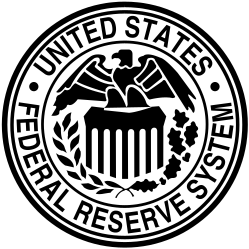
Official Seal of The Federal Reserve

The Fed’s key roles are defined in its so-called dual mandate, which stresses the promotion of full employment and price stabilization as the major objectives of the Fed’s monetary policy. The responsibilities of the Fed have grown in the century-plus since its 1913 inception to include the regulation of banking institutions and facilitating foreign exchange of payments. To that end, the Fed engages in oversight and control over the entire financial system in an attempt to pursue its policy objectives.

The manipulation of interest rates is a principal tool by which the Fed attempts to control macroeconomic indicators such as unemployment and inflation. Fed actions in monetary policy have significant and far-reaching impacts, affecting everything from the cost of paying off credit card debt to the prices of goods on store shelves. Therefore, it is important to understand why and how the Fed controls the interest rate as well as the ultimate effects of their policies.

The Importance of Interest Rates

The interest rate represents the time value of money. Since humans tend to value present goods higher than future goods, lenders must be paid back more in the future in order to part with money today. The additional sum of money that the borrower later pays back to the lender is some fraction of the principle of the loan, which in percentage terms is the interest rate.
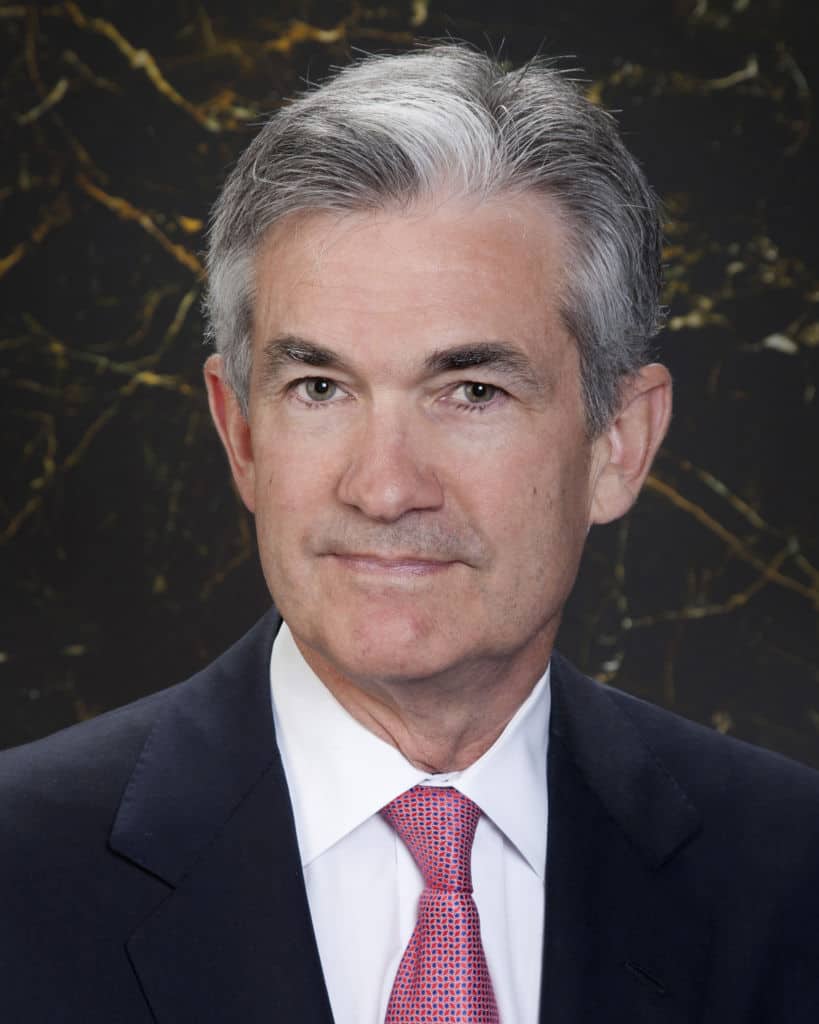
Jerome Powell, Chair of the Federal Reserve

Here’s a simple mathematical example to drive the point home. Imagine you borrow $1,000 from a bank today with the promise to pay the sum back one year later at a 10% annual interest rate. In one year, you will not only return the $1,000 you initially borrowed, but an additional $100 to compensate the bank for the value of time between receiving the cash and paying it back. While you receive $1,000, you pay back $1,100 at the end of the loan period to compensate the bank for the time value of the money you borrowed for the duration of one year.

Interest rates are thus an essential indicator of the total savings in the economy. Absent intervention from a central bank, less savings means more demand for whatever credit is available, which pushes the interest rate higher. On the other hand, more savings means that credit is more plentiful, resulting in a lower interest rate.

In that way, interests rates are the key signal for business owners and entrepreneurs to determine if pursuing a given economic project is feasible given the cost of borrowing. If credit is expensive at higher interest rates, those pursuing stable, shorter-term projects are more likely to afford the high cost of credit than those with riskier long-term projects in mind. In the event that interest rates are low from a genuinely high pool of real savings, entrepreneurs who otherwise could not have been able to afford the cost of borrowing might now be able to acquire the capital required to kick off their projects.

The Fed and Interest Rates

So why does the Fed bother with the interest rate in the first place? The answer lies in the aforementioned dual mandate. The Fed believes that it can use the interest rate as a lever to pursue its policy objectives of both low unemployment and low inflation.

In simple terms, the Fed’s basic operating theory states that the interest rate should be lowered in times of economic distress to encourage the availability of cheap credit and thereby increase aggregate borrowing and investment. Conversely, when there are fears of an “overheating” economy, the interest rate should be raised to act as a speed-bump in containing a potential outbreak of inflation above the Fed’s target of around two percent.

To hear in the news that the Fed is raising interest rates may evoke the idea that the FOMC simply declares a new rate to be in effect. This is partly true, but there is an actual mechanism by which the Fed exerts pressure on interest rates beyond simply declaring what they would like to see.

How the Fed Controls Interest Rates

The federal funds rate (FFR) is the overnight interbank lending rank. Every night, each bank and depository institution must meet the reserve requirement ratio set forth by the Fed. Banks with reserve ratios in excess of the current requirement will lend at the FFR to banks who are short in cash balances.

This is where things become quite technical, but don’t worry if you find it difficult to follow the exact mechanism. The most important thing to understand is that the Fed does manage to control the interest rate as they intend and that these manipulations have very real consequences on main street, which will be discussed in the next section.

First of all, the Fed will set a federal funds target rate, such as the 2.00-2.25% range of September 2018. This is the number that is commonly reported in the media but is not the precise interest rate at any given time. In order to actualize the target rate, the Fed will engage in reverse repurchase agreements with money-market mutual funds, selling treasuries with the promise to buy them back on the next day at a certain rate. That repo rate is the lower bound (2.00%) of the federal funds effective rate. The Fed will then set a higher rate on the interest they pay on excess bank reserves, which serves as the upper bound (2.25%) of the federal funds rate range. The federal funds effective rate is the resulting interest rate that borrowing banks pay to lending banks to maintain adequate reserves.

If the effective rate at which banks lend overnight reserves to each other diverges from the federal funds target range, the Fed will then use open-market operations to change the supply of money in the economy and subsequently bring the interest rate in line with their target rates. It is called expansionary monetary policy when the Fed makes large-scale purchases of treasuries, thereby increasing the supply of money in the economy and pushing down interest rates. Conversely, contractionary monetary policy occurs when the Fed sells treasuries back into the market and sucks dollars out of the economy, raising interest rates as money supply decreases.

The Fed is likely to employ expansionary monetary policy when there is an economic downturn and unemployment is rising. Since lower interest rates mean a lower cost of borrowing, it follows that more borrowing and subsequent economic activity will occur than would have otherwise. In the event of a booming economy with low unemployment but fears of increasing price inflation, the Fed will enact contractionary monetary policy to restrict economic activity and “cool down” the economy, so to speak.

Consequences of Rising Interest Rates

As previously mentioned, rising interest rates usually lead to a contraction in economic activity. Since it becomes more expensive to borrow money, fewer projects will be economically feasible and macroeconomic metrics such as employment and GDP will tend to be lower as a result. The stock market also takes a hit, as the higher costs of both taking on and paying down debt works against corporations. At the same time, consumers are likely to save more than before in response to higher money-market savings rates and consequently spend less on goods and services. Finally, the increase in Treasury rates attracts investors to low-risk government bonds and leaves corporate bonds comparatively in the cold.

A higher federal funds rate also impacts the micro-economy in a very real way. Following an increase in the prime rate, the interest rate that banks extend to their most credit-worthy customers will also increase. Many variable-rate loans signed under a low-interest rate environment may become untenable as rates rise and the cost of carrying the debt exceeds the capacity for the borrower to cover the interest payment. Such credit defaults significantly decrease the value of any collateral behind the now-defunct loans as well, which can be economically crippling if major sectors, such as housing, suffer in a systematic fashion.

There is yet another very serious impact resulting from a change in interest rates, although there is little any single person can do about it. Given that the substantial national debt already assumed by the US government is increasing by the second, an increase in interest rates also increases the cost of the interest payments required to pay down the outstanding debt. As the burden of maintaining the national debt increases, fewer Federal funds are available for such outlays as infrastructure or education, which can have a very real impact at the local level.

The Effects of Rising Interest Rates on You

As already mentioned, the Fed’s manipulation of interest rates affects the economy in such a pervasive way that is virtually impossible to avoid experiencing some of the repercussions. For instance, by changing the price of borrowing, the different incentives for individuals to either save or consume leads to changes in demand and, consequently, the prices of consumer goods. These higher prices can appear anywhere from the gas pump to the grocery store, although financial assets like stocks seem to be most strongly correlated with Fed activities.

Since most credit cards charge a variable interest rate, any change in the federal funds rate also ends up affecting the cost of borrowing on a credit card. For that reason, it is usually advisable to lock in the terms of any credit repayment before an expected increase in interest rates. Otherwise, you might find yourself facing a higher interest rate when paying down any accrued debts.

Rising rates can have a significant impact on home affordability and mortgage rates

In fact, anything that has a variable interest rate attached, such as many automobile loans or lines of credit, are likely to be affected by Fed policy. Conversely, fixed-rate loans like home mortgages will remain unaffected by changes in the interest rate, although homeowners looking to purchase a new mortgage will certainly be affected, for better or worse.

Conclusion

While the process by which the Federal Reserve manipulates interest rates is complicated and somewhat esoteric, the effects are significant and felt by everyone. If you hold any variable rate debt, changes in the interest rate brought about by the Fed might make all the difference between comfortably paying it off over time or squeezing every penny to keep up with the interest payments. While the boon to savers is nice, those who have made a habit of borrowing extensively in a low-interest rate environment will be in for a shock as projects that initially looked appealing no longer seem economically feasible and must be abandoned.

One more rate hike on the year is expected to come out of the December 18-19 FOMC meeting, but only time will tell if the Fed will follow through with it in the face of the recent turmoil in the stock market. We can be sure, however, that whatever decision they come to will have very real consequences for millions of Americans.